
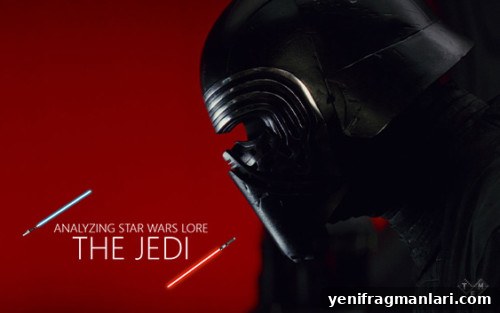
(Artwork by Sandara – DeviantArt)
The debates around the Star Wars saga continue as fans debate the legacy of the main nonology. A recent discussion on /r/StarWarsLeaks examined George Lucas’ involvement — or lack of it — in the Sequel Trilogy and sparked a variety of thoughtful responses. One comment that attracted attention came from /u/Angelmv86:
“This was great, but my main takeaway is this: How dare JJ, Arndt, KK, and Iger think for even a second that JJ and Arndt should write the script or that they could match Lucas’ vision… that feels arrogant. According to the article, lore about the whills and connecting story beats across the nine films were largely set aside for aesthetics and spectacle. So why call them Episodes VII–IX if you’re not going to answer core questions? That’s why I’m worried these films won’t age well. They lack a crucial element every previous Star Wars film had (even Rogue One)… People are starting to reassess the prequels and see what Lucas intended, and Disney thought they could outdo him. That’s both disrespectful and foolish.”
I don’t think it’s accurate to say the sequels sacrificed all lore for visual style. In fact, ignoring deeper context is how problems emerged with the Prequel Trilogy, and the prequels themselves show that Lucas’ later creative choices were not always successful. Concepts like the Whills — referenced in the original novelization, in draft scripts for Revenge of the Sith, and touched on in Rogue One — remain ambiguous. They’re connected to the Force in a loose, mythic way, but they aren’t essential to the main story spanning Episodes I–IX. If anything, Disney has explored some of these ideas more overtly than Lucas ever did.
One commenter summed up why many creators steered away from Lucas’ approach to the Force. As /u/madamz put it:
“Lucas wanted to emphasize midi-chlorians and a microbiological explanation for the Force — and that’s the one element people really disliked when The Phantom Menace debuted. I can’t blame Disney for moving away from that.”
Another user, /u/Haltopen, expanded on that critique:
“Introducing midi-chlorians violated an important storytelling principle: show, don’t tell. The Force had always functioned as a mythic storytelling device. Revealing it as a measurable, biological phenomenon — ‘magic space bacteria’ — didn’t add meaningful depth; it stripped away mystique.”
Many fans took issue with the oversimplified phrase “magic space bacteria,” since midi-chlorians are presented more precisely in canon as microscopic symbiotic organisms that enable connection to the Force. Still, the core point stands: giving a scientific explanation for something that had been framed as transcendent and mysterious changed how audiences relate to it.
That change is part of a larger shift introduced by the Prequels in the portrayal of the Jedi. In the Original Trilogy, Obi-Wan describes the Jedi as “guardians of peace and justice” spread across the galaxy, more like wandering warrior-monks inspired by samurai and knights than a centralized ecclesiastical bureaucracy. Lucas later expanded the Order into a formal institution in the Prequels: a Grand Master, a High Council, ranks such as Youngling, Padawan, Knight, and Master, and many internal divisions and corps. The prequel-era Jedi became a much more organized, almost religious bureaucracy — forbidden to marry, discouraged from emotions, and tied to widespread institutions and temples on planets like Coruscant.
The Prequels attempted to recast Jedi identity with increased structure, but that formalization often contradicted the simpler, more archetypal depiction from the Original Trilogy. In the OT, Jedi are defined by their discipline, wisdom, and martial skill; they appear as nomadic peacemakers and warriors who can act decisively when conflict arises. The PT’s emphasis on rank, administration, and internal politics made the Jedi feel more like a state institution than a wandering order of guardians.
There are scenes in the Prequels meant to justify the new structure, yet the storytelling sometimes feels at odds with that vision. Qui-Gon’s claim that he can’t fight a war for Queen Amidala, while later aiding her militarily, and Mace Windu’s insistence that Jedi are keepers of the peace rather than soldiers, contradict the actions and origins implied by the films. Semantically, a “peacekeeper” who performs combat roles is effectively a soldier; the distinction becomes academic when they’re defending the Republic in wartime.
The Sequel Trilogy took the opposite approach in many ways: it simplified the Order’s role by placing a new Jedi era in the past and focusing on personal stories and smaller-scale stakes. Luke trained a handful of students, including Ben Solo. A moment of fear and misjudgment between them led to Ben’s fall, the rise of the Knights of Ren, and the destruction of the new temple. Rather than building elaborate bureaucracies on-screen, the sequels hint at these events and let the films center on Rey, Kylo, and the thematic conflicts of identity, legacy, and balance.
That pared-down worldbuilding gives the sequels room to explore the Force in mythic, practical, and emotional terms without bogging the audience in minutiae. Rey doesn’t need encyclopedic knowledge of Jedi ranks or biological explanations of the Force; she needs to understand connection, balance, and purpose. The training scenes in The Last Jedi — intimate, atmospheric, and focused — carry the tradition of master-and-apprentice relationships in a way the Prequels seldom matched.
Ultimately, the debate about which vision of the Jedi is “truer” to Star Wars springs from different storytelling priorities. The Prequels tried to institutionalize and expand the lore, while the Sequels often returned to emotionally focused, character-driven arcs that echo the Original Trilogy’s scale and tone. Both approaches have strengths and weaknesses, and fans will understandably prefer one over the other.
For my part, I appreciate how JJ Abrams and Rian Johnson handled worldbuilding and theme in their films. They chose clarity of character and mythic resonance over exhaustive institutional detail, and in doing so, they left room for future creators to shape the galaxy in fresh ways. Whether Disney will revisit detailed origin stories or preserve the more elemental, character-led approach remains to be seen — but the sequels’ emphasis on human stories and the Force’s mystery has, to me, been a welcome direction.
…
In short, the question isn’t whether one era of Star Wars lore is definitively correct; it’s how different creative choices change what the saga feels like. The Prequels expanded the universe’s structure; the Sequels narrowed the focus to the heroic and personal. Both contribute to the larger tapestry, and both will continue to fuel conversation among fans and creators alike.