
Score: A-
Director: Clint Eastwood
Cast: Tom Hanks, Aaron Eckhart, Laura Linney
Running Time: 96 Minutes
Rated: PG-13
“This is the captain, brace for impact.”
On January 15, 2009, Captain Chesley Sullenberger made a split-second decision that saved 155 lives when US Airways Flight 1549 landed on the Hudson River. The moment entered the public imagination as a miracle, but Clint Eastwood’s Sully resists simple hero worship. Instead, the film focuses on the aftermath: the scrutiny, the uncertainty, and the quiet determination of a man trying to reconcile what happened with the questions that followed.
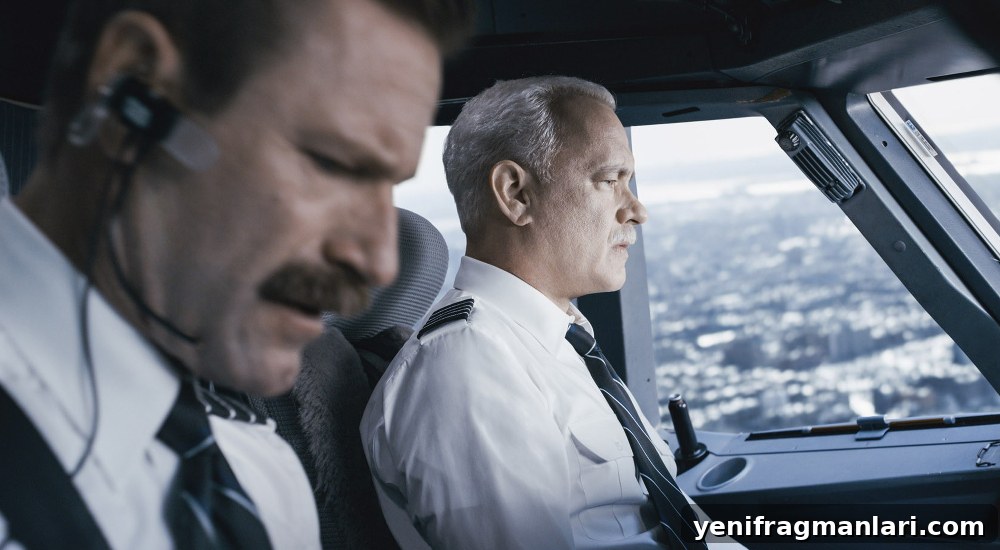
Sully centers on Captain Sullenberger (Tom Hanks), portraying a man whose calm exterior hides a storm of emotion. The film begins the day after the emergency landing, with Hanks’ character walking through New York City, restless and unsettled. Hanks conveys this internal turmoil with subtlety—small facial choices and a taut physical presence reveal a reservoir of anxiety and resolve. His performance anchors the movie and provides the emotional core that holds the story together.
Eastwood structures the narrative around two primary threads: the meticulous investigation into the flight crew’s decisions and the captain’s private struggle to process the event. Rather than dwelling on spectacle, the director employs flashbacks and dreamlike sequences to reconstruct the fateful 208 seconds in a way that is both suspenseful and human. These moments immerse the audience in the pressure of the cockpit while also revealing the enduring responsibility carried by those who command a plane.
Where the film occasionally falters is in its tendency to flirt with familiar cinematic shorthand. The hearing scenes introduce a probing investigator who represents institutional skepticism, and the marriage between Sullenberger and his wife Lorrie (Laura Linney) is hinted at more than fully explored. Linney’s performance is restrained and effective, but her relatively brief screen time leaves her character feeling underused. The choice to emphasize process and procedure over personal backstory is deliberate, though it leaves some viewers wanting more depth in the domestic portrait.
Aaron Eckhart, as First Officer Jeff Skiles, provides a vital counterbalance to Hanks. Their on-screen chemistry is convincing and crucial: together they create a believable partnership forged under stress. The film pays careful attention to the professional rapport and split-second coordination that made the successful water landing possible, honoring the teamwork at the heart of the incident.
Technically, Sully favors economy over extravagance. At only ninety-six minutes, the film is compact and tightly edited, keeping the focus on character and consequence rather than extended thrills. Eastwood’s direction is unobtrusive; he lets the actors and the material breathe. Visual choices—measured framing, naturalistic lighting, and selective use of slow-motion—underscore the weight of each decision without resorting to melodrama. The sound design and score support the tension and relief of the narrative without overwhelming it.
One of the film’s strengths is how it broadens the idea of heroism. Sully doesn’t limit the title of “hero” to the captain alone; it shows multiple people responding with courage and compassion—flight attendants, rescuers, and everyday citizens—each contributing to the rescue and recovery. Those scenes, combined with the real-life reunion of Flight 1549 passengers during the closing credits, leave the audience with a warm, heartfelt impression.
Sully is not a perfect film, but it is a thoughtful, respectful dramatization of an extraordinary event. Tom Hanks delivers a measured, convincing portrait of a man under pressure, and Eastwood’s steady hand keeps the film focused on the ethical and procedural questions that followed the landing. The movie asks us to consider what it means to do one’s job exceptionally well, and how society evaluates split-second decisions in the harsh light of investigation. It may not be cinema at its most flashy, but it is a moving and intelligent account of a modern-day miracle that treats its subject with dignity and nuance.