
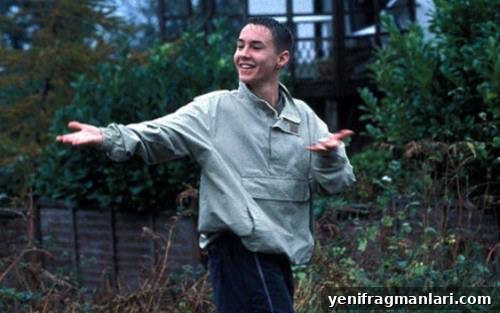

Sweet Sixteen (2002)
Director: Ken Loach
Screenwriter: Paul Laverty
Starring: Martin Compston, Michelle Coulter, Annmarie Fulton, William Ruane
Ken Loach’s Sweet Sixteen remains a striking example of contemporary British social realism. Set in a small Scottish town, the 2002 drama follows Liam, a young man whose determination to build a better life for himself and his incarcerated mother collides with the harsh realities of poverty, limited opportunity, and peer pressure. Loach and his longtime collaborator Paul Laverty shape this story with humane precision, presenting a portrait of working-class life that is both intimate and unflinching.
The film is anchored by a powerful debut from Martin Compston, an untrained actor cast from his high school who brings a raw, urgent presence to the role of Liam. Compston’s naturalism—his gestures, speech, and impulsive choices—helps the character feel lived-in rather than performative. Rather than rely on melodrama, the film trusts small details and silences to reveal Liam’s loyalty, vulnerability, and the emotional burden he carries for his family.
Loach’s direction emphasizes authenticity. He favors unobtrusive camera work and a handheld, documentary-influenced style that keeps the viewer close to the characters without calling attention to the technique. This unobtrusive cinematography, together with restrained blocking and naturalistic performances, allows everyday moments to accumulate into a vivid sense of place. The result is a film that feels less like staged fiction and more like a window into a community where choices are narrow and consequences are immediate.
Paul Laverty’s screenplay gives Liam complexity and moral ambiguity. Laverty asks viewers to look beyond the stereotype of the “delinquent” and to see a young person shaped by love, loyalty, and scarce options. Liam’s devotion to his mother and his longing for a stable future drive many of his decisions, even when those choices steer him toward danger. Laverty balances empathy and realism: the script avoids easy redemption but never strips Liam of humanity.
Stylistically, Sweet Sixteen uses simplicity as a strength. Loach’s preference for nonprofessional actors and pared-down mise-en-scène produces scenes that feel immediate and unvarnished. Small set pieces—an argument in a kitchen, a quiet ride through town, a tense confrontation—are staged with a minimum of artifice so that the characters’ emotions remain the focal point. This approach deepens the film’s social commentary without resorting to didacticism.
At the same time, the film is not without its limitations. Some plot threads move in predictable patterns, and certain sequences repeat similar emotional beats, which can make the narrative feel episodic at times. A few moments might have benefited from further development to strengthen their impact. Nevertheless, these structural shortcomings do not erase the film’s emotional power. Scenes of personal crisis and quiet tenderness land with force precisely because the filmmakers have earned our investment in the characters’ lives.
Sweet Sixteen also stands out for its attention to social detail. It portrays the pressures faced by young people in economically depressed areas—gang influence, limited employment prospects, and a fragile support network—without turning those realities into mere backdrops. The film examines how systemic issues shape individual destinies while keeping the story centered on the human cost of those systems.
For viewers interested in social-issue cinema and contemporary British film, Sweet Sixteen offers a compelling, empathetic entry point. It showcases Ken Loach’s commitment to working-class storytelling and Paul Laverty’s ability to write characters who resist easy categorization. Martin Compston’s debut performance remains a standout element, lending the film emotional credibility and a visceral sense of urgency.
While it may not be the most polished or conventionally structured film in Loach’s catalogue, Sweet Sixteen endures as a moving depiction of youth under pressure and the difficult choices that arise when the future seems closed off. Its strengths—honest performances, naturalistic direction, and compassionate writing—make it well worth seeking out for anyone interested in realist drama and British social cinema.
Score: 19/24