
The Bob’s Burgers Movie (2022)
Director: Loren Bouchard, Bernard Derriman
Screenwriters: Loren Bouchard, Nora Smith
Starring: H. Jon Benjamin, Dan Mintz, Eugene Mirman, Kristen Schaal, John Roberts
Animated television comedies adapted for the big screen face a familiar challenge: how to remain true to the tone and characters fans cherish while delivering the broader scope and visual polish audiences expect from cinema. The balance is delicate. Television thrives on consistency and the comfort of recurring gags and character dynamics, while film usually demands higher stakes, richer visuals, and a more cinematic rhythm. The Bob’s Burgers Movie succeeds by embracing both sides of that equation. It expands the series’ world and presentation in ways that feel organic rather than forced, giving long-time viewers an experience that is recognizably the show—only more vibrant, cinematic, and ambitious.
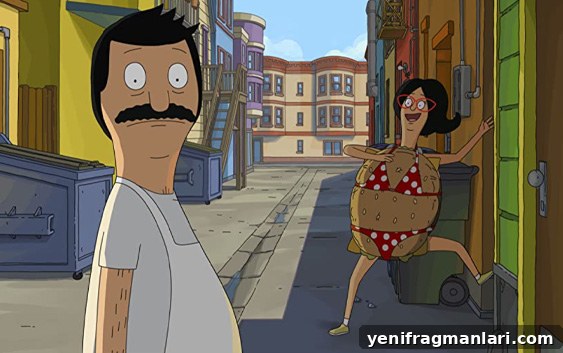
Since its 2011 debut, Bob’s Burgers has built a devoted following across hundreds of episodes. The series centers on the Belcher family—Bob and Linda, who run a struggling burger restaurant, and their three children: Tina, Gene, and Louise. The show’s charm comes from its gentle absurdity, warm family dynamics, and a gallery of eccentric supporting characters, including landlord Mr. Fischoeder, loyal customer Teddy, and the competitive Pesto family across the street. Rather than leaning into crude shock humor, the series often chooses sincerity and oddball tenderness, making it one of the more wholesome animated comedies on television.
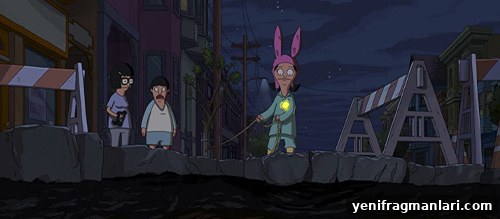
In the film, the Belchers are at the end of the school year and once again facing financial peril when their bank refuses to extend a loan. Disaster seems to compound when a sinkhole opens in front of the restaurant and a skeleton is discovered inside it. Authorities arrest a suspect, but the Belcher kids aren’t convinced and mount their own investigation to clear the name of the accused and ultimately save the family business. Framed as a mystery, the plot allows the movie to introduce genuine suspense and dramatic beats without abandoning the show’s usual wit and warmth. It avoids the common pitfall of inflating the stakes to unrealistic proportions; instead, the storyline remains rooted in the established world and logic of the series.
One of the most noticeable differences from the show is the film’s use of lighting and visual design. The animation benefits from more nuanced cinematography—deeper shadows, purposeful lighting choices, and moments that echo classic noir imagery without veering into parody. These choices make the film feel cinematic, especially in sequences that play with light and atmosphere, such as sun-drenched exteriors and dramatic daydreams. Yet the movie never abandons the familiar look of the series; most scenes preserve the show’s straightforward visual identity, with occasional flourishes that underline its status as a theatrical production.
The movie also handles its ensemble smartly. While the TV series features a wide cast of recurring characters and many celebrity guest voices, the film resists the temptation to overcrowd the story with cameos. Instead, it focuses on a compact group of characters and gives supporting roles meaningful moments to expand their presence. For example, the carnival workers who populate the pier receive a full musical number that illuminates their grievances and humanity—a scene that reflects the show’s empathy for outsiders and its consistent theme of found family. That kind of attentive character work ensures the film feels both populated and purposeful.
Not everything in the movie lands perfectly. Some character arcs mirror familiar television beats rather than breaking new ground. Long-running dynamics—Tina’s crush on Jimmy Jr., Gene’s playful musical impulses, and Louise’s scheming energy—remain largely as they are in the series. For devoted viewers, these continuations are comforting, but the film could have taken greater advantage of its larger canvas to explore more surprising or transformative developments for certain characters. Moments that play like extended versions of typical episodes occasionally reduce the potential for the movie to feel wholly distinct.
Still, what the film does best is deliver an extended, polished dose of the Belchers’ world while respecting the traits that made the original series so appealing. It offers increased production values, a tighter narrative focus, and a few cinematic gambits that elevate the story without betraying the show’s heart. The result is a lively, family-friendly feature that brings the Belchers to the big screen in a way that feels both familiar and fresh.
Score: 20/24