
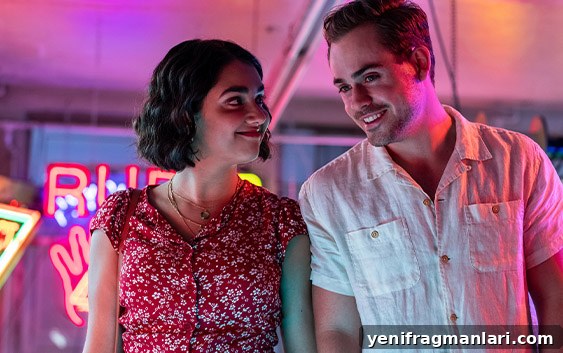

The Broken Hearts Gallery (2020)
Director: Natalie Krinsky
Screenwriter: Natalie Krinsky
Starring: Geraldine Viswanathan, Dacre Montgomery, Uktarsh Ambudkar, Molly Gordon, Phillipa Soo, Suki Waterhouse
The Broken Hearts Gallery is a light, modern rom-com that mines contemporary millennial culture for laughs and warmth while delivering the familiar beats audiences expect from the genre. Natalie Krinsky’s debut feature updates classic romantic-comedy rhythms with quick-witted dialogue, visual gags and a premise that turns an emotionally messy habit into a communal act of healing. For viewers who enjoy films about friendship, identity and the small rituals that mark our romantic lives, this movie offers both charm and a clear point of view.
Geraldine Viswanathan plays Lucy, the spirited center of a tight trio that includes horror-obsessed Amanda (Molly Gordon) and the self-assured Nadine (Phillipa Soo). Lucy collects tokens from every failed relationship—ticket stubs, lost keys, odd trinkets—until her apartment feels like a museum of breakups. She holds onto these mementos the way other people hold onto photographs: as a way to remember, to process and, sometimes, to avoid letting go.
At the start, Lucy seems to be on the upswing. She works for Eva Wolff (Bernadette Peters) at a well-regarded art gallery and is dating a comfortably adult, if ultimately incompatible, partner. But one night, a drunken, jealousy-fueled speech at a work event costs her both job and relationship in a single humiliating evening. The rude awakening sets the plot in motion and sends Lucy toward an unexpected new direction.
Her meet-cute with Dacre Montgomery’s Nick is clumsy and honest: a case of mistaken rideshare identity ends with him taking pity and driving her home. After a later, genuine second encounter, the two form a tentative friendship. Nick, who is trying to launch a boutique hotel, welcomes Lucy’s help—and she, in turn, is given space in his lobby to try out a project. That experiment becomes the film’s beating heart: The Broken Hearts Gallery, a temporary exhibit where New Yorkers display objects from former relationships and share the stories behind them. The idea is simple, funny and moving: by making private memorabilia public, participants confront the past with humor and ritual.
Viswanathan’s performance is the movie’s anchor. She brings contagious energy to every scene, selling physical comedy with expressive faces and well-timed gestures while also grounding Lucy’s vulnerability. Her comic instincts keep the film buoyant, and she easily navigates the script’s shifts between farce and sentiment. Opposite her, Montgomery offers an effective counterbalance—reserved, slightly world-weary and genuinely kind—so that their chemistry feels earned rather than manufactured.
Supporting turns enrich the story without ever dominating it. Molly Gordon’s Amanda provides recurring comic highlights with her macabre enthusiasms and offbeat relationship dynamics. Uktarsh Ambudkar and Phillipa Soo populate Lucy’s orbit with credible friends who help the film feel lived-in. Krinsky’s script gives these characters small, telling beats that build a community around the central idea, and the New York City setting is used as a vibrant backdrop rather than mere scenery.
Where the film falters is in the handling of Lucy’s deeper emotional baggage. A late-film reveal explains why she hoards keepsakes, but the explanation arrives close to the finale and lacks the buildup needed to deliver a genuinely devastating emotional payoff. Expanding that thread earlier in the story would have given the central conceit greater resonance and a stronger through-line, making Lucy’s transformation feel more consequential.
Still, the movie succeeds more often than it stumbles. Its strengths are clear: a smart, contemporary script that pokes affectionate fun at romantic-comedy clichés; a lead performance that blends comedy and heart; and a concept that reframes the ritual of breakups into something communal and healing. Krinsky’s direction keeps things brisk, and the production design—colorful outfits and lively set pieces—underscores the film’s playful tone.
For viewers craving a rom-com that is self-aware without being cynical, The Broken Hearts Gallery is an enjoyable ride. It relights the pleasures of the genre—the awkward, earnest attempts at love, the grand gestures and the small humiliations—in an updated context. Above all, it celebrates the idea that making a fool of yourself sometimes leads to the most honest, life-affirming moments.
19/24