
This article was written exclusively for The Film Magazine by Scott Z. Walkinshaw.
Carnival of Souls (1962)
Director: Herk Harvey
Screenwriter: John Clifford
Starring: Candace Hilligoss, Sidney Berger, Frances Feist, Art Ellison, Herk Harvey
Herk Harvey’s influence on horror cinema is outsized precisely because his feature output is so small. His 1962 film Carnival of Souls remains his only full-length theatrical work, yet it casts a long, eerie shadow over later genre films. Like Charles Laughton’s The Night of the Hunter, Harvey’s movie is a singular achievement that hints at a directorial voice whose full potential we never got to see. Though it was made on a shoestring budget, the film’s atmosphere and visual choices would prove quietly influential over decades of horror and psychological cinema.
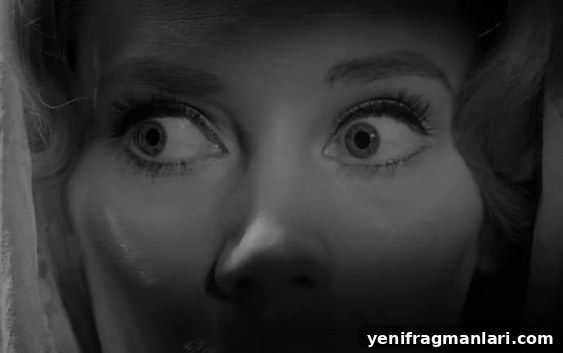
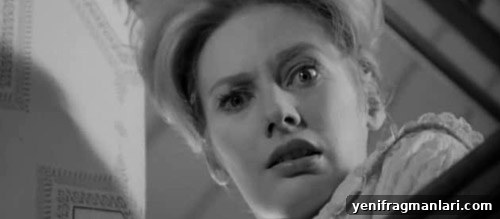
The story opens with a reckless drag race that ends in disaster at a wooden bridge. One car loses control and plunges into the river; when townspeople search the wreckage they cannot find the occupants. A few days later a stunned, mud-covered Mary Henry (Candace Hilligoss) emerges on the riverbank. How she survived is never fully explained, and she quickly tries to leave the incident behind. Mary relocates to Salt Lake City and takes a job as a church organist, attempting to resume an ordinary life. But ordinary life proves elusive: she begins seeing a pale, expressionless man with dark eyes watching her, and she is repeatedly drawn to an abandoned pavilion that seems to haunt her steps.
Mary is an unusually interesting central figure for a 1962 horror film. She is independent, solitary, and quietly self-assured; despite working in a church she shows an ambiguous relationship with organized religion. The film allows for readings of her character that were rare for the period—hints of asexuality or non-heteronormative identity give Mary an interior life that differs from typical female protagonists of the era. Much of the film’s tension comes from how others respond to her: leering advances from a neighbor named John Linden, condescension from male authority figures, and repeated moments in which Mary appears invisible to those around her. These interactions deepen the sense that Mary’s struggle is not only supernatural but social.
Visually and tonally, Carnival of Souls feels dreamlike. Its episodic structure—Mary drifting from one uncanny encounter to the next—anticipates later films that explore isolation and mental disintegration. The silent, gaunt watcher played by Harvey himself functions as either a spectral pursuer or a projection of Mary’s trauma; the film never settles the question, and that deliberate ambiguity is one of its greatest strengths. Is Mary being pursued by a supernatural force bent on reclaiming her, or are these visions the psychological fallout of her near-death experience? Harvey and screenwriter John Clifford leave the answer open, allowing interpretation to be part of the horror.
Although made on a modest budget slightly over $30,000, the film never looks merely cheap. Harvey’s background in industrial filmmaking is evident in his economical compositions and pacing, but the film also bears a European aesthetic influence—notably echoes of Ingmar Bergman—in its use of black and white photography and sparse, haunting mise-en-scène. These formal qualities lift the picture beyond its financial constraints and create a lingering sense of unease that rewards repeated viewings.
The movie’s influence can be detected in later artists and films that explore dream logic, isolation, and intrusive images: there are clear resonances with the work of David Lynch and with films like The Sixth Sense. Even the exaggerated, ghostly fare of Tim Burton’s Beetlejuice seems to owe something to Harvey’s approach to ghostly presence and liminal spaces. Yet despite its clear impact, Carnival of Souls never became as widely recognized as some other landmark horror films of the 1960s.
Part of that limited visibility is explained by practical matters. As an independent picture, it lacked the distribution muscle needed to reach large audiences. Copyright and distribution missteps also contributed to the film entering the public domain, which led to multiple, inconsistent cuts circulating in different places. Those factors kept the film from the kind of mainstream canonical status achieved by bigger titles, but they also helped build a cult reputation: midnight screenings, festival revivals, and rediscoveries by critics and filmmakers have solidified its standing as a key work in the horror canon.
Fans of atmospheric, psychological frights—think episodes of The Twilight Zone—will find much to admire here. By contemporary standards the film may not deliver the same number of jump scares that modern audiences expect, but its power is cumulative: the grainy black and white photography, the off-kilter camera angles, and the empty Saltair pavilion all conspire to produce an abiding sense of dread. The film leaves viewers with the unsettling image of spaces that feel watched and of a protagonist who is increasingly unreachable.
20/24
Written by Scott Z. Walkinshaw
You can support Scott Walkinshaw in the following places:
Twitter – @scottfuzz
Letterboxd – /scottfuzz