
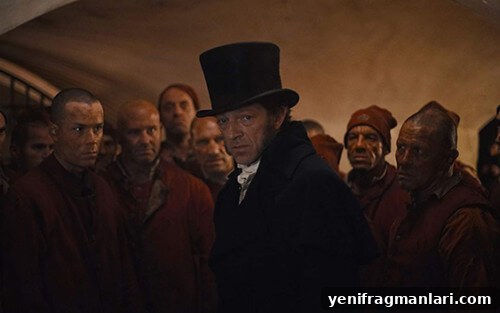
L’Empereur de Paris (2019)
Director: Jean-François Richet
Screenwriters: Éric Besnard, Jean-François Richet
Starring: Olga Kurylenko, Vincent Cassell, Freya Mavor, August Diehl, Denis Ménochet, Fabrice Luchini, Denis Lavant, William Sciortino, Patrick Chesnais
L’Empereur de Paris is a richly staged French historical epic from director Jean-François Richet that reframes the life of François Vidocq as a larger-than-life action saga. Rather than aiming for a strictly academic retelling, the film embraces the rhythms and spectacle of mythic storytelling, drawing comparisons to sweeping action epics while remaining firmly rooted in its Napoleonic-era setting. The result is an engaging, visceral piece of cinema that balances genre thrills with period atmosphere.
The plot follows Vidocq (Vincent Cassel), a taciturn and legendary criminal whose reputation forces him out of anonymity. When Annette (Freya Mavor), a streetwalker, enters his life, Vidocq shifts his priorities: he seeks amnesty and reluctantly collaborates with a government that is simultaneously untrustworthy and opportunistic. In exchange for clemency, he is tasked with dismantling the very underworld that made him infamous. At the same time, Nathanaël (August Diehl), a man to whom Vidocq once owed his life, has become a powerful figure within that criminal sphere. Their inevitable confrontation turns into a battle for control of Paris’s clandestine world — a contest to become the true “emperor” of the city’s shadows.
Vincent Cassel delivers a powerful lead performance, embodying Vidocq’s mix of brutality, vulnerability and stubborn honor. August Diehl matches him with a magnetic presence that elevates their rivalry into the film’s emotional core. Supporting players round out the world effectively; even when given less screen time, they often have clear motivations and moments that contribute meaningfully to the unfolding stakes.
Technically, Richet and his crew create a convincing historic Paris through a combination of detailed production design, layered costumes and careful visual effects that fill geographical and safety gaps without drawing attention to themselves. The film’s score provides a steady, drum-like propulsion that amplifies the mythic tone, particularly after a gritty opening sequence that establishes Vidocq’s world. Action sequences are frequent and generally well-staged, though a few moments lack the kinetic clarity seen elsewhere in the film.
Manuel Dacosse’s cinematography is a standout element: his fluid camera movements and composed framing give the film a sweeping, almost operatic quality. The camera often shifts perspective in ways that underline emotional transitions and shifting power dynamics, lending the picture a visual intelligence that complements the script’s thematic concerns. Production and costume choices further sell the illusion of a lived-in past, providing texture and authenticity to the streets, taverns and official rooms of early 19th-century Paris.
On the script side, there are occasional reminders that the film is designed for broad appeal. Characters sometimes deliver expository lines that feel functional rather than natural, and a few dialogue exchanges lack the spark found in the more physical, visually driven scenes. Nevertheless, the screenplay maintains momentum, and Richet keeps the narrative brisk over its roughly 110-minute runtime. Plot twists and shifting alliances sustain interest, ensuring the film seldom stalls.
Thematically, the film explores corruption, loyalty and reinvention against the backdrop of a nation changing under Napoleon’s rule. Famous landmarks and the suggestion of national transformation frame Vidocq’s personal struggle: his attempt to negotiate freedom within a system that both brands and uses him. That tension — between myth and survival, justice and compromise — gives the story emotional weight beyond the thrills.
Ultimately, L’Empereur de Paris is an effective and entertaining historical action film. It marries strong performances and striking visuals with a confident directorial voice. While not without flaws in dialogue and the occasional action beat, it succeeds as a fast-paced, intelligent blockbuster with period flavor — a film that reimagines a notorious figure as a cinematic antihero and delivers consistent, cinematic pleasure.
18/24