
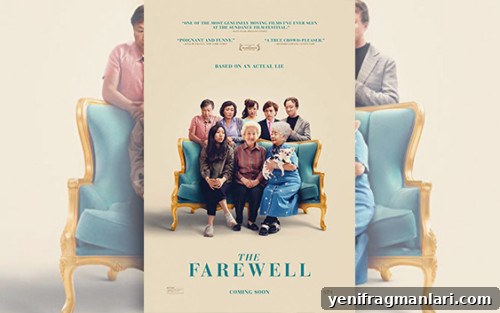
The Farewell (2019)
Director: Lulu Wang
Screenwriter: Lulu Wang
Starring: Awkwafina, Zhao Shuzhen, Diana Lin, Tzi Ma, Lu Hong
Overview
At first glance, The Farewell might seem to follow familiar indie-family dramedy territory: a creatively inclined protagonist, fraught family relationships and a mix of awkward comedy with an unconventional examination of grief. It would be easy to assume the film will tread predictable ground, or that the central moral dilemma—lying to a relative about terminal illness—will be presented in a simple, black-and-white way. Lulu Wang’s writing and direction, however, overturn those expectations. The Farewell becomes a nuanced study of cultural difference, filial love and the messy practicality of mercy.
Plot and Themes
Based on Wang’s own family story, The Farewell follows Billi (Awkwafina), a struggling Chinese-American writer who returns to China after her beloved grandmother, Nai Nai (Zhao Shuzhen), is diagnosed with terminal cancer. Rather than telling Nai Nai about her prognosis, the family opts to conceal the truth and stage a wedding as an excuse for relatives to gather and say goodbye. That choice—presented as a genuine act of protection—drives the film’s emotional core and raises careful questions about truth, duty and cultural values.
The film contrasts Western approaches to illness and openness with the Chinese practice of shielding elders from painful knowledge. In one telling hospital scene, Billi speaks frankly to an English-speaking doctor while Nai Nai listens nearby; the doctor’s quiet acceptance of the family’s decision highlights how social customs shape medical and personal choices. Because The Farewell refuses easy judgment, it invites viewers to consider whether honesty is always kinder, or if certain silences can be an expression of love.
Family, Food and Cultural Tension
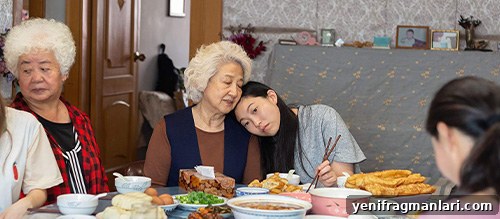
Much of the film’s drama unfolds around family meals and rituals. A tense East-versus-West dinner—complete with a revolving selection of tempting dishes—captures the friction between relatives who have stayed in China and those who emigrated. Conversations quickly turn to identity: what it means to be Chinese after living abroad, and whether distance constitutes a kind of betrayal. Food becomes a battleground and a balm, a natural setting for the film’s first difficult summit and a reminder that cultural differences are often negotiated over shared plates.
The film also contains a poignant grave-side scene in which family members gather to honor Nai Nai’s late husband. The ritual unfolds with pragmatic humor—people eat, drink and even smoke at the shrine to offer comfort to the deceased—underscoring how reverence and everyday life coexist in family traditions.
Symbolism and Visuals
Lulu Wang employs subtle symbols throughout the film, most notably a recurring bird that finds its way indoors and refuses to depart. Appearing in Billi’s New York apartment and again in China, the bird can be read as a reflection of the fragile secret about Nai Nai’s illness: something that wants to be freed yet is kept inside to preserve family harmony. The film’s visual language is restrained and intimate, allowing small gestures and looks to carry emotional weight.
Performances and Score
Performances are uniformly strong. Awkwafina delivers a notably subdued, mature portrait of Billi that contrasts with her more overtly comedic roles elsewhere. Zhao Shuzhen is the film’s beating heart as Nai Nai, and Diana Lin gives a layered performance as Billi’s conflicted mother. Supporting actors, including Tzi Ma and Lu Hong, add depth and warmth to the extended family dynamic.
Alex Weston’s score enhances the film’s emotional resonance, blending classical elements, traditional Chinese instrumentation and operatic vocal textures. Lulu Wang’s piano contributions and Mykal Kilgore’s ethereal vocals create an atmospheric backdrop that lifts the story without overwhelming its quiet honesty.
Conclusion
The Farewell is a delicately crafted film that resists easy moralizing. It is tender, bittersweet and frequently funny, balancing the shadow of deception with moments of genuine joy—most notably at the film’s wedding sequence, where imperfect speeches and raucous games reveal a family’s imperfect love. With compassion and intelligence, Lulu Wang has created a special film that captures the complexities of family, culture and farewell.
Score: 23/24