
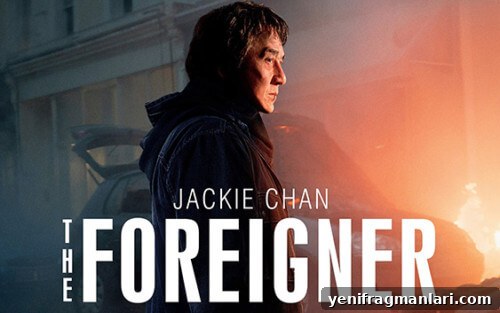

The Foreigner (2017)
Director: Martin Campbell
Screenwriter: David Marconi
Starring: Jackie Chan, Pierce Brosnan
Adapted from Stephen Leather’s novel The Chinaman and directed by Martin Campbell—best known for revitalizing the James Bond franchise with Casino Royale—The Foreigner (2017) is a revenge-driven thriller that balances brutal action with a political backdrop. The film navigates the fallout of IRA-related violence and the complicated dynamics between the British government and Northern Ireland, threading a personal story of loss and retribution through larger questions of justice and responsibility.
At its core, The Foreigner is a character piece powered by two contrasting lead performances. Jackie Chan portrays a grieving, resolute father whose personal tragedy fuels his pursuit of those responsible. This role asks Chan to abandon the comic timing and acrobatic showmanship that defined much of his career in favor of a darker, more restrained performance. Pierce Brosnan offers a controlled counterpoint as a high-ranking government official caught between political expediency and moral pressure. Their on-screen confrontation becomes the film’s emotional and dramatic center.
Visually, the film matches expectations for a modestly budgeted action picture, reportedly around $35 million. Martin Campbell favors functional, clear camerawork over flamboyant visual flourishes, allowing the story and performances to remain front and center. Production design and editing serve the narrative efficiently: action scenes are tightly constructed, and set pieces emphasize tension and consequence rather than spectacle for its own sake. Several sequences deliberately echo the raw, survivalist feel of older revenge films, providing a gritty realism that complements the film’s somber tone.
One of the movie’s strengths is how it shapes action around Chan’s strengths while acknowledging his evolving screen persona. As Chan has matured, his physicality and stunt-heavy presence have naturally shifted; The Foreigner uses this to its advantage by presenting violence as brief, decisive bursts rather than prolonged displays. These moments act as narrative peaks—tools to heighten emotion and underscore the protagonist’s desperation—rather than merely showcasing choreography. The result is an intensity that recalls the moral urgency of films like First Blood and the close-quarters urgency of contemporary espionage thrillers, applied in a way that feels grounded in this story’s stakes.
Where the film stumbles is its sprawling political subtext and supporting cast. The screenplay introduces multiple factions, political operatives, and personal histories that sometimes diffuse the drama’s focus. A number of side characters receive limited development, which can make parts of the plot feel congested and less emotionally resonant than they ought to be. The result is an occasionally uneven pace: moments of crisp, compelling intensity punctuated by stretches that lean on exposition rather than character.
Despite these flaws, The Foreigner succeeds most often when it narrows its attention to the central moral confrontation between Chan and Brosnan. Both actors bring credibility and weight to their roles, creating a clash that fuels the film’s dramatic momentum. Campbell’s direction ensures these scenes land with clarity and force, using restraint to amplify impact rather than drown it in excess. The movie’s willingness to inhabit a darker, more world-weary version of Jackie Chan is one of its more interesting choices, delivering a mature, layered performance that defies audience expectations.
In terms of themes, the film asks practical questions about accountability, the cost of vengeance, and the compromises made in the name of political stability. It does not resolve these issues neatly, nor does it pretend to offer a comprehensive examination; instead, it presents them as moral complications that shape the characters’ decisions. Viewers looking for a tightly plotted political thriller with exhaustive explanations may find it wanting, while those who prefer character-driven action with ethical undertones are likely to appreciate what the film attempts.
Overall, The Foreigner is not without imperfections: an overpopulated supporting cast and an occasionally cluttered narrative prevent it from fully realizing its ambitions. Yet it remains an effective, often compelling thriller thanks to strong lead performances, directorial focus, and a willingness to show a grittier side of its star. For audiences interested in a serious, character-centered revenge film that blends action with political tension, The Foreigner offers a satisfying, if imperfect, experience.
12/24