
This article was originally published to SSP Thinks Film by Sam Sewell-Peterson.
The Host (2006)
Director: Bong Joon-ho
Screenwriters: Bong Joon-ho, Ha Won-jun, Baek Chul-hyun
Starring: Song Kang-ho, Byun Hee-bong, Park Hae-il, Bae Doona, Ko Ah-sung
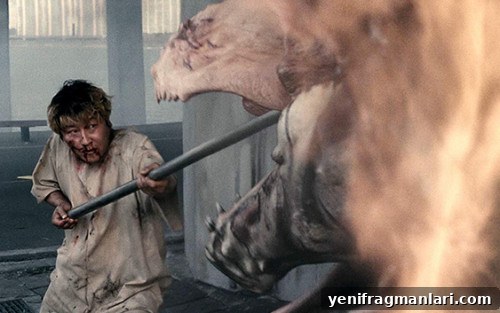
Bong Joon-ho’s The Host (2006) stands out as a richly layered Korean monster movie that blends horror, comedy, and family drama with sharp political undercurrents. On the surface it is a creature feature: a mutant river monster emerges from the Han River and drags away the youngest member of a chaotic family. But the film becomes far more than a conventional genre picture as Bong uses the monster to expose social failings, institutional incompetence, and foreign interference, while never letting go of heartfelt human emotion.
When a monster emerges from the Han river and takes their youngest member, the Park family must stop squabbling long enough to find it and bring their dysfunctional unit together again. But the Korean government and some shady American scientists are up to something and lock down Seoul to prevent unwanted snooping…
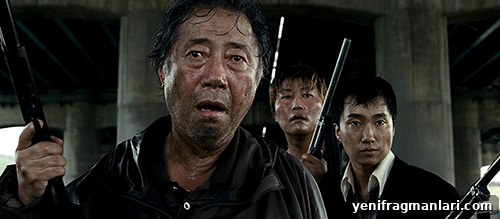
At its core The Host is about the Park family: messy, loud, and oddly affectionate. Their search for Hyun-seo (Ko Ah-sung), the abducted child, is the emotional engine of the film. Song Kang-ho plays Gang-doo, a likable, perpetually sleeping oddball who becomes both comic relief and an unexpectedly sympathetic hero. He’s surrounded by an ensemble that includes Byun Hee-bong, Park Hae-il and Bae Doona, each of whom brings nuance and humanity to roles that might otherwise have been stock characters. The small domestic quarrels, petty slights and fierce loyalty of the Parks make their plight genuinely affecting, and it’s this focus on character that gives the film its lasting power.
Bong balances tones with extraordinary skill. The Host toggles between black comedy and heartbreak with a natural rhythm: scenes that should be somber are frequently undercut by brutally funny family interactions, while moments of levity are never allowed to erase the film’s emotional stakes. A notable example is the family’s grief scene after the monster attack. Rather than staging a purely solemn vigil, Bong allows the Parks’ brittle humour and mutual blame to surface, creating one of the film’s most memorable and darkly comic sequences. It’s a testament to Bong’s gift for finding laughter in unexpected places without diminishing the pain beneath.
Beyond the family dynamics, The Host is unafraid to make a pointed critique of institutions. Government agencies respond with bureaucratic cruelty and secrecy, and the film hints at questionable foreign involvement in attempts to control the crisis. The monster functions as an externalized threat but also as a symbol of systemic failure and the consequences of mismanagement. This political dimension gives the movie bite and relevance: the horror is as much social as it is supernatural.
Technically, the film delivers effective set pieces and credible creature effects that still hold up today, especially considering the movie’s modest budget. Bong consistently prioritizes characters’ emotional journeys over spectacle, so action sequences feel organic to the story rather than hollow displays. The pacing keeps the audience invested in both the mystery of the monster and the human story at the center.
Performances elevate the material throughout. Song Kang-ho’s blend of comic timing and emotional restraint anchors the film, while Ko Ah-sung’s portrayal of the missing child in flashbacks gives the search genuine poignancy. Supporting players like Bae Doona and Park Hae-il flesh out the family with distinct personalities, turning what could have been a single-note ensemble into a fully realized clan whose conflicts and affection feel lived-in.
Ultimately, The Host is a demonstration of Bong Joon-ho’s aptitude for mixing genres and for mining popular formats for deeper meaning. It’s funny and terrifying, intimate and broad, a monster movie that never forgets the human beings at its heart. For viewers coming to Bong’s work for the first time, The Host makes a persuasive case for his status as one of contemporary cinema’s most vital storytellers.
22/24