

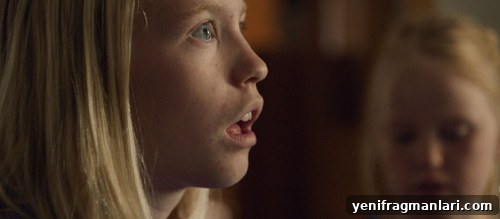
The Innocents (2022)
Director: Eskil Vogt
Screenwriter: Eskil Vogt
Starring: Rakel Lenora Fløttum, Alva Brynsmo Ramstad, Sam Ashraf, Mina Yasmin Bremseth Asheim, Ellen Dorrit Petersen, Morten Svartveit
Amid the current flood of Stephen King adaptations, Eskil Vogt’s The Innocents stands apart as a quiet, art-house thriller that blends childhood wonder and dread. It evokes familiar Nordic atmospherics—towering apartment blocks, dense woods, and long, contemplative shots—while exploring the darker side of youthful discovery. The film follows four children—Ida, Anna, Aisha, and Ben—as they uncover supernatural abilities and face the moral and emotional consequences that follow.
From the opening moments Vogt signals an unhurried approach: this is not a movie of cheap scares or relentless jump edits. Instead, it invests time in character. We watch the quartet test their powers, play in the forest, and learn the contours of newfound influence over others. This measured introduction is crucial; because the film asks us to live inside these kids’ experiences, it must first make them real and sympathetic. Only then can the darker beats land with force.
When the horror arrives, it is effective precisely because it sits against a backdrop of everyday life. Many violent moments are quick, sudden snaps rather than prolonged sequences, but the direction and editing cultivate an ever-present tension. Vogt often employs extended zooms and lingering framings that recall European horror filmmaking from the late 1960s and early 1970s, allowing dread to creep into the frame before a brutal conclusion. That restrained buildup—rarely overstated—gives each shock more impact.
The film’s strongest asset is its final confrontation. Rather than staging a showy climax full of contrived effects, the movie opts for a quiet, emotionally charged standoff. A simple, daylight scene across a lake becomes a battlefield of wills. The setting is ordinary and public, but isolation is complete: only other children nearby seem to grasp what unfolds. This denial of adult comprehension is a recurring theme—the notion that adults observe but rarely understand the private struggles of growing up. The finale succeeds because it is rooted entirely in the characters’ journeys and the subtle transformations we have witnessed in them.

Visually, The Innocents plays with dualities: the rigid geometry of apartment blocks set against the organic darkness of the forest, the ordered structures of adult life versus the messy, volatile interiority of children. Vogt emphasizes these contrasts with composition and long takes, letting background elements—high-rise facades, tall trees, the edge of a lake—act as silent counters to the characters’ inner turmoil. Even small choices, such as the unconventional direction of the closing credits, underline the film’s intent to invert expectations and unsettle the viewer subtly.
At its core the film is a coming-of-age tale masquerading as supernatural horror. It asks a deceptively simple question: what happens when the emotional turmoil of adolescence becomes literalized as power? The answer here is complicated and often uncomfortable. As bonds shift and friendships fray, the stakes escalate in ways the children cannot fully predict or control. Vogt resists sensationalism, favoring a psychological approach that exposes how fear, jealousy, and innocence can mutate into something dangerous when given unchecked agency.
The performances are uniformly strong, particularly from the young leads who carry the weight of both wonder and menace with authenticity. Their chemistry creates believable dynamics, and their moments of quiet interaction—shared glances, whispered plans, or tense silences—are more chilling than many explicit set pieces. Supporting performances ground the film in a recognizable reality, which only heightens the dissonance when the supernatural elements pierce the everyday.
Sound design and score are used sparingly and deliberately. Vogt avoids bombastic orchestration; instead, ambient textures and natural sounds build the film’s atmosphere. This restraint keeps the viewer attentive to small auditory cues—footsteps in the dark, a rustling tree, the abrupt hush before a shocking event—enhancing the film’s creeping unease.
Ultimately, The Innocents (2022) is a quiet, measured exploration of youth, power, and the perilous moment when private pains spill into public consequence. It refuses to simplify its themes or indulge in facile answers, preferring to leave certain moral questions unresolved. For viewers who appreciate slow-burn storytelling, intimate character work, and horror that emerges from human relationships rather than spectacle, Vogt’s film is a compelling and unsettling watch.
Score: 20/24