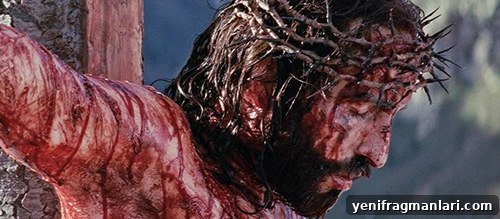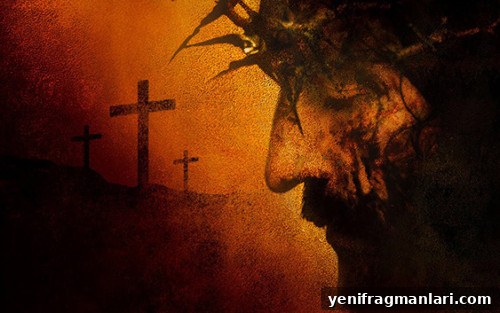
“He was wounded for our transgressions, crushed for our iniquities, through His wounds we are healed”
-Isiah 53; 700 BC.

Mel Gibson opened The Passion of the Christ with Isaiah’s prophecy of the Suffering Servant, signalling a deliberate intent: to depict Jesus’ final hours with an unflinching realism that would cut against the sanitized portrayals common in film. The result was one of the most divisive and talked-about religious films of the modern era. Its graphic violence earned it an 18-rating and drew intense criticism and fascination in equal measure. I remember the hush of anticipation and the rumours—about the lead actor Jim Caviezel enduring severe hardship on set—surrounding its release. Stories followed of viewers and even cast members having intense spiritual experiences. I went to see it at eleven as part of a parish outing; it was the only adult-rated film my parents ever let me watch, and the experience stayed with me.
Years later, when Gibson announced a sequel titled The Resurrection of the Christ, I felt uneasy. I admire many filmic treatments of biblical stories, such as The Prince of Egypt and The Miracle Maker, which I’ve praised and found spiritually fruitful. Re-watching The Passion now, however, revealed two major problems: shortcomings in its craft and troubling consequences in how it shapes viewers’ responses and cultural perceptions.
Author’s note: I recognise Gibson likely intended to discomfort audiences, but this review examines where that intention succeeds and where it fails.
Gibson’s aim was clear: to reconstruct Jesus’ last day with historical textures—the Aramaic and Latin spoken at the time, and the brutal methods the Roman Empire was known for. But to what end? Was the film meant to revive faith among Christians and Catholics, or to introduce the story to new audiences and draw them to belief? I’ll return to those questions, but first I want to consider whether the film’s execution deepens or undermines faith.
As a Catholic, the Passion narrative is central: Christ’s sacrifice embodies God’s love, the extent to which God enters human suffering, and the cost borne to reconcile humanity. Seeing that suffering dramatized can be profoundly moving—films like The Miracle Maker or Franco Zeffirelli’s Jesus of Nazareth have strengthened my faith by making Jesus’ humanity and compassion tangible. Yet despite Gibson’s attempt at authenticity, The Passion of the Christ did not deepen my faith on re-watch.
On repeated viewings I found the film often difficult to engage with. Moments of genuine sorrow and shock exist, but they are sparse amid long stretches that felt emotionally distant. Much of this stems from choices in writing and direction—chiefly an emphasis on extreme, prolonged violence. When I first saw the film as a child, the brutality rattled me and prompted reflection on Christ’s suffering. Over time, exposure to various cinematic violences desensitised me, and I became less affected by spectacle alone. Violence in cinema can be powerful when it serves character and narrative; when it becomes spectacle without deeper payoff, it isolates rather than draws in.
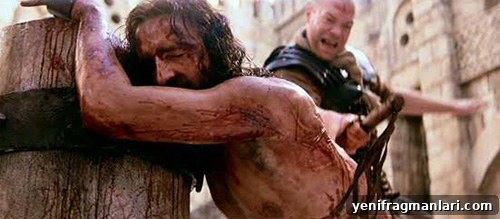
The sheer volume of brutality often undermined the actors’ ability to register nuance. Jim Caviezel’s commitment—performing in archaic languages and enduring harsh conditions—is evident, but heavy makeup and staging frequently muffled emotional expression. The choice to use Aramaic and Latin contributes to historical atmosphere, yet it also creates an added layer of distance that prevents some viewers from fully connecting. Stylistically, the film borrows familiar slow-motion and dramatic techniques used in contemporary blockbusters, which can make its visual language feel derivative rather than transcendent.
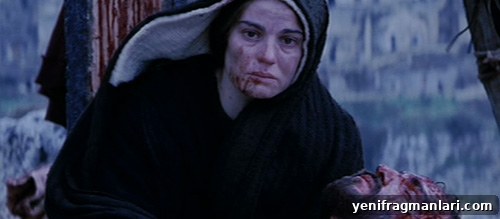
Despite these flaws, the film contains very powerful moments. The crucifixion sequence, where Caviezel’s raw cries and Maia Morgenstern’s portrayal of Mary’s grief converge, is among the film’s most affecting stretches. Those intimate exchanges—small gestures, contradictory glances, silent remorse—are where the movie approaches spiritual impact. Scenes of secondary characters like Barabbas, Veronica, and Simon of Cyrene registering pity or guilt are quietly transformative; they suggest that the power of the Passion lies in small human responses more than in prolonged spectacle.
Part of what makes the Passion narrative so resonant is the audience’s ability to place themselves in it. That empathy is harder to achieve when the film limits itself to just the garden, trial, and execution. By focusing almost exclusively on those final hours and resorting to many flashbacks to fill out the narrative, the film misses an opportunity to show why people followed Jesus and how his life shaped others. Shorter, more complete films, like The Miracle Maker, manage to make Christ’s compassion and charisma palpable within a compact runtime, so the eventual Passion carries real emotional weight. Showing a fuller portrait of Jesus—the miracles, the teaching, the personal encounters—would have made the suffering more meaningful and the Resurrection less of an afterthought.
More than technical problems, though, are the film’s moral and cultural effects. The most memorable images for many viewers are not the moments of compassion but the bloodied faces and jeering soldiers. The Roman tormentors in Gibson’s film often verge on caricature, their exaggerated cruelty sometimes feeling performative and unrealistic. On rewatching with others, I noticed eye-rolling and comments about overacting—responses that yank audiences out of the story rather than drawing them in. This overemphasis on sadism gives the film the tone of a guilt-inducing spectacle rather than a contemplative spiritual work.
That tone becomes especially problematic in the depiction of the Jewish leaders. The Sanhedrin and other authorities are presented in a way that many viewers, Jewish and non-Jewish, have found troubling. When supporting characters are reduced to one-dimensional antagonists, the result can replay dangerous historical tropes. The Passion narrative has a long, painful history of being used to justify anti-Jewish sentiment; filmmakers should be especially careful to avoid reinforcing that history. Other adaptations, like Jesus of Nazareth, show how care and consultation with diverse religious perspectives can produce a portrayal that is thoughtful and sensitive, giving context to political and social pressures rather than demonising an entire people.
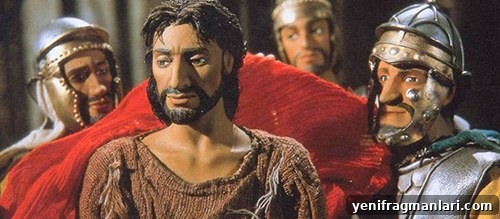
Context matters. The early 2000s saw a cultural moment in which anxiety about identity and security influenced how stories were told and received. Films that reinforced a certain moral or national identity sometimes slid into narrower portrayals of “us” versus “them.” The Passion arrived in that environment and, whether intentionally or not, played into fears of otherness rather than offering a balm of universal compassion. A film rooted in Gospel teaching could have been a call to forgiveness and reconciliation at a time when such messages were urgently needed.
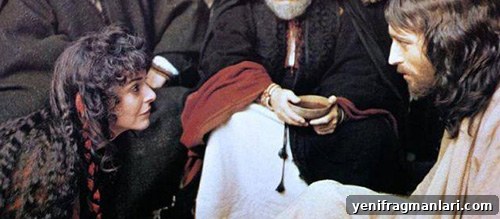
In the end, my critique is both cinematic and ethical. As a film, The Passion of the Christ struggles with pacing, tone, and characterization; it is long, repetitive, and at times clumsy in direction. As a cultural artifact, it raises legitimate concerns about how religious stories are used and interpreted in public life. The movie has had undeniable impact and has affected many viewers deeply, but for me it has offered the least spiritual nourishment of the major cinematic treatments of Jesus’ life.
I would hope that any sequel or future retelling learns from these shortcomings: to balance historical realism with human warmth, to avoid reducing people to stereotypes, and to show more fully the life and ministry that make the Passion meaningful. Films about Jesus have the capacity to inspire compassion, forgiveness, and a stronger sense of shared humanity. That is the kind of message the world needs.
Recommended for you: 5 Great Cinematic Depictions of Jesus Christ (title reference)