The Suicide Squad (2021)
Director: James Gunn
Screenwriter: James Gunn
Starring: Margot Robbie, Idris Elba, John Cena, Joel Kinnaman, Sylvester Stallone, Viola Davis, Jai Courtney, Peter Capaldi
The Suicide Squad (2021) represents a clear tonal relaunch for DC’s cinematic output under the direction of James Gunn. Where the 2016 film struggled with inconsistent edits and an uncertain identity, Gunn’s version embraces a bold blend of dark comedy, graphic violence, and comic-book fidelity that makes it feel like a living, breathing graphic novel. This is a movie that understands how to balance irreverent humor and genuine stakes while giving eccentric characters room to breathe.
The story follows a newly assembled squad of antiheroes and criminals sent on a black-ops mission by the U.S. government to a South American island where a covert research project is developing a powerful extraterrestrial organism. The mission structure allows the film to introduce its ensemble organically, revealing backstories and motivations through action and interaction rather than clumsy exposition. Relationships between characters—often forged or deepened in the crucible of combat—drive much of the movie’s emotional core.
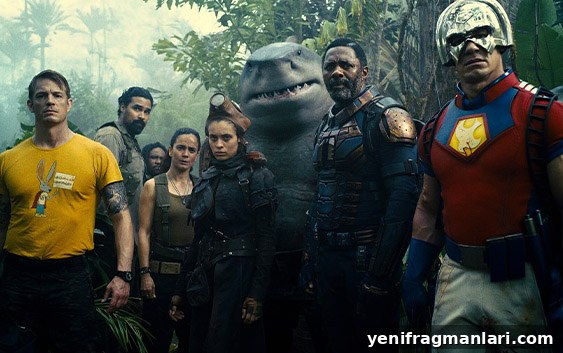
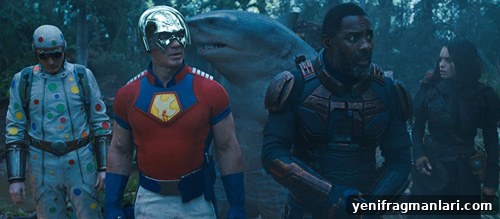
Gunn leans into the comic-book roots of these characters instead of attempting to “realistically” tone them down. John Cena’s Peacemaker is a standout: costumed in an absurd, retro outfit and playing his zealotry completely straight, Cena mines both menace and deadpan comedy. Ratcatcher 2 (Daniela Melchior) and Polka-Dot Man (David Dastmalchian) remain visually true to the source material while receiving thoughtful, sometimes heartbreaking backstories that give their odd designs real pathos. Idris Elba’s Bloodsport benefits from a more grounded redesign that complements Elba’s focused performance—he’s the team’s weary professional, a foil to the film’s more chaotic personalities.
Margot Robbie returns as Harley Quinn and once again proves indispensable to the film’s success. Her subplot keeps the narrative fresh and injects expressive, often surreal sequences that showcase Gunn’s taste for visual flair. Robbie’s Harley carries her own emotional arc that feels episodic in the best sense, like one installments in an ongoing comic series: self-contained, vivid, and hinting at more to come. Harley’s presence is crucial to the movie’s energy; she’s both anchor and wild card, and she helps propel DC’s evolving transmedia presence without relying on the Joker as a crutch.
One of the film’s most inventive achievements is its animation and characterization of nonhuman characters. King Shark—voiced by Sylvester Stallone—manages to be both terrifying and endearing thanks to convincing motion and vocal choices. Ratcatcher 2’s pet rat functions almost as a live-action sidekick, charming in ways that lean into Disney-style warmth without undermining the film’s darker impulses. There are other creature designs that remain faithful to the comics while feeling tactile and expressive; the CGI is solid and serves character rather than spectacle. The only minor disappointment is that Sean Gunn’s Weasel receives limited screen time amid an already crowded roster of memorable oddities.
Visually, The Suicide Squad favors stylized lighting and kinetic camera movement. Gunn and his cinematography team aren’t afraid to play with color and composition to evoke comic-book panels; sequences lean into strong silhouettes and punchy framing that distinguish the film from many MCU entries that prefer flatter, more neutral palettes. The action is abundant and frequently humorous, combining practical stunt work with bold visual effects to create memorable set pieces.
At 2 hours and 12 minutes the film is on the longer side, and some viewers may find the final act loses a touch of momentum. Still, the pacing often works in the movie’s favor because it allows quieter moments for character development among the chaos. Unlike its 2016 predecessor, this installment presents villains who feel like plausible threats yet remain beatable by this unruly squad—an important balance that keeps the stakes engaging without straining believability.
Strategically, the film demonstrates that DC can successfully adopt humor and quips without becoming derivative of other studios. Movies like Aquaman and Shazam previously showed that a lighter tone can help broaden DC’s appeal, and The Suicide Squad continues that trend while preserving a distinct identity rooted in comic-book craziness and R-rated thrills. Whether or not this film anchors a broader, cohesive DC cinematic universe, it stands on its own as an entertaining, character-driven blockbuster.
The movie also includes a brief post-credits tease that hints at future television or streaming development, suggesting Warner Bros. sees The Suicide Squad as a springboard for serialized storytelling as well as standalone features. Even so, spin-offs will need strong creative leadership to match the film’s specific voice and quality.
20/24