
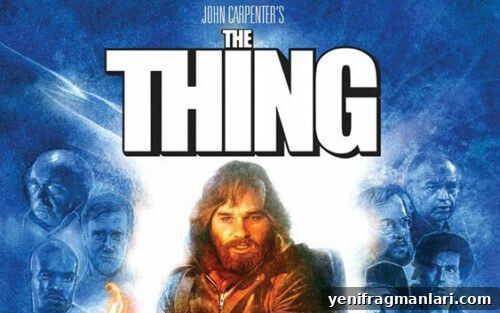
The Thing (1982)
Director: John Carpenter
Screenwriter: Bill Lancaster
Starring: Kurt Russell, Wilford Brimley, Keith David, T.K. Carter, David Clennon
John Carpenter’s The Thing (1982) remains one of the most unsettling and meticulously crafted entries in science fiction horror. Built around a bleak Antarctic setting and an atmosphere of growing paranoia, the film pairs Carpenter’s economical, suspense-driven direction with a lean, memorable performance from Kurt Russell. The result is a tense, slow-burning experience that emphasizes distrust, isolation, and the terror of the unknown.
The premise is simple but devastatingly effective: an American research outpost in Antarctica discovers a strange sled dog after shots are heard from a nearby Norwegian camp. Welcoming the animal into the base quickly proves catastrophic. The dog is not what it seems; it is a shape-shifting lifeform capable of imitating other organisms perfectly. As the creature begins to assimilate members of the team, the survivors must confront not only an external monster but the internal collapse of their own trust and reason.
The screenplay by Bill Lancaster keeps the focus tight, balancing measured character work with mounting dread. Carpenter stages scenes with an economy that heightens suspense—lingering on silent interiors, the endless whiteness outside, and the small, human gestures that become charged with suspicion. The claustrophobic interiors of the research base contrast sharply with the open, hostile landscape, underlining the film’s central theme: that isolation magnifies fear and encourages suspicion to fester.
Unlike the sentimental optimism of some contemporaneous alien movies, The Thing revels in paranoia and practical horror. Carpenter and his team deliver a sustained, visceral assault: practical effects and makeup create physically convincing transformations and grotesque body horror that remain striking decades later. These practical elements are married to a spare, unnerving score and production design that together produce a tactile, lived-in world—one where danger feels immediate and contamination feels personal.
At its core, the film is as much about human behavior as it is about an alien threat. As friendships fray and alliances dissolve, each character becomes a suspect, and every act of kindness is shadowed by suspicion. That moral ambiguity elevates the film above simple monster-movie mechanics; it becomes a study of how fear corrodes community and judgment. The performances sell that breakdown—subtle reactions, strained voices, and moments of brittle humor all reveal layers of character while fueling the mounting tension.
The Thing also plays deliberately with earlier genre traditions. It nods to the paranoia of 1950s science fiction and to the claustrophobic dread of films like Alien, while steering its own course. Where some science fiction leans on cosmic wonder, Carpenter’s film insists on dread and the inescapability of suspicion. The Antarctic setting—vast, white, and indifferent—turns nature itself into an ally of the threat, intensifying the characters’ sense of abandonment.
Technically, the film stands out for its commitment to practical effects and for creating a convincingly hostile environment. The make-up and prosthetic work give the alien a shocking physicality; it is not an abstract menace but a concrete presence that distorts bodies and minds. Cinematography and editing work in tandem to keep the audience off-balance, withholding full revelation until moments when the shock is most effective.
Though the film was originally met with mixed reactions upon release, it has since developed a dedicated following and is often cited as a high point in John Carpenter’s career and a benchmark in science fiction horror. Its influence can be seen in later works that explore contagion, identity, and the breakdown of small communities under stress. For viewers who appreciate films that trust atmosphere, character, and craft to generate unease, The Thing remains a powerful, uncompromising experience.
This is a film that rewards attention: its slow build, sudden shocks, and lingering questions about identity and trust keep the viewer engaged long after the credits roll. If you seek a sharply made, intelligent horror picture that marries psychological tension to inventive visual effects, Carpenter’s The Thing is essential viewing.
20/24