
The Zone of Interest (2023)
Director: Jonathan Glazer
Screenwriter: Jonathan Glazer
Starring: Christian Friedel, Sandra Hüller
Are you sitting comfortably? Good. You should be. This review is being read on a device made with materials that often come at a human and environmental cost. You access the internet through infrastructure that shapes and scars landscapes. You live in a world where convenience frequently hides exploitation: cheap goods from sweatshops, supply chains that ignore human suffering, and comfort that coexists with catastrophe. Jonathan Glazer’s The Zone of Interest, his first feature in a decade, places that uneasy proximity at the centre of its argument. It forces viewers to confront not only historical atrocity but also the moral compromises of everyday life. The film achieves this by focusing on a surprising vantage point: the domestic life that sits just beyond the fence of Auschwitz.
The Holocaust remains one of modern history’s greatest tragedies: the systematic genocide carried out by the Nazi regime that resulted in millions of deaths. Rather than retell the obvious horrors inside the camps, Glazer’s film concentrates on the household of Rudolf Höss, the camp commandant, and his family living nearby. In doing so, it offers a complementary approach to Holocaust cinema: while many films foreground the suffering of victims, The Zone of Interest examines the chilling normalcy of perpetrators and those who shared their lives. The movie refuses to humanize its main figures in any conventional, sympathetic way; instead, it exposes how ordinary routines and domestic comforts can coexist with monstrous crimes.
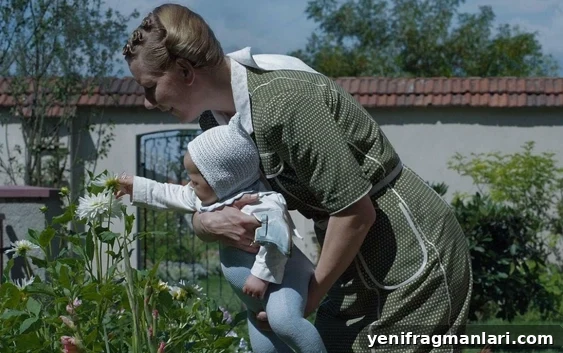
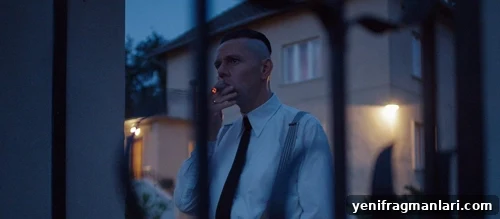
The Höss family’s home is presented in intimate detail. They swim in the river, tend the garden, plan holidays, gossip with neighbours and rely on domestic help. Christian Friedel and Sandra Hüller deliver performances that avoid dramatic flourishes designed to elicit empathy. Instead, their characters speak and act in ways that reveal entrenched prejudice, denial, and a disturbing capacity for moral distance. The film repeatedly denies the audience any easy points of identification: whenever a scene invites emotional investment, the narrative pulls back, reminding us that these people’s lives are complicit in atrocity. That refusal to provide comfort or moral loopholes is one of the film’s strengths; it forces sustained ethical reflection rather than catharsis.
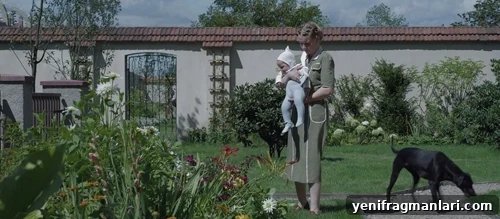
Glazer’s direction and Łukasz Żal’s cinematography form a tightly controlled partnership. The camera is observant, cold and precise, mapping the house and its routines with an almost forensic clarity. Within minutes the viewer understands the layout of the Höss household: the rooms, the corridors, the familiar gestures and habits. That familiarity becomes the film’s device for horror—the ordinary domestic space turns out to conceal unspeakable actions nearby. Żal’s lens works to juxtapose the banal with the brutal, making the film’s visual language an active participant in its moral project.
There is minimal musical score, and silence is used to amplify the viewing experience. Mica Levi’s sparse contributions are unsettling when they appear, but more often silence intensifies attention to behaviour, dialogue and the sounds of everyday life. Glazer also subordinates conventional empathetic camera angles; close-ups and melodramatic cues are largely absent. Editing plays a crucial role in suggesting the camp’s horrors without showing them directly, often cutting between domestic scenes and the distant industrial reality that the family’s comfort depends on. This approach asks the audience to imagine and assemble the full picture, to become co-authors of the ethical judgment the film seeks to provoke.
Stylistically rigorous and morally uncompromising, The Zone of Interest stands out as one of the most important films about the Holocaust in recent years. It does not compete with works that focus on victims’ experiences; instead, it complements them by exploring complicity, denial and the normalization of violence within ordinary life. The film’s power lies in its refusal to sentimentalize or to make easy moral distinctions. It challenges viewers to reflect on how systems of atrocity rely on everyday routines and how quickly societies can slide into acceptance of cruelty when it is framed as ordinary.
Jonathan Glazer’s film is a measured, haunting work of cinema. Where some filmmakers would dramatize or moralize, Glazer observes, withholding narrative comfort and forcing a confrontation with conscience. It is a film that rewards careful attention: each choice in framing, rhythm and performance compounds the overall effect. This is not a film for casual viewing; it demands engagement, reflection and an unwillingness to look away from the implications it raises about history and our present moment.
Score: 24/24
Recommended reading: Oscars 2024 nominations and notable films of the year (search titles by name)