
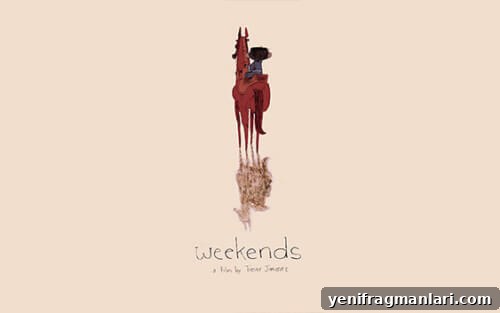
Weekends (2017)
Director: Trevor Jimenez
Screenwriter: Trevor Jimenez
Trevor Jimenez’s Oscar-nominated animated short Weekends, produced by Past Lives Productions, is a tender, visually inventive exploration of childhood memory and family change. Told through the small, intense perspective of a young boy who splits his time between his mother’s home on weekdays and his father’s on weekends, the film translates emotional reality into a series of evocative visual metaphors. Scenes unfold like pages in a storybook, blending dream and memory to capture how a child experiences separation, loyalty, longing and the small moments that shape a young life.
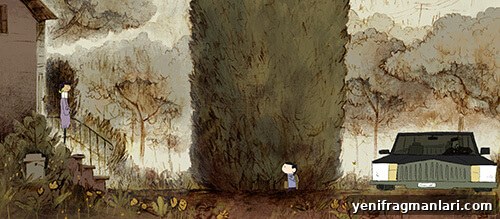
The film’s narrative is deceptively simple: a boy navigates the rhythms of two homes as his parents move forward with their separate lives. Yet the short’s power comes from how it presents those rhythms—through sensorial details, imaginative exaggerations and careful pacing that mirror the way memory smooths and heightens what mattered most. The animation often reads like illustrated recollection: familiar domestic objects and moments assume symbolic shapes, light and shadow dramatize private fears, and transitions feel like the sudden leaps that happen when a single childhood memory triggers another.
Weekends excels at character by focusing less on plot and more on emotional truth. The parents are rendered not as full biographies but as felt presences: loving, flawed, capable of causing both comfort and bewilderment. The boy’s experience anchors every scene, and the film resists judging either parent so much as showing the impact of their choices on a child’s inner world. That restraint gives the short a quiet integrity—its storytelling choices always return to the perspective of the child rather than the parents’ motivations.
At roughly 15 minutes, the short is longer than many Animated Short nominees, but it never overstays its welcome. The film’s rhythm—alternating reflective pauses and sharper, more vivid moments—keeps viewers immersed. A soundtrack that mixes licensed classical pieces with rock elements underscores emotional contrast: tenderness in one scene, dissonance or urgency in another. Music in Weekends functions like memory’s shorthand, surfacing emotions that image alone might only imply.
Visually, Jimenez and his collaborators make bold choices that distinguish the film from studio-driven shorts. The animation style favors handcrafted textures and storybook composition over glossy realism, which reinforces the film’s themes of recollection and imagination. Occasionally, sequences slide into unsettling territory—moments of skin-crawling intensity that remind the audience that childhood wonder and fear are often inseparable. These choices create a layered viewing experience: at once nostalgic and probing, familiar and subtly disorienting.
Compared to some nominees that lean toward broader accessibility, Weekends is more intimate and idiosyncratic. It does not aim to please by cookie-cutter emotional beats; instead, it invites viewers into a particular sensibility—a child’s way of making sense of adult actions. That commitment to a specific viewpoint, along with the film’s imaginative visuals and sound design, makes Weekends a standout in its category and a piece that rewards attentive viewing.
Ultimately, Weekends is a story about the persistence of childhood imagination amid change. It honors the way small, seemingly mundane moments become monumental in memory and shows how loyalty, confusion and yearning coexist in a child’s heart. The film is a reminder that animation can do more than entertain: it can translate interior experience into images that feel both personal and universal, leaving a lasting emotional impression long after the final frame.
20/24