
This piece was written exclusively for The Film Magazine by Mark Carnochan.
Whisky Galore! (1949)
Director: Alexander Mackendrick
Screenwriters: Compton Mackenzie, Angus MacPhail
Starring: Basil Radford, Joan Greenwood, Gordon Jackson, James Robertson Justice
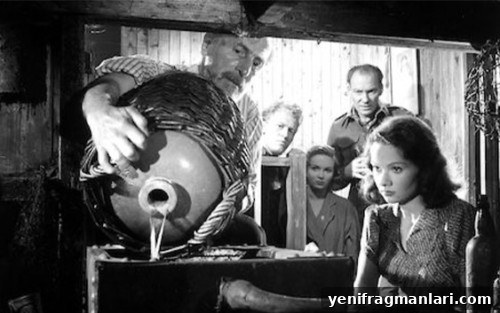
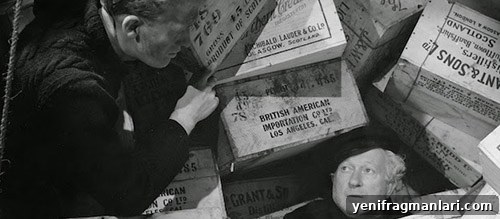
Whisky Galore! (1949) is a compact, character-filled comedy set on the fictional island of Todday in the Outer Hebrides. Directed by Alexander Mackendrick early in his career, the film centers on a wartime crisis of an unusual kind: the islanders’ whisky supply runs out during World War II. The comedic premise is straightforward — a cargo ship carrying 50,000 cases of whisky runs aground off the coast, and the desperate, resourceful islanders scheme to retrieve the precious cargo before the authorities can intervene — yet the film surrounds that plot with a dense web of romantic subplots, eccentric personalities, and small-community rivalries.
From an SEO perspective, Whisky Galore 1949 remains an important title in British and Scottish cinema. Its combination of local color, wartime backdrop, and broadly comic situations makes it a frequent point of reference when discussing postwar British comedies and the early work of Alexander Mackendrick, who would later direct the highly regarded The Ladykillers. The film’s setting — the makeshift island community of Todday — functions almost as a character itself, shaping the plot and supplying much of the humor and sympathy the film relies on.
Mackendrick’s direction balances broad comedy with moments of genuine tension. Scenes where the islanders secretly attempt to salvage the whisky are staged with an edge of suspense that contrasts effectively with the film’s lighter elements. That tonal balancing act hints at the director’s future strengths: an ability to blend laughs with a tighter dramatic focus, and to find humor in human foibles rather than only in slapstick spectacle.
The screenplay, adapted from a story by Compton Mackenzie and shaped by Angus MacPhail, deliberately overpopulates its eightytwo-minute runtime. Alongside the whisky-heist plot are a number of romantic entanglements — notably the proposed marriage of Peggy Macroon (Joan Greenwood) to Sergeant Odd (Bruce Seton) and the courtship of Catriona Macroon (Gabrielle Blunt) and George Campbell (Gordon Jackson) — plus a chorus of island eccentrics who supply comic riffs and local color. That abundance of characters gives the film a lively, communal feel, but it also means some threads receive limited development. The result is an energetic but occasionally crowded narrative where promising subplots are sometimes shortchanged.
Performance-wise, the ensemble cast carries the film. Basil Radford’s Captain Waggett and James Robertson Justice’s presence create reliable comic counterpoints to the younger leads, while Joan Greenwood brings charm to the romantic storyline. Much of the film’s humor derives from the community’s exaggerated reactions to the loss of whisky — presented, deliberately and hilariously, as if it were a calamity more devastating than wartime privations. That inversion is one of the film’s most effective comic strategies, and it helps create memorable, laugh-filled set pieces.
Despite its humor and historic place in Scottish film history, Whisky Galore! shows its age in ways that may limit its appeal to modern viewers. The screenplay’s desire to include many characters and subplots leaves the central whisky caper less developed than it might be, and some cultural references and performance styles read as period pieces rather than timeless comedy. Still, its particular charm — a warm affection for community life, a taste for gentle farce, and an affectionate satirical eye on wartime bureaucracy — gives the film an enduring personality.
As a landmark in Scottish cinema, Whisky Galore! is significant: it helped put regional British filmmaking on the map and provided early evidence of Alexander Mackendrick’s directorial gift. While it may not land as cleanly with contemporary audiences seeking faster pacing or more focused storytelling, the film’s wit, memorable scenes, and ensemble warmth secure its place in the history of British comedy. For viewers interested in postwar British cinema, Scottish film history, or the early work of notable directors, Whisky Galore! remains well worth watching for its humor, setting, and cultural flavor.
12/24
Written by Mark Carnochan
You can support Mark Carnochan in the following places:
Twitter – @MarkJurassic