

Essential Connor Storrie Viewing: Why ‘Heated Rivalry’ Fans Need to Watch ‘Riley’ Immediately
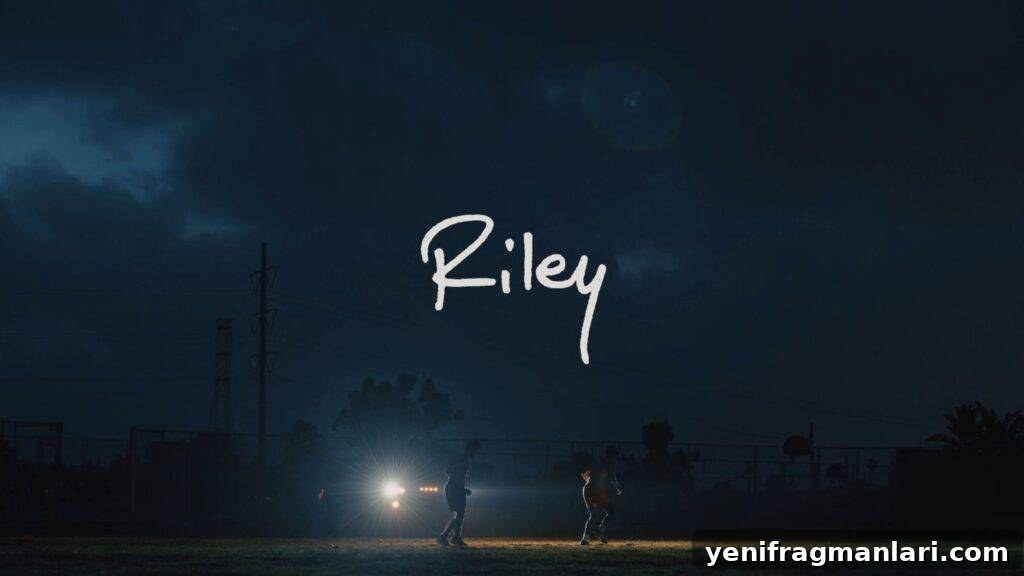
|Connor Storrie RILEY|
Connor Storrie has become a focal point of discussion through his recent work in Heated Rivalry. While his portrayal of Ilya Rozanov is what many viewers are talking about now, his earlier indie work is essential to understanding how he approaches demanding roles. One of the clearest examples is Benjamin Howard’s 2023 drama, Riley, which reveals the foundations of Storrie’s craft and shows the traits that make his current performance so compelling.
Connor Storrie In Riley

Watching Riley back-to-back with Storrie’s newer work highlights how an actor’s earlier roles can forecast later breakthroughs. In Riley, Storrie appears in a supporting role as Liam, yet his presence often reads as lead-caliber. The film captures the kind of concentrated energy and detailed listening that mark an actor ready for more prominent parts. Those qualities were visible during my early coverage of the production and remain evident now.
When I revisited my notes from an interview with director Benjamin Howard in September 2023, one handwritten bullet stood out clearly:
CONNOR STORRIE STANDOUT

That assessment was not hyperbole. Even then, Storrie’s performance suggested a versatility and focus that would serve him well beyond the film’s supporting ensemble. His ability to anchor small moments and make them feel consequential is a throughline from Riley to his current high-profile work.
Ben Howard, Director of Riley, on the “Serendipitous” Casting of Connor Storrie

To understand how Storrie landed the role, I reviewed the transcript of my conversation with Benjamin Howard about the film’s casting. Howard praised his leads, Jake Holley and J.B. Waterman, and described rehearsals and on-set exchanges as creatively open and collaborative. Yet, when discussing Storrie, Howard described a different casting process—one that almost took a different path.
Ben Howard: “As for Connor, he’s a scene-stealer. After watching early cuts, people asked, ‘Who is this guy?’ and said everything was perfect as it was. Connor came on late. We had a casting call and saw a few actors, but none seemed to fit what the role demanded. Connor was one of them, and he was excellent, but I wasn’t entirely sure he was the right fit at first. It was a back-and-forth with my casting director. I was close to committing to another actor, but I wasn’t fully convinced until Connor came in, and then it clicked.”
Howard’s account underscores how casting is often as much discovery as intention. Storrie was not a predetermined choice; he arrived late in the process and changed the dynamics of the role simply by being the right match. That late decision paid off creatively, producing a layered supporting character who resonates more than some leads.
One practical example of that creative adaptability was a change in the character’s academic background. Howard explained that the role originally called for a character fluent in Spanish, but the production adjusted when Storrie demonstrated a different linguistic strength.
Ben Howard: “It was a quick pivot into getting Connor locked in. The role was originally going to be in Spanish class instead of a French class, so the character would have to be fluent in Spanish. So I needed someone who speaks this foreign language. Connor just so happens to speak French fluently, so it was easy. It was perfect. It was serendipitous.”
The decision to rewrite elements of the character to align with Storrie’s real abilities is a good example of collaborative filmmaking. Rather than forcing an actor into an ill-fitting conceit, the production adapted the text to take advantage of what Storrie naturally brought to the role. That choice allowed him to deliver authentic moments and showcased a technical skill—language fluency—that enriches his on-screen identity.
For viewers intrigued by Storrie’s facility with speech and subtle performance beats in Heated Rivalry, Riley serves as a useful and illuminating precursor. The film highlights early indications of his range—how he listens, how he takes small behavioral choices and makes them tell a story. Seeing him in this earlier work clarifies why his later roles feel so fully formed.