
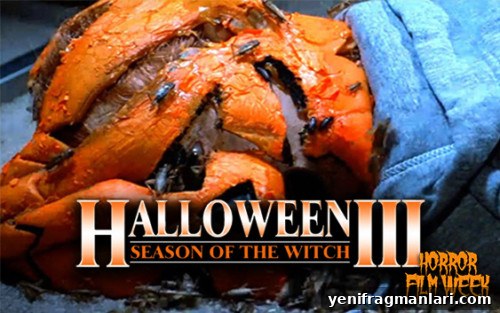
John Carpenter’s Halloween (1978) is often credited with helping to define the modern slasher film. Its success led directly to sequels and imitators, and to the idea of a recurring Halloween-themed franchise. Rather than continuing the Michael Myers storyline indefinitely, Carpenter originally envisioned Halloween as an anthology series: each year a different frightening tale released around the holiday. That plan culminated in the unexpected and divisive 1982 entry, Halloween III: Season of the Witch.
Season of the Witch deliberately abandoned the familiar shape of slasher cinema and the presence of Michael Myers. Instead, it follows Dr. Dan Challis (Tom Atkins) and Ellie Grimbridge (Stacey Nelkin) as they investigate Conal Cochran (Dan O’Herlihy), the eccentric owner of Silver Shamrock Novelties. The plot leans into witchcraft, Celtic folklore, and industrial conspiracy, all building toward a Halloween-centered threat aimed at children—an unsettling premise that felt especially provocative at the time.
Audiences in 1982 arrived with expectations shaped by the earlier entries: Michael Myers, a relentless masked killer and the familiar visual and tonal language of the previous films. Instead, Season of the Witch offered a standalone thriller in the guise of a franchise installment. That mismatch between marketing and content largely explains the immediate backlash. Many moviegoers felt misled and disappointed that the film did not continue Laurie Strode’s story or feature the iconic masked antagonist.
Critically and commercially, the movie underperformed on release, and Carpenter’s anthology plan was abandoned. Over time, however, Halloween III has been reassessed by viewers and critics. Re-watchers often praise its tension, eerie practical effects, and unique storytelling. The film’s use of an infectious, unsettling jingle—based on the nursery rhyme “London Bridge Is Falling Down”—became a memorable, creepy touch that lingers in the viewer’s mind. While the film was initially a box office disappointment, it has since built a strong cult following and is appreciated as an inventive, atmospheric horror piece that stands apart from conventional slashers.
After Season of the Witch failed to meet expectations, the franchise returned to the Michael Myers storyline. Subsequent sequels would bring Myers back in different forms, reboots, and retcons across the decades. Films such as Halloween H20: 20 Years Later revisited familiar characters, while later entries and remakes attempted other modernizations of the series. Through it all, Michael Myers proved resilient: he kept returning to the screen in one incarnation or another.
Evaluating Halloween III today, it’s clear the film is more interesting when viewed on its own terms rather than compared directly to earlier franchise entries. As an experiment in horror anthology cinema, it took risks—swapping a well-known antagonist for atmospheric paranoia and mythic elements. Those risks alienated some fans at the time, but they also produced a distinctive movie that rewards viewers who appreciate oddball, cerebral genre entries rather than straightforward slasher fare.
If you’re interested in Halloween-themed movies that deviate from the expected, Season of the Witch is worth revisiting. Its blend of folklore, corporate malfeasance, and ritualistic horror offers a different kind of chill—one that helped the film achieve cult status and secure its place in discussions of unconventional 1980s horror.
Recommended for you: The ‘Halloween’ Franchise Movies Ranked
Written by James Cullen