
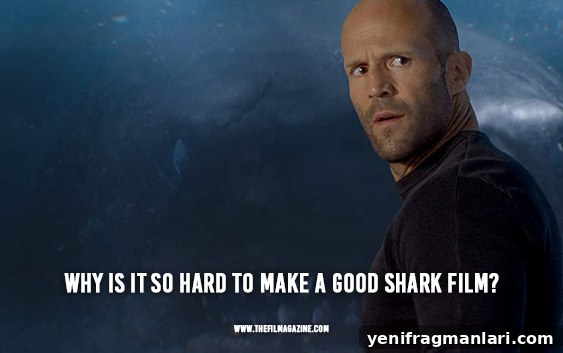
Why is it so difficult to make a great shark movie? We know it can be done—after all, one of the greatest films ever made is a shark movie.
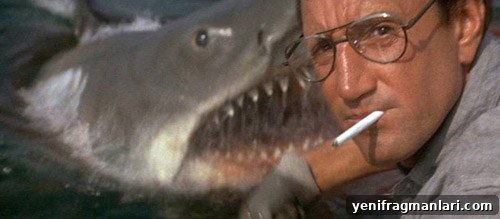
Jaws (1975)
When Jaws celebrated its 45th anniversary, it stood as proof that a shark film can be transcendent. Steven Spielberg’s 1975 classic became a global cultural landmark, creating sustained fear of an animal that, in reality, is mostly placid. The film is a sequence of iconic moments—pier destruction, sudden attacks, the mounting dread leading up to the reveal of the shark—and it remains a masterclass in suspense. Ironically, much of that suspense came from a practical problem: the mechanical shark kept breaking down. Spielberg turned that limitation into an advantage, suggesting the shark’s presence through POV shots, music and the famous dorsal fin cutting through the water rather than showing the beast in full. That restraint made the threat feel larger than the creature itself.
Crucially, the filmmakers simplified the source material. By trimming subplots and focusing the story on three men—a police chief, a marine biologist and a hardened shark hunter—and a hungry Great White, the film made the shark the central, unavoidable obstacle. It turned the animal into something legendary and terrifying, and it balanced fear with human relationships and humour. Recreating that balance has proven remarkably difficult for later filmmakers.
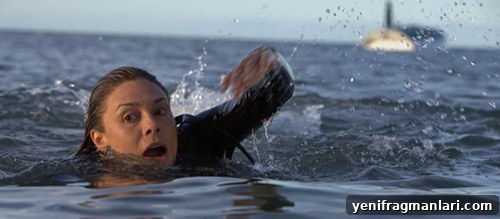
The Reef (2010)
Many shark films fall into two common traps: they are either overloaded with needless subplots or so thin on narrative that watching them becomes a waiting game for the next attack. Examples of the latter—tense but minimal—include The Reef and Open Water, which rely on realism and atmosphere rather than spectacle. These movies feel taut and immediate, but they can suffer when compared directly with the richer, more character-driven structure of Jaws. Conversely, films that clutter the runtime with romances, corporate scheming or elaborate conspiracies dilute the elemental terror of the shark.
Films that try too hard to innovate often end up overstuffed. Some recent entries layer in burglary plots, love affairs, competing personalities, pseudo-science, military subplots and even spy games—none of which inherently elevate the shark threat. Other entries make the opposite mistake by presenting a handful of characters adrift with little to say beyond waiting to be picked off. Sustained suspense requires more than repeated jump scares; it needs characters, stakes and thematic tension.

The Meg (2018)
Effect quality also matters. Bad practical effects or poor CGI can quickly turn terror into laughter. Where Spielberg used a temperamental prop to heighten fear, many later filmmakers simply put subpar effects on screen and expect the audience to believe. At the other extreme, big-budget efforts can deliver convincing visuals but still fail because of bloated plots and underwritten characters. The best shark films often pair convincing threat visuals with a streamlined narrative and memorable, believable characters.
Acting and craft play an outsized role in whether a shark film succeeds. Strong performances and careful editing can make minimal premises compelling; weak performances, continuity errors and cliché-ridden dialogue will undermine almost any creature feature. That’s why some shark films—despite their sensational concepts—feel like excuses to get to the next scream rather than stories that hold your attention.
Underlying most natural-horror movies is a simple theme: humanity’s desire to control and conquer nature. The most effective entries explore that tension, showing both human hubris and a respect for the animal at the center of the story. Films that treat the shark as a simple monster to be vanquished miss the richer dramatic possibilities of man versus nature, or man misunderstood by nature. Conversely, movies that sentimentalize the animal can come off as preachy if they ignore the basic need for suspense and stakes.
Making a great shark film requires many precise elements to align: a focused script, believable characters, smart restraint in what’s shown, credible effects and a central theme that gives the predator narrative weight. Few films manage to bring all those pieces together. Perhaps part of the magic behind the original was simply timing, talent and a leading man who could sell the stakes. For anyone trying to follow in that wake, the lesson is clear: respect the animal, respect the audience, and don’t mistake spectacle for story.
Written by Martha Lane
You can support Martha Lane in the following place:
Twitter – @poor_and_clean