
Mr Smith Goes To Washington (1939)
Director: Frank Capra
Screenwriter: Sidney Buchman
Starring: James Stewart, Jean Arthur, Thomas Mitchell, Edward Arnold, Claude Rains, Harry Carey
In dark or uncertain times, finding a guiding light can feel impossible — and yet hope persists. Sometimes we turn away from it, comforted by our melancholy. Other times, hope arrives unexpectedly: a line of dialogue, a comforting embrace, a stubborn belief in a better tomorrow. For many viewers over the decades, Jefferson Smith — the idealistic protagonist of Frank Capra’s Mr Smith Goes To Washington — has embodied that hope.
The adjective “Capraesque” captures Frank Capra’s trademark optimism, his sympathy for underdogs and his faith in individual courage. But Mr Smith Goes To Washington represents a shift in the director’s work. Released on the eve of global conflict, the film abandons the lighter, more playful tone of films like You Can’t Take It With You! (1938). Capra’s usual warm romanticism gives way to a sharper critique: a film that celebrates ordinary decency while exposing the rot inside political institutions.
This duality — love of American ideals coupled with fierce condemnation of political corruption — would later resurface in Capra’s films such as It’s a Wonderful Life (1946). At first, many in Washington’s press and political circles reacted angrily to the film’s darker tone. Critics branded it unpatriotic or even pro-communist, arguing it undermined confidence in American democracy. Yet overseas, when occupied Europe still screened it, audiences embraced Jefferson Smith as a symbol of resilient hope. Perception depends on perspective: what some saw as a dangerous critique, others saw as an uplifting call to stand up for principle.
The plot is direct and propulsive. After a senator dies unexpectedly, Governor selects Jefferson Smith (James Stewart), a modest leader of the Boy Rangers, to fill the seat. Smith is an earnest, naive idealist who arrives in Washington under the mentorship of Senator Joseph Paine (Claude Rains). He meets Clarissa Saunders (Jean Arthur), a sardonic political secretary, and Diz Moore (Thomas Mitchell), a gossip-driven reporter. Smith’s plan to secure funding for a national Boy Rangers camp soon exposes a web of corruption that ties Paine to political boss Jim Taylor (Edward Arnold). As Smith becomes the target of a coordinated smear campaign, his integrity and hope are put to the ultimate test.
Capra’s film is a celebration of ordinary citizens and an argument that their voices matter. It elevates the small, often overlooked figures and gives them a megaphone; it insists that moral courage can change outcomes. Capra wants the audience to feel inspired rather than cynical, to believe that spirited individuals can alter public life.
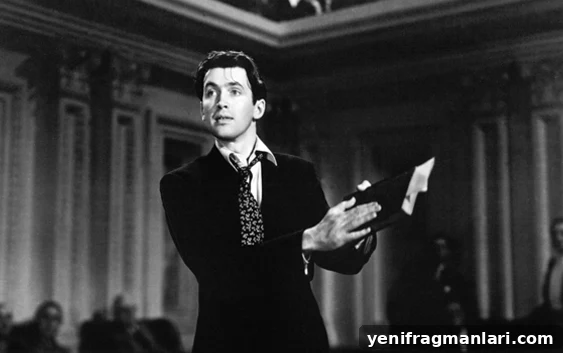
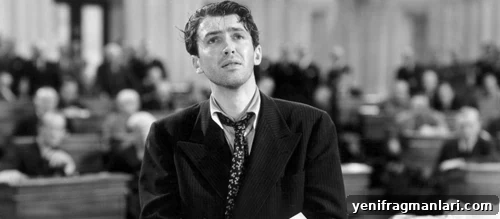
James Stewart’s performance encapsulates everything that made him a star: the quintessential American everyman, a hesitant romantic, and a voice that can swell from shy earnestness to passionate defiance. Stewart charts Jefferson Smith’s transformation from a hesitant newcomer to a relentless force standing up to entrenched interests. His signature softness and vulnerability make the character sympathetic at first, and his climactic filibuster — hoarse, exhausted, and yet unwavering — is a sequence of astonishing emotional power. It’s a performance that can rouse even the most skeptical viewer.
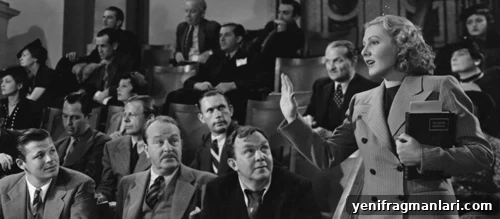
Jean Arthur provides an effective counterbalance to Stewart. As Clarissa Saunders she is sharp, guarded and dryly comic; her wit undercuts Smith’s optimism in all the right ways. Unlike many female characters of the period, Saunders is a strategist who orchestrates parts of Smith’s defense from behind the scenes. Her gradual softening, as Smith’s sincerity breaks through her cynicism, is quietly convincing and emotionally satisfying.
The film’s score reinforces its themes: patriotic anthems like “The Star-Spangled Banner” and solemn, civic motifs underscore the nation’s founding ideals, while simpler string arrangements remind us of Smith’s humble roots. These musical choices help balance grandeur with intimacy, linking Smith’s personal journey to larger national myths without losing sight of his humanity.
Sidney Buchman’s screenplay is carefully crafted, blending rousing rhetoric with candid humor. Characters deliver lines that land like sparks, and moments of tenderness are balanced by fierce indignation. Memorable lines — for example, the insistence that liberty must be held up, not stored away in books — resonate precisely because they come from a character who believes them with every fiber of his being.
Supporting players bring texture and depth. Thomas Mitchell’s Diz Moore mixes comic relief with a blunt depiction of media opportunism; his bemused tolerance of sensationalism becomes another target of Capra’s critique. Claude Rains’ Senator Paine delivers one of the film’s most devastating moments: after a gunshot in the Senate, Paine returns to declare he is unfit to serve. The scene jolts the narrative and underscores Capra’s warning about the human cost of corruption.
Not everything lands perfectly. Capra occasionally sacrifices narrative detail for momentum: the film’s brisk pacing mirrors Smith’s whirlwind journey to Washington, but it sometimes glosses over the deeper development of key antagonists. Edward Arnold’s Jim Taylor has clear affinities with the corrupt villains of other Capra films, and while his performance is effective, the film’s early tempo keeps Taylor from becoming as fully realized as he might have been.
At its core, Mr Smith Goes To Washington functions both as a fairy-tale moral drama and as a sincere call to civic engagement. Jefferson Smith’s reverence for monuments like the Lincoln statue becomes symbolic: Capra asks the audience to stand up and restore justice, to listen when conscience calls. The film’s final plea — Jefferson Smith’s belief that “somebody’ll listen to me” — remains a quiet challenge to every viewer: will we be that somebody?
Score: 23/24
Rating: 5 out of 5.
Written by Bella Madge
You can support Bella in the following places:
Substack: BellaWatchesFilms
Instagram: @bellawatchesfilms
TikTok: @bellawatchesfilms
Picturehouse Fresh Takes: Name Me Lawand Review