
This article was written exclusively for The Film Magazine by Rhian Gillah.
Pinning down the exact origin of the zombie idea is difficult because the concept has shifted and splintered into many sub-genres of horror. Across film history, zombies have been depicted in a range of ways: as humans infected by a virus, as victims of radiation, as the product of alien intervention, as reanimated corpses through scientific hubris, or as the result of voodoo rituals. Each interpretation has shaped what audiences expect from zombie cinema: how zombies behave, how they are created, how they can be stopped, and what they represent.
Voodoo, in particular, gave us the archetype of the slow-moving, mindless corpse that shuffles through early horror films — the figure we now commonly picture when we think of a classic movie zombie.
One early example familiar to modern viewers is I Walked With a Zombie (Tourneur, 1943), which reflects Western interpretations of Haitian voodoo. That tradition draws on figures such as Baron Samedi, the master of the dead, a spirit that a houngan (voodoo priest) might invoke. Baron Samedi also appears in pop culture, notably in the James Bond film Live and Let Die (Hamilton, 1973), portrayed by Geoffrey Holder.
Live and Let Die (1973)
As John Landis notes in Monsters in the Movies, Haitian voodoo traditions include accounts of houngans using potions and burial rituals to convince victims they are dead, after which those victims can be exploited as laborers — a theme that early films like White Zombie (Halperin, 1932) dramatized. In Haitian Creole, the word zombi originally referred to a spirit of the dead; in Western cinema it soon came to represent the living-dead figure exploited for plantation work or other forms of servitude.
That exploitation motif continued through the decades. Hammer’s The Plague of the Zombies (Gilling, 1966) uses witchcraft to create obedient corpses for use as slaves or soldiers. Over time, however, the image of the zombie shifted: it moved away from being a controlled servant toward a symbol of uncontrollable breakdown and social collapse.
The 1960s and 70s ushered in the image of the flesh-eating zombie. No longer merely servants, these creatures became ravenous, decaying versions of humans — often portrayed with dark humor in low-budget grindhouse films. Filmmakers leaned into grotesque effects and shocking imagery, and comedy began to play a role in the genre: Return of the Living Dead (O’Bannon, 1985) blends horror and humor, even giving some zombies the ability to speak, while films like Planet Terror (Rodriguez, 2007) pay affectionate homage to earlier B-movie sensibilities. By the early 2000s, zombies could even run, as in Danny Boyle’s 28 Days Later (2002), raising the intensity of the threat.
28 Days Later (2002)
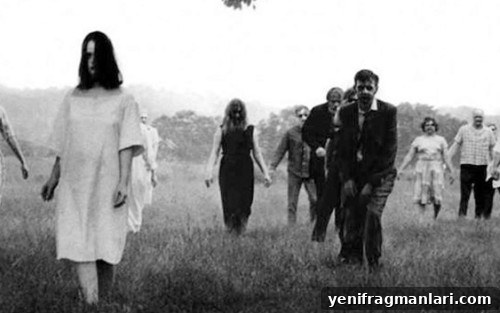
In contemporary cinema, zombies often function as agents of anarchy, representing the collapse of orderly society. The typical structure — an outbreak occurs, chaos pours into the streets, a band of survivors forms, and then members are whittled away — was codified by George A. Romero’s Night of the Living Dead (Romero, 1968). Romero’s work, including Dawn of the Dead (1978), Day of the Dead (1985) and Land of the Dead (2005), established many conventions of modern zombie films: the slow, relentless undead, the moral and social commentary, and the vulnerability of the living to both the monster and other humans.
Subsequent filmmakers took these conventions and reworked them. Directors like Edgar Wright, Ruben Fleischer and Jonathan Levine recognized how familiar the zombie framework had become and injected fresh elements — particularly comedy — to keep the genre vibrant. Shaun of the Dead (Wright, 2004), Zombieland (Fleischer, 2009) and Warm Bodies (Levine, 2013) each blend horror with humor, romance or satire to create intentionally hybrid “zomcoms” that both honor and play with established tropes.
Zombieland (2009)
Zombie films have a global presence: the genre adapts to different cultures while keeping core elements that audiences worldwide immediately recognize. From Spain’s Rec (Balaguero & Plaza, 2007) to New Zealand’s Braindead (aka Dead Alive, Jackson, 1992), from Italian and French takes to Japanese and American variations, zombie cinema crosses borders. Its adaptability helps explain its enduring popularity: the zombie can be a vehicle for social commentary, a source of visceral horror, a canvas for gore and effects, or a character in a dark comedy.
Whether born from voodoo magic, viral outbreaks, scientific experiments, or other fictional causes, zombies continue to evolve on screen. Yet their essentials remain: hordes of decaying, hungry corpses whose existence forces us to confront fear, survival, and what it means to be human. And in many films, that confrontation carries bleak humor — after all, as these stories remind us, what’s on the inside often matters most.
Written by Rhian Gillah
References:
Landis, J. (2011). Monsters in the Movies: 100 Years of Cinematic Nightmares. Dorling Kindersley Limited.
Smith, M. (2018). The Evolution of Zombie Cinema. Available from: https:// moviesdrop.com/evolution-of-zombie-cinema/3785/
You can support Rhian Gillah’s make-up and hair service at the following links:
Facebook – Snake Eyes SFX
Instagram – @snakeeyessfx