
Welcome to the revival of “So Bad It’s Good,” a feature series originally presented in The Film Magazine. This relaunch continues a celebration of films whose failures become their chief entertainment value. As a devoted bad-movie enthusiast, Jacob Davis takes the reins for this edition and will examine what makes certain films entertaining precisely because they are terrible.
For a movie to qualify as “so bad it’s good,” it needs to satisfy two clear criteria: first, it must demonstrably fail in core elements of filmmaking; second, that failure must generate genuine enjoyment for the viewer. These criteria separate mere incompetence from the kind of entertaining disaster that becomes a cult favorite.
“So bad” refers to breakdowns in the basic craft: cinematography, editing, writing, acting, sound design and mise-en-scène. Films released widely usually clear a minimum professional bar, but some fall spectacularly short. Examples often cited by casual viewers—like Attack of the Clones, The Emoji Movie, or The Fanatic—might register as “bad” to many, but true cinephile connoisseurs of dreadful cinema seek a different level of abyss. The most memorable failures often stem from structural problems: missing scenes that wreck pacing, baffling editing choices that rupture narrative logic, or inconsistent visual language that leaves audiences disoriented.
Even mainstream studio products generally obey essential rules that keep viewers oriented in time and space. When those rules are flagrantly broken—when cuts remove crucial connective tissue, characters vanish without explanation, or camera work alternates wildly between styles for no reason—the result is often unintentionally hilarious or fascinating. Poor editing is one recurring hallmark in films that land in the “so bad it’s good” category.
“It’s good”, however, depends entirely on the viewer’s response. The enjoyment must arise from the movie’s failings—either through affectionate mockery or through amazement at the filmmakers’ audacity. Crucially, intent matters. Films like The Toxic Avenger or Thankskilling clearly attempt to evoke B-movie aesthetics; their makers aim for schlock, camp or shock, which frames their deficiencies as deliberate style rather than merely clueless execution. By contrast, a film borne of ignorance, arrogance or naïveté can be harder to enjoy because the failures feel less playful and more troubling.
Viewer enjoyment can be complicated by problematic elements embedded in a film’s approach. A movie that trades on offensive attitudes or regressive social views can still be mocked or analyzed, but those elements may dampen the pleasure of ridiculing its craftsmanship. Taste, context and cultural sensitivity all affect whether a given film’s badness translates into fun.
There is educational value in watching bad movies. Deconstructionist thought reminds us that presence often gets more praise than absence: critics and audiences celebrate the presence of “good” filmmaking in classics like Citizen Kane, 2001: A Space Odyssey and Vertigo. But absence—the conspicuous lack of craft—can be an equally sharp teacher. Viewing films that “blatantly suck” makes it easier to recognize the qualities that distinguish professional competency and aesthetic coherence. Seeing an extreme example of failed storytelling clarifies why editing, sound design, framing and acting are essential.
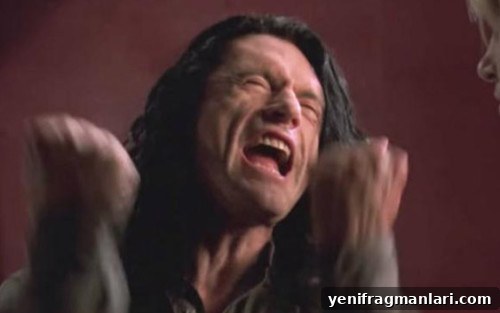
The Room stands as the archetypal “so bad it’s good” film. Its awkward ADR, self-important narrative detonations and confusion about visual storytelling are legible to any attentive viewer. Compare that with a recently maligned wide-release like The Fanatic and you’ll notice technical differences: composition, use of space, framing discipline and even basic sound mixing. Those details are often invisible in competent films but become glaringly important when they’re absent or mishandled.
In this series, each episode of “So Bad It’s Good” will examine the what, how and why behind a film’s failures and the pleasures they produce. I will highlight key scenes, recurring negative motifs, and consider, where appropriate, what changes—if any—could have pushed the film from unwatchable to watchable. The goal is not simply to mock but to understand: to identify how and why a movie breaks down and why, in doing so, it can still provide entertainment.
Edutainment has never been so delightfully awful. Whether you watch for laughs, for cultural insight or for a clearer sense of cinematic craft, this series will guide you through the strange, rewarding world of films that are entertaining because they fail. I hope you enjoy the ride.