

This article introduces three essential films by the legendary Japanese director Akira Kurosawa, intended as an accessible starting point for readers new to his influential body of work.
Born in Tokyo in 1910, Akira Kurosawa is widely regarded as one of cinema’s most important directors. His skills as a filmmaker and screenwriter, and the global influence of his films, have had a profound effect on both Asian and Western cinema. Kurosawa’s work helped introduce Japanese culture, history, and storytelling techniques to international audiences, and his films continue to inspire filmmakers and cinephiles worldwide.
The three films discussed here provide a clear, approachable entry into Kurosawa’s oeuvre. Rather than beginning with Rashomon (1950)—a landmark film famous for its narrative innovation and the so-called “Rashomon effect,” but also a complex work that can be challenging for first-time viewers—this guide focuses on three jidaigeki (period) films that reveal Kurosawa’s recurring themes, visual style, and musical sensibilities. Each movie demonstrates his command of historical settings, character-driven narratives, and epic visual storytelling.
1. Seven Samurai (1954)
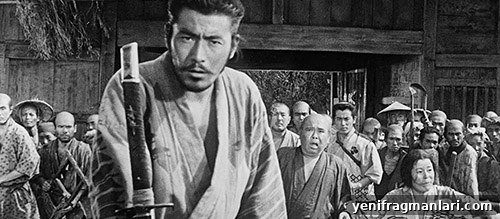
Seven Samurai is arguably Kurosawa’s best-known work and an essential film for understanding his approach to narrative, character, and action. Shot in black and white and set in sixteenth-century feudal Japan, the story follows a farming village terrorized by bandits. To protect their harvest and families, the villagers recruit a group of ronin—masterless samurai—to defend them.
The film balances humor and gravitas, especially in its long recruitment sequence where villagers evaluate potential defenders. Kurosawa assembles a band of seven samurai through scenes that mix testy banter, quiet dignity, and moments of heroism. Much of the film focuses on preparation for the coming attack rather than constant battle; energetic combat is reserved for the finale, which heightens its dramatic impact.
Kurosawa’s casting choices are a major strength. Toshiro Mifune (Kikuchiyo) and Takashi Shimura (Kambei Shimada) deliver performances that helped cement their reputations and became closely associated with Kurosawa’s cinema. Mifune, first noticed by Kurosawa in Drunken Angel (1948), provides both comedic relief and powerful dramatic intensity—his presence alone elevates the film.
Technically, Seven Samurai showcases Kurosawa’s preference for long takes, wipes in editing, and wide or medium-wide framing rather than frequent close-ups. The film’s social themes—class divisions, survival, and honor—are articulated through character relationships and the brutal realities of peasant life in feudal Japan. Composer Fumio Hayasaka’s score blends traditional Japanese instrumentation with Western orchestral elements, using more regional sounds during everyday village life and swelling to a more epic tone in battle sequences. This musical fusion, together with Kurosawa’s visual style, recurs throughout his period films.
2. Throne of Blood (1957)
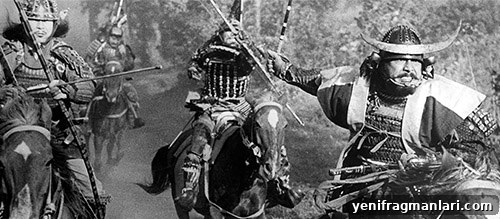
Throne of Blood is a powerful, atmospheric adaptation of Shakespeare’s Macbeth, relocated to medieval Japan. Kurosawa reimagines the play’s supernatural and psychological elements to suit a Japanese historical and cultural setting—for example, a threatening spirit replaces the original witches, and rituals and omens are conveyed through local customs and imagery.
The film’s soundscape, scored by Masaru Satō, mixes Western musical textures with distinctly Japanese sonic motifs. A haunting Japanese chant and recurring fog images create a ring composition: the fog appears before tragic events and returns at the film’s close, reinforcing the sense of doom.
The plot centers on two loyal generals, Washizu and Miki, who encounter a spirit prophesying their futures. When Washizu’s fate begins to materialize, he and his ambitious wife, Asaji, set in motion a chain of actions that lead to tragedy. Toshiro Mifune’s intense performance as Washizu is a highlight, particularly in the film’s descent into madness, while Takashi Shimura offers a grounded turn as the castle advisor.
Kurosawa uses deep-focus photography, wide framing, Dutch angles, and low-angle shots to build tension and psychological unease. The composer’s and director’s recurring use of drums signals the approach of battle or crisis. The film’s moral is bleak: a portrait of human weakness and the corrosive effects of ambition, showing how moral choices can unravel a person and a society.
3. Ran (1985)
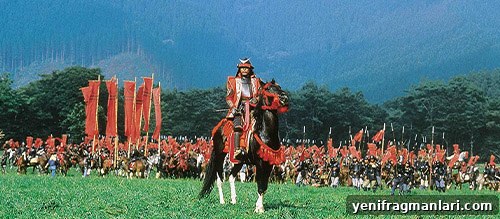
Ran, Kurosawa’s late-career masterpiece, offers a dark and visually stunning meditation on power, chaos, and human folly. Inspired by Shakespeare’s King Lear and set in feudal Japan, the film is notable for its rich color palette, operatic scale, and uncompromising pessimism. Even characters who embody religious devotion or moral conviction find no refuge from the destructive forces unfolding around them.
The story opens with an elaborate hunting sequence that introduces Hidetori, played by Tatsuya Nakadai. Following the hunting scene, Kurosawa often favors static long or full shots, limiting rapid cutting in favor of composed frames that emphasize landscape, costuming, and the choreography of movement. The plot follows Hidetori as he divides his realm among his three sons—Taro, Jiro, and Saburo—only to watch envy and ambition tear his family and kingdom apart. Jiro’s lust for power sets in motion a brutal struggle with tragic consequences.
Composer Toru Takemitsu’s score distinguishes Ran from Kurosawa’s earlier films by foregrounding natural sounds—the wind, burning wood, birdsong—and using silence as an expressive tool. Drums still punctuate conflict, but the film often relies on ambient sound to heighten mood and internal emotion. Nakadai’s performance as Hidetori is commanding and tragic, matching the film’s grand themes.
The battle scenes in Ran are stark and unflinching, with Kurosawa directing the camera to linger on the aftermath of slaughter. This emphasis on human cost and senseless violence reinforces the film’s bleak outlook: a world where order collapses and moral certainties disintegrate.
All three films share Kurosawa’s fascination with feudal Japan, his ability to recreate historical atmosphere through costume, production design, and performance, and his collaboration with gifted composers and actors. They also demonstrate recurring directorial choices—preferential use of wide framing, deliberate pacing, and a blend of Japanese and Western musical influences—that make Kurosawa’s style immediately recognizable. For those seeking a compelling introduction to one of cinema’s greatest filmmakers, Seven Samurai, Throne of Blood, and Ran form a powerful, coherent trilogy of entry points into Akira Kurosawa’s world.