
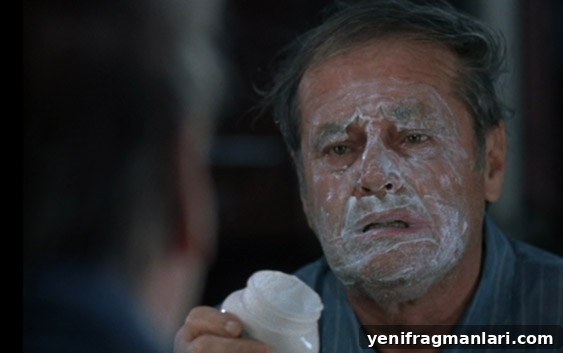

About Schmidt (2002)
Director: Alexander Payne
Screenwriters: Alexander Payne, Jim Taylor
Starring: Jack Nicholson, Kathy Bates, Hope Davis, Dermot Mulroney
About Schmidt is a contemplative comedy-drama from director Alexander Payne, arriving three years after his acclaimed debut Election. The film pairs Payne’s keen observational style with a late-career, understated turn from Jack Nicholson, who anchors the story as Warren Schmidt, a recently retired actuary confronting loneliness, regret and the reassessment of a life that suddenly feels small.
On release the film received widespread critical praise. Leading publications hailed Nicholson’s performance as one of his most controlled and affecting in years, and critics praised Payne and co-writer Jim Taylor for a screenplay that balances dry humor with genuine melancholy. The film was also a commercial success for Payne, grossing over $100 million and entering awards season conversations, with major acting nominations and recognition for its sharp screenplay.
The narrative follows Warren Schmidt after his retirement and the death of his wife. Facing an existential void, Schmidt makes a slow, awkward cross-country journey in his camper-van toward his daughter’s wedding. He uses the trip to revisit places associated with his past and to think aloud—through letters and monologues—to Ndugu, a Tanzanian foster child he supports financially. Those recorded reflections form a crucial part of the film’s voice, delivering much of its bittersweet humor while exposing Schmidt’s bitterness, loneliness and surprising tenderness.
Payne’s film excels at character study. Warren Schmidt fits the director’s recurring interest in difficult, often prickly protagonists who gradually reveal humanity beneath their flaws. Where characters from Payne’s other films—Tracy Flick in Election or Miles in Sideways—occupy very different emotional territory, they all share a careful, empathetic construction that gives even brief scenes surprising emotional weight. About Schmidt demonstrates Payne’s ability to develop richly textured characters within a relatively economical runtime.
Jack Nicholson’s performance is the film’s most notable strength. Departing from some of his more flamboyant or menacing roles from earlier decades, Nicholson delivers a restrained, internally conflicted portrayal. He blends sharp comic timing with moments of quiet pathos, creating a complex protagonist who evokes sympathy even as he behaves selfishly or awkwardly. The chemistry between Nicholson and the supporting cast—especially Hope Davis as his daughter Jeannie and Kathy Bates as Randall’s mother—adds layers of warmth and tension to the story. Both Nicholson and Bates earned major award nominations for their work, a testament to the emotional authenticity they bring to relatively intimate material.
The central relationship between Schmidt and his daughter, and his reaction to her chosen partner, provides the film’s emotional core. Family estrangement, parental confusion and generational differences are recurring themes in Payne’s work, and here they are treated with subtlety and humor. Jeannie’s world feels distant and slightly foreign to Schmidt, and his attempts to insert himself into her life reveal both his yearning for connection and his inability to adapt to change. These interactions are believable and often quietly painful, offering some of the film’s most affecting moments.
Structurally, About Schmidt borrows elements of the road movie: travel as a device for self-discovery, episodic encounters and the physical and psychological transition of the central character. Yet Payne resists broad gestures; the journey is less about grand revelations than small, accumulating recognitions of loss, responsibility and mortality. Humor in the film often arises from Schmidt’s blunt assessments and the absurdities of his social missteps, while the drama comes from the gradual uncovering of his regrets and the modest possibilities for change.
While it may sit between the sharper satire of Election and the later praise for Sideways, About Schmidt stands on its own as a mature, humane work. The screenplay remains sharp and layered, balancing comic and melancholic tones without lapsing into sentimentality. The film’s appeal lies in its honest portrait of aging and the small, stubborn ways people seek meaning late in life.
For viewers drawn to character-driven filmmaking, perceptive dialogue and performances that reveal inner life with restraint, About Schmidt is a rewarding watch. It showcases Alexander Payne’s gift for blending humor and heart, and it offers one of Jack Nicholson’s most memorable late-career performances—a role that is as quietly devastating as it is darkly funny.
20/24