
INT. CARGO LOCK
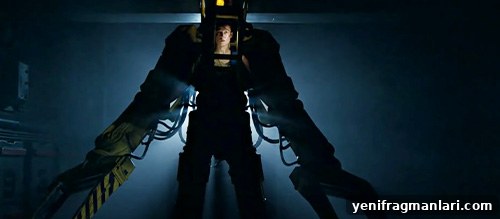
Two vast metal doors grind apart, revealing an almost inhuman silhouette. Ripley emerges, encased in a chunk of hardened steel: the power loader. The camera pushes in on Ripley, a human within a mechanical skeleton.
RIPLEY
Get away from her, you bitch!
That shot is one of my earliest memories of cinema. It is one of those moments that lodged itself in my imagination and never let go.
I remember hearing a story on The Empire Film Podcast about an audience reaction that perfectly captures why films matter. During a screening of Pier Paolo Pasolini’s Salò, or the 120 Days of Sodom, a woman rose from her seat near the end and shouted that Pasolini deserved his violent fate. The anecdote is extreme, but what it reveals is simple: film provokes fierce feeling. Cinema invites strong emotional responses—admiration, anger, laughter, contempt—and every response is shaped by the work on screen.
Passion is essential to loving cinema. Each film reaches into us differently. Some viewers mark a film on Letterboxd and move on; others respond viscerally, as that woman did. Both reactions are part of the same truth: films compel us. They ask us to care.

My own passion started in childhood, around the time my parents separated. Whether movies were already a love before that moment or whether the upheaval made me cling to them is hard to say, but visiting my father on weekends and watching films with him and my brother became a highlight of the week. I was shown big, loud pictures—the kind that press on your nerves and your imagination alike.
It’s possible that Aliens was the first of these films that really hooked me. I also remember being shown Terminator 2: Judgment Day and Blade II. My dad liked sequels, which meant loud action, clear characters, and memorable set pieces. For me, though, it was James Cameron’s Aliens that sparked a deeper urge: I wanted to be part of that world. As a child, I believed actors literally lived inside their characters’ realities. Watching Ripley in the power loader made me imagine stepping into a suit and becoming someone else entirely.
That childhood assumption was romantic and exaggerated, but not entirely wrong. Film is a kind of controlled reality—an art form that creates alternate worlds, convincing us to accept new rules for a while. Movies offer escape from daily worries, a haven when life is bleak, and a place to feel intense emotions safely. That ability to transport and transform is why cinema inspires such devotion.
Those early films were more than entertainment; they were initiations. Comedy duos like Laurel and Hardy taught me timing and humanity, while big franchises and animated studios—Star Wars, Disney, Pixar—showed storytelling’s range, from spectacle to subtlety. Over time, my curiosity expanded. I discovered masterpieces and regrettable misfires alike, and both kinds of films taught me something. They shaped my taste, challenged my assumptions, and helped me consider filmmaking as a real possibility.
My youthful desire to become an actor eventually broadened into an interest in all aspects of the moving image. I learned that telling a story on film requires collaborators—writers, directors, designers, editors—and that a career in the arts is practical, if not always easy. Film had opened a door not only to fantasy worlds but to a way of life.
People often say “manners maketh man,” but for me, an equally true maxim could be “movies maketh man.” The films of my childhood laid down patterns of thought and feeling that still guide me: how to be moved, how to laugh, how to confront fear. They provided models of heroism, failure, tenderness, and fury. They also made clear the power of images to shape memory.
Even now, when I return to those formative titles, I don’t only see nostalgia; I see craft. I see how lighting, editing, performance, and score combine to produce a single, emphatic experience. I am reminded that cinema’s magic depends on both imagination and skill—on a child’s hunger to be transported and on the filmmakers who can make that transport credible.
In the end, films are mirrors and windows. They reflect parts of ourselves and offer glimpses into lives we have not lived. The moment Ripley steps into the power loader remains iconic because it condenses so much cinema can do: it thrills, it empowers, and it lodges itself in memory. That is why I love movies—and why I still believe this art form has the power to change us.