
This article was originally published on SSP Thinks Film by Sam Sewell-Peterson.
Minority Report (2002)
Director: Steven Spielberg
Screenwriters: Scott Frank, Jon Cohen
Starring: Tom Cruise, Colin Farrell, Samantha Morton, Max von Sydow, Steve Harris, Neal McDonough, Kathryn Morris, Lois Smith, Peter Stormare, Tim Blake Nelson
More than just another Tom Cruise action vehicle—though there is plenty of running and jumping—Minority Report is a deceptively complex blockbuster. As one of Steven Spielberg’s often under-appreciated films, and now marking its twentieth anniversary, it’s worth revisiting this inventive adaptation of Philip K. Dick’s work. The film blends high-octane thrills with moral and philosophical questions about free will, justice and technology.
Set in Washington D.C. in the year 2054, the PreCrime initiative has transformed law enforcement. Using visions from three psychic precogs, the police can predict and prevent violent crimes before they happen. Violent crime has been virtually eliminated, and the program is poised for national expansion. The system appears infallible—until Chief John Anderton (Tom Cruise) is identified as the future murderer of a man he has never met. That accusation forces Anderton into flight and investigation, turning the story into both a personal odyssey and a procedural whodunit.
Minority Report had a long development history, delayed by scheduling conflicts and changing hands among directors before Spielberg took it on. He was drawn to the material because it combined character-driven drama with a layered mystery, creating fertile ground for both spectacle and thoughtful storytelling. Screenwriters Scott Frank and Jon Cohen crafted a lean script that avoids heavy-handed exposition; instead the film relies on clear visual design and efficient scenes to establish its future world.
The film’s visual storytelling quickly immerses viewers in its imagined near future. We see Anderton’s routines and how daily life has been altered by technology, while familiar human behaviors remain recognizable. When Colin Farrell’s character Danny Witwer arrives at PreCrime, his briefing sequences serve both to update the character and to plant clues for attentive viewers—details that will later become crucial to understanding the central mystery. As the narrative unfolds, both Witwer and Anderton find themselves manipulated, and the supposedly rigid laws underpinning the system begin to bend and break.
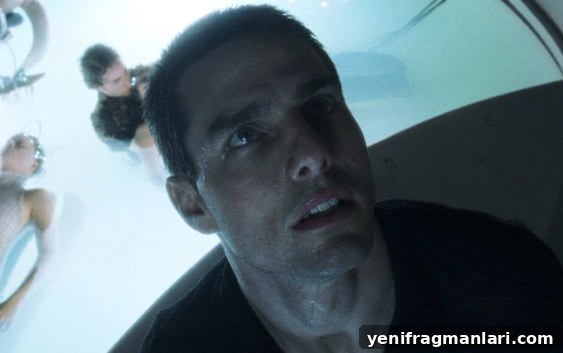
The depiction of the precogs’ visions is especially effective: cold, distant and unsettling. Those sequences are intentionally focused, steering audience attention toward specific details while obscuring others. This selective seeing allows the filmmakers—and the story’s antagonists—to pull the rug out from under characters and viewers multiple times. The result is a series of revelations that feel earned rather than gimmicky.
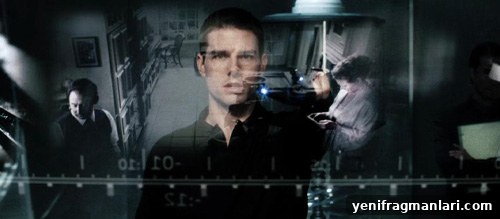
Remarkably, Minority Report anticipated many near-future technologies. Motion-based interfaces, immersive displays, pervasive personalized advertising, and biometric recognition are all presented in ways that now feel eerily prescient. While some of these concepts were already in development when the film was made, its aesthetic and ideas have influenced how people imagine future tech—an influence visible across contemporary cinema and design.
Like Blade Runner, this film expands Philip K. Dick’s original short story into a broader critique of society and its institutions. The movie presents a grotesque mirror of the justice system, asking uncomfortable questions: If you could prevent a murder before it happened, would you incarcerate the person predicted to commit it? The film probes the moral cost of a system that claims prevention as justification, and the tension between preventing harm and preserving individual autonomy.
Spielberg brings a contemplative, even philosophical touch to the material. The film repeatedly returns to the theme of fate versus choice. Small but striking moments—like the terrifying gap in the apparently flawless system—underscore how fragile certainty can be. Anderton’s grief over the disappearance of his son Sean fuels his actions and grounds the high-concept elements in emotional reality. Samantha Morton’s performance as Precog Agatha provides a haunting counterpoint, offering fleeting, ambiguous glimpses of what might have been.
The movie contains moments of pure cinematic bravado, including a shock that ranks among Spielberg’s most effective jump scares. It also shaped the look and tone of later sci-fi films, from stylistic touches to action beats and production design. Iconic props like the sonic gun and the sick-stick, though used sparingly, leave a lasting impression, and the police spider drones contribute an unnerving sense of surveillance and control. A sequence showing a city-wide apartment search captures the world’s intrusiveness with dark humor as ordinary life is interrupted by mechanized authority.
Minor details add texture to the setting: background coughs and streaming colds, a seedy underground of illicit medical services, and small, disturbing touches that push the film into darker territory than typical mainstream sci-fi. Peter Stormare’s portrayal of a backstreet surgeon carries a Polanski-like menace that deepens the film’s gritty, off-kilter atmosphere. Spielberg doesn’t shy away from these darker elements, which enrich the film’s moral complexity.
The film is not without minor flaws. Some sequences, like an attack by animated vines, feel like tonal missteps, and a few plot conveniences—such as how Anderton re-enters secure facilities—ask the viewer to suspend disbelief. Still, these quibbles are small against the film’s strengths: a smart script, bold production design, compelling performances, and a sustained engagement with ethical dilemmas. Minority Report endures as a gripping, thought-provoking mystery that combines blockbuster energy with serious ideas.
Score: 22/24