
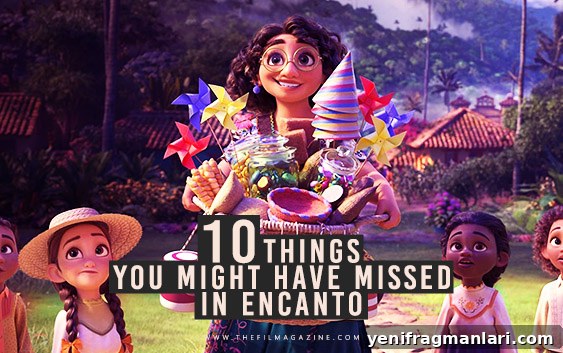
Disney’s 60th animated feature film Encanto, released in November 2021, became an immediate phenomenon. Directed by Jared Bush and Byron Howard and featuring voice performances from Stephanie Beatriz, John Leguizamo and Alan Tudyk, the film follows Mirabel as she struggles to save the miracle that grants her family their magical gifts—gifts she herself does not possess.
With memorable original songs by Lin-Manuel Miranda, Encanto earned multiple Oscar nominations for Best Original Score, Best Original Song and Best Animated Feature in 2022. Disney’s animation teams are known for hiding details and references throughout their films, and Encanto is no exception. From subtle visual motifs to references that shift a scene’s meaning, the film rewards attentive viewers.
This article highlights 10 notable details and hidden touches you may have missed in Encanto. Spoilers ahead.
10. Bruno Appears in the Background During “We Don’t Talk About Bruno”
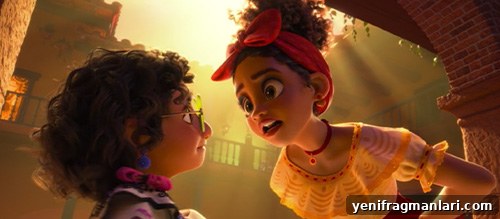
The song “We Don’t Talk About Bruno” became a chart-topping hit, and in the film it’s the main moment that reveals Bruno’s presence. In addition to flashbacks and Camilo’s transformations, Bruno actually appears in the present-day house. During Dolores’ rapid verse, he can be seen walking along the upper level of Casita; Dolores, who can hear him, subtly distracts Mirabel so she won’t notice. At the verse’s end Bruno is briefly visible, bobbing his head behind Dolores—an easy visual detail to miss amid the song’s layered staging.
9. The Family’s Clothing Reflects Their Gifts
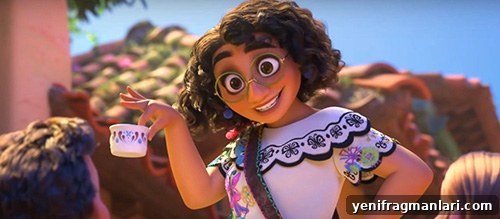
Costume design in Encanto blends authentic Colombian patterns with symbolic motifs tied to each Madrigal’s gift. Abuela’s dress hemlines depict the surrounding mountains, Bruno’s ruana features hourglasses, Pepa’s neckline includes suns, and Julieta’s apron shows a pestle and mortar. Dolores’ dress contains soundwave-like patterns, Camilo’s ruana is patterned with chameleons, Antonio’s waistcoat displays animals, Luisa’s hemline includes stylized dumbbells, and Isabela’s dress is covered in orchids, Colombia’s national flower.
Spouses who married into the family also carry symbolic cues: Felix’s guayabera echoes Pepa’s sun motif, and Agustín’s clothing includes a flower nod to Isabela. Mirabel’s embroidery is especially rich, featuring symbols representing each family member—Abuela’s candle, Camilo’s chameleon, Isabela’s flowers, Antonio’s animals, Luisa’s weight-bearing fist, Dolores’ musical notes, Pepa’s rain cloud and Julieta’s breadbasket—reinforcing her emotional connection to the entire family despite lacking a gift.
8. Mirabel’s Actions Fulfill Her “Waiting on a Miracle” Promises

In “Waiting on a Miracle,” Mirabel sings about grand gestures—moving mountains, making new plants bloom, mending what’s broken and changing her family’s life. Those lines aren’t just wishful thinking; the film later literalizes many of those promises. The mountain splits during a confrontation, Mirabel helps Isabela grow new kinds of plants, she contributes to repairing Casita’s damage, and ultimately she helps heal familial wounds and shifts the family’s understanding of themselves beyond their magical identities.
7. Subtle Frozen References
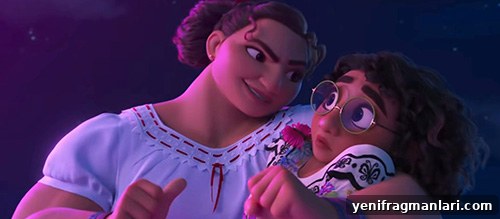
The creative team includes playful nods to previous Disney successes. One notable moment occurs when Bruno reconciles with Pepa in “All of You.” He sings lines that play with weather imagery—“Let it in, let it out, let it rain, let it snow, let it go”—and the piano accompaniment briefly echoes the opening notes of “Let It Go,” a subtle musical wink to Frozen.
6. Butterflies Symbolize Change and Renewal

Butterflies are a recurring motif linked especially to Mirabel and Abuela. They appear on clothing, in Casita’s wallpaper and architecture, and in Bruno’s visions. The Oscar-nominated song “Dos Oruguitas” accompanies Abuela’s backstory and leads into a reconciliation scene where hundreds of yellow butterflies surround Abuela and Mirabel. Butterflies here symbolize transformation and new beginnings—central themes as the family confronts change and learns to move forward.
5. Dolores’ Subtle Mannerisms Highlight Her Gift
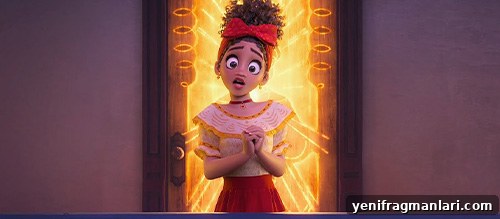
Dolores’ power is superhuman hearing, which the animators convey through small, telling gestures. In Antonio’s gifting scene she claps with just her index fingers rather than full hands, covers her ears during loud fireworks, and later covers them again when the vision is revealed and the house becomes chaotic. Dolores’ voice is typically quiet and hushed; she only raises it in moments of emotional intensity, reinforcing that sound affects her differently than others.
4. Bruno’s Wall Slides Contain Cultural References
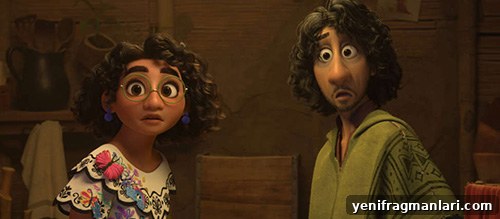
Bruno’s slides—miniature scenes he watches from his hideout—are more than simple gags. One slide references Colombia’s 1990 World Cup match against Germany, depicting football imagery and kits that suggest the memorable match and its late goals. Another telenovela slide includes a tongue-in-cheek explanation from Bruno about a melodramatic amnesia twist, a storytelling device that echoes elements of Latin American literature and traditional soap-opera plots.
3. The Children’s Names Honor Key Contributors
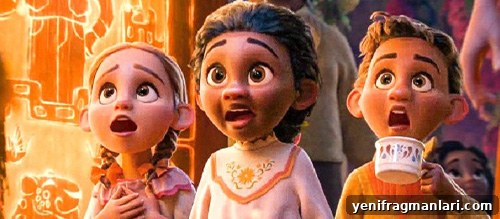
The three children appearing in “The Family Madrigal” sequence are named with purposeful nods. Cecilia is named after co-director Charise Castro Smith’s baby, Alejandra honors a cultural consultant who guided the filmmakers through Colombian customs and locations, and Juancho (originally called Weecho) is named after Jose “Weecho” Velasquez, who designed elements of Mirabel’s dress. The sequence also includes a playful coffee joke tied to Colombia’s global reputation for coffee production.
2. Thematic Trifectas Across the Family
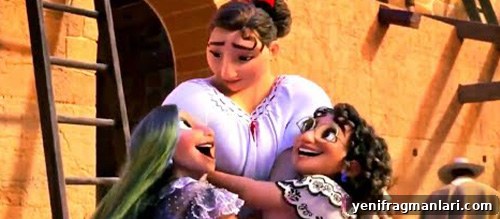
Trios and threes are woven into the film’s structure. Each branch of the family contains three siblings, and fans have linked sibling trios to familiar symbolic “trifectas.” Julieta, Pepa and Bruno map loosely to past, present and future—Julieta mends past hurts, Pepa controls weather in the present, and Bruno experiences visions of the future. Camilo, Dolores and Antonio evoke the see/hear/speak triad: Camilo alters his appearance, Dolores hears all, and Antonio communicates with animals. Finally, Isabela, Mirabel and Luisa reflect beauty, ingenuity and strength—roles Mirabel herself labels when observing her sisters.
1. The Use of Green and Misleading Visual Cues
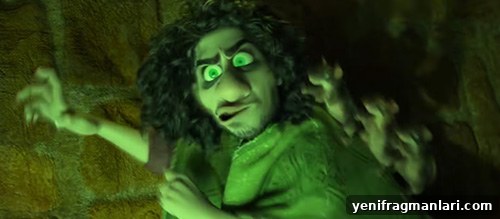
Bruno’s visual palette is dominated by green: his clothing, his visions and the lighting around him. Historically in animation green has often been used to suggest villainy, and Bruno’s color scheme initially leads viewers to suspect he’s the antagonist—an impression amplified by the family’s reluctance to speak his name. The film subverts that expectation by sharing the green motif with Mirabel—her glasses and bedroom wallpaper include green tones—suggesting the color instead links two outsiders who are misunderstood. That visual choice supports one of Encanto’s themes: appearance and assumption don’t determine a person’s true character.
Did you spot other unique details in Encanto? Share your observations in the comments. Follow The Film Magazine on social platforms for more movie insights.