
Seven Samurai (1954)
Director: Akira Kurosawa
Screenwriters: Akira Kurosawa, Shinobu Hashimoto, Hideo Oguni
Starring: Toshiro Mifune, Seiji Miyaguchi, Isao Kimura, Daisuke Katō, Yoshio Inaba, Takashi Shimura, Keiko Tsushima, Kamatari Fujiwara
Often a film is more than its surface — more than its genre label, more than a set of images to be catalogued or critiqued by checklists. Sometimes a movie sneaks up on you: a sliver of feeling escapes from an unnoticed crack and turns the whole experience into something greater than its category. Great cinema speaks to parts of us we didn’t know existed, and it does so quietly and unexpectedly, because we weren’t looking for it.
There is a reason Seven Samurai is widely regarded as one of the most remade, reworked, and referenced films in cinema history. It was created with painstaking care: a six-week writing period, full set construction, and a 148-day shoot. Kurosawa insisted a director’s power comes from a layered script, precise editing, and a complementary soundtrack. That commitment is why Seven Samurai is often called Akira Kurosawa’s masterpiece.
Martin Scorsese once said cinema is about what is in the frame and what is left out, and Seven Samurai fits that description perfectly. Kurosawa’s film left a creative imprint across generations of filmmakers by crafting an experience that feels profoundly human, seeping out from the edges of the screen.
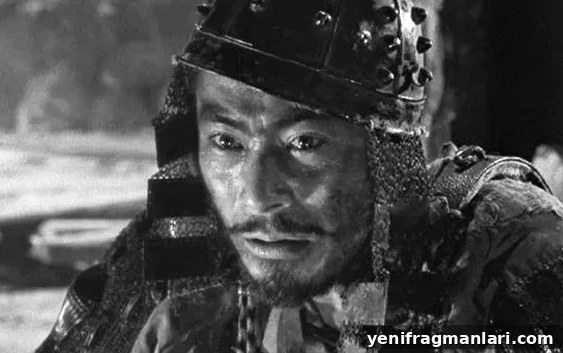
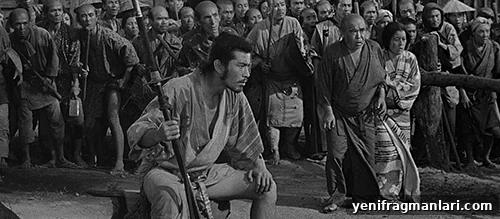
Seven Samurai is set during Japan’s Sengoku period, around 1586. A small farming village is terrorized by bandits and decides to hire samurai to protect them. The village’s leaders turn to veteran samurai Kanbê Shimada (Takashi Shimura) and gradually assemble a team of seven defenders: Kanbê and six others, including the earnest young protégé Katsushirō (Isao Kimura) and the explosive, unpredictable Kikuchiyo (Toshiro Mifune).
Contemporary critics noted Kurosawa’s achievement. Writing at the time, reviewers praised his command of action and his deep understanding of human behavior. That balance — thrilling technique combined with insight into character — is what makes Seven Samurai so enduring.
The film reads like a collection of fables, each scene vivid and tactile: the roar of imagined gods, the metallic ring of blades, the daily rhythms of farmers and soldiers. Kurosawa’s care for texture — from the mud underfoot to the sweeping fields of barley — brings the world to life. The film moves gently at times, intimate and tender, and then with brutal force when conflict erupts. It reaches for the full spectrum of human experience.
The score and atmosphere work as constant companions to the visuals. The opening sequences are shrouded in dust and grief, making the villagers’ fear and despair palpable. Intimate interior scenes feel claustrophobic and mournful, and composer Fumio Hayasaka amplifies that mood with a deep male chorus that sits over the images like a low, approaching tide.
That oppressive mood lifts when the samurai arrive. The village itself begins to breathe; rooms open up, conversations gain space, and the soundscape brightens as hope returns. Hayasaka blends traditional Japanese instrumentation with broader orchestral colors, giving the film moments of quiet nobility and ceremonial uplift that contrast with the earlier bleakness.
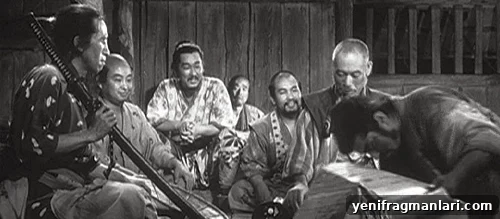
Kurosawa’s visual approach is precise and deliberate. He often used multiple cameras and careful staging to populate the foreground, middle ground, and background with emotional reactions. By layering perspectives within a single shot, he allowed stillness to carry multiple points of view. He also favored placing characters in the center of the frame, subjecting them to scrutiny and moral inquiry.
As the film progresses into its climactic battle, Kurosawa loosens this rigid control. The camera becomes more mobile, and scenes swell with kinetic energy. He avoids excessive cross-cutting, instead letting continuous action unfold in larger, fluid sequences. This choice intensifies the physical and moral stakes: we feel the collapse of bodies, the scatter of arrows, the heat of combat more acutely. Kurosawa’s editing is economical, letting scenes breathe without overstaying their welcome and maintaining narrative momentum.
Where the film truly excels is in its moral complexity. On the surface it’s a story about social hierarchy — peasants and samurai — but the deeper questions are about honor and humanity. The samurai, traditionally figures of virtue, reveal flaws that blur the line between them and the very bandits they oppose. Kurosawa presents his characters almost like figures in a tragedy, noble but fallible, governed by their limits as much as their principles.
Takashi Shimura’s Kanbê is a quiet, weathered commander whose experience has left him both practical and resigned. His decision to shave his head early in the film signals a reluctant return to the life he thought he had left behind. Shimura brings a steady authority to the role, a moral center that anchors the narrative while allowing Kurosawa to explore the costs of duty.
Katsushirō, Kanbê’s young disciple, embodies youthful idealism and romantic longing. His gentle courtship of Shino (Keiko Tsushima) provides one of the film’s tender counterpoints: a simple, delicate romance set against the harshness of the villagers’ lives. Yet his choices later force him to confront failure and shame, and his arc becomes a study in the fragility of honor.
By contrast, Kikuchiyo, played by Toshiro Mifune, is a volatile force of nature — at once comic, violent, and deeply human. Mifune brings tremendous physicality and emotional range to the part, shifting between combative bravado and tender vulnerability. Kikuchiyo’s contradictions expose the film’s central moral tensions: his outbursts mask wounds, and his willingness to question social order makes him one of the movie’s most compelling figures.
Seven Samurai conjures a world in which human impulses — courage, fear, love, greed — are visible in the smallest details: a grain of rice, a soldier’s cropped hair, the thundering approach of a horse, the bloom of a field. Kurosawa threads these images together to create not just an action picture but a meditation on community, sacrifice, and what it means to be human. By the film’s end you leave the story having felt more than the plot: you carry the emotional weight of the people who populate its world, and the questions they leave behind.
Score: 24/24
Rating: 5 out of 5.
Recommended for you: Where to Start with Akira Kurosawa
Written by Bella Madge
You can support Bella in the following places:
Substack: BellaWatchesFilms
Instagram: @bellawatchesfilms
TikTok: @bellawatchesfilms
Picturehouse Fresh Takes: Name Me Lawand Review