Blade Runner (1982)
Director: Ridley Scott
Screenwriters: Hampton Fancher, David Peoples
Starring: Harrison Ford, Rutger Hauer, Sean Young, Daryl Hannah, Brion James, Edward James Olmos, M. Emmet Walsh, Joe Turkel, William Sanderson, Joanna Cassidy
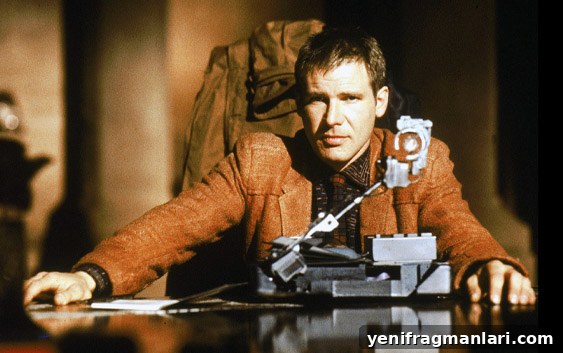
Troubled during production and met with a lukewarm response on initial release, Blade Runner has since evolved into the defining example of cinematic cyberpunk—a film whose visual and thematic influence reverberates across science fiction and popular culture. Its title was borrowed from an unrelated novel, it exists in multiple competing cuts, and its near-future setting of 2019 has long passed, yet the film’s power and relevance remain undiminished. Ridley Scott’s Los Angeles is a sprawling, neon-drenched metropolis of continual rain and persistent grime. In that dense urban tapestry, Harrison Ford plays Rick Deckard, a retired “blade runner” tasked with hunting down and “retiring” four rogue replicants—bioengineered humans who fled their off-world servitude and returned to Earth.
The film asks blunt, resonant questions about identity, mortality, and what it means to be human. Deckard’s pragmatic line—“Replicants are like any other machine. They’re either a benefit or a hazard. If they’re a benefit it’s not my problem”—captures the cool, detached veneer of a noir detective, while the plot peels back layers to reveal ethical and emotional complexity. This blend of noir and speculative science fiction turns the story into a meditation as much as a mystery, and the result is a film that lingers intellectually and emotionally long after the credits roll.
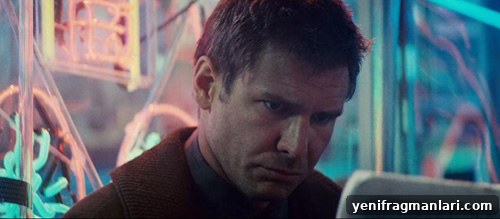
Philip K. Dick, whose work inspired the film, reportedly watched an early cut shortly before his death and recognized on-screen elements that matched his own imaginings. That sense of uncanny fidelity comes through in the film’s production design. Much of Blade Runner’s iconic look is owed to Syd Mead and to the craft of practical effects. Giant corporate billboards—Coca-Cola and Atari among them—loom over a smoky skyline, while neon umbrellas and street-level bazaars cast ghostly illumination across crowds. The contrast of gleaming technology and urban decay exemplifies the “high-tech, low-life” ethos later associated with cyberpunk. The city itself functions as a character: the spinner police cars, the dense architecture, and the layered visual texture create a tactile, lived-in future that feels immediate and plausible.
Vangelis’s evocative synth score complements that imagery, enveloping scenes in a haunting, melancholic atmosphere. Because much of the film’s spectacle was achieved through practical effects and meticulously built sets, the world feels tangible—every rain-slick street and smog-choked alley has weight. Cinematography by Jordan Cronenweth heightens the mood, capturing the interplay of shadow, light, and steam in compositions that remain striking four decades on.
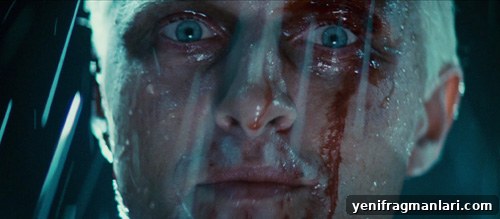
Harrison Ford gives a restrained, effective performance as Deckard—equal parts weary detective and reluctant empath. He is physical enough for the film’s required confrontations yet subtle in the quieter moments, when Deckard’s internal conflict and sense of exhaustion become evident. Still, Rutger Hauer’s portrayal of Roy Batty is the film’s emotional fulcrum. As the leader of the replicant group, Batty is driven by a desperate, humane desire for more life. His urgency, frustration, and capacity for tenderness culminate in the film’s climactic encounter with Deckard and in the rooftop monologue that has since become legendary. That speech—rueful, elegiac, and intimate—distills the film’s central preoccupations: memory, mortality, loss, and the ache to have one’s experiences remembered before they fade like tears in the rain.
The film’s pacing favors mood and philosophical exploration over non-stop action. While it contains memorable set pieces and moments of violence, its primary momentum derives from noir-styled investigation and introspection. Some viewers initially found the tempo slow, but that deliberateness is a strength: it allows atmosphere, character, and theme to settle and accumulate. Blade Runner is less a conventional action thriller than a neo-noir inquiry into consciousness, ethics, and the consequences of manufacturing life. Experienced on a large screen with immersive sound, the film is both majestic and hypnotic, an audiovisual experience that rewards careful attention.
Over the years, Blade Runner has been reassessed and elevated to a canonical position in science fiction cinema. Its influence can be seen in film, television, literature, and design, where its aesthetic and ideas continue to inspire creators probing the relationship between technology and humanity. Even as the specifics of its future date become historical footnotes, the film’s questions about grief, agency, and what it means to live resonate more strongly than ever. Blade Runner remains essential viewing for anyone interested in speculative storytelling, atmospheric filmmaking, or the ethical dilemmas of artificial life.
Score: 24/24