
My Policeman (2022)
Director: Michael Grandage
Screenwriter: Ron Nyswaner
Starring: Emma Corrin, Gina McKee, Harry Styles, Linus Roache, David Dawson, Rupert Everett
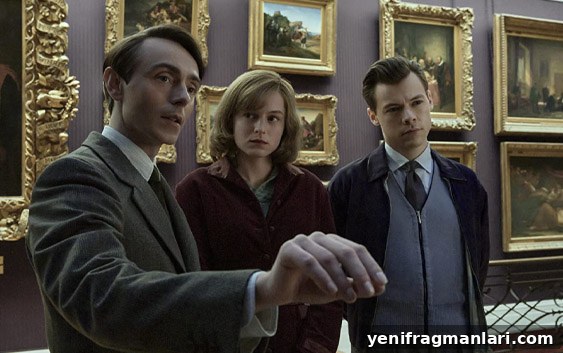
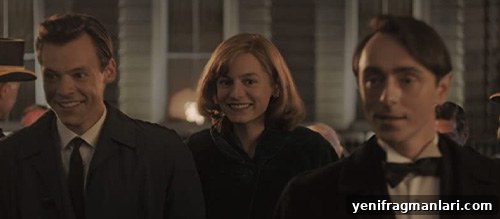
After the widely discussed reaction to Harry Styles’ performance in Don’t Worry Darling, audiences approached Michael Grandage’s period drama My Policeman with mixed expectations. Based on Bethan Roberts’ 2012 novel, the film examines a fraught love triangle that unfolds in the conservative seaside town of Brighton in 1957. The story centers on Tom (Harry Styles), Marion (Emma Corrin), and Patrick (David Dawson), and explores how desire, secrecy, and social pressure shape their lives across decades.
Tom, a policeman, meets Marion, a schoolteacher, and the two quickly enter a relationship that seems, at first glance, conventional. Underneath this apparent normalcy, however, Tom shares a deep, complicated connection with Patrick, a museum curator. The film traces how their intertwined relationships produce jealousy, guilt, and painful compromises, and how those consequences follow each character into later life.
One of the film’s persistent problems is its reluctance to fully dramatize the central gay relationship between Tom and Patrick. The narrative gives us a prologue and a tragic aftermath, but comparatively little of the formative middle ground where their intimacy might have been most evident. Aside from a short trip to Rome and an early drunk encounter, many of the scenes focus on the tension among the three characters rather than on the emotional core of Tom and Patrick’s bond. David Dawson and Harry Styles offer credible performances, and they communicate fragments of tenderness and conflict, but the screenplay often undercuts emotional momentum with stilted dialogue and muted chemistry.
Slow-burning romance can be effective, but in this case the romance tends to wither rather than slowly ignite. The film leans so heavily into the dangers and repercussions of queer life in the 1950s—police raids, public shame, and social ostracism—that it leaves minimal room for viewers to witness the private warmth and complexity of the relationship at its height. As a result, the sacrifices the characters make feel less grounded in lived intimacy and more like narrative consequences without sufficient emotional pay-off.
Expectations around the film’s intimate scenes were magnified by public comments and press around the actors. When Styles suggested in interviews that portrayals of gay sex in movies often default to caricature, interest in how his character’s intimacy would be staged intensified. The movie’s sex scenes are restrained and avoid sensationalism, but they also struggle to be transcendent. Compared with acclaimed queer romances that linger on the quiet nuances of desire and connection, the scenes in My Policeman rarely achieve a sense of revelation or deep emotional truth.
Another notable element is the decision to make Tom a policeman. Placing a member of law enforcement at the center of a queer narrative carries political weight, and the film occasionally gestures toward the institutional violence queer people faced. Yet whenever the story nears a critique of the society that punishes these relationships, it retreats into quieter, more personal territory. Tom remains presented as a sympathetic, gentle figure, and the film does not fully pursue the tensions between his professional role and his private life. A more decisive examination of that contradiction could have sharpened the film’s political resonance.
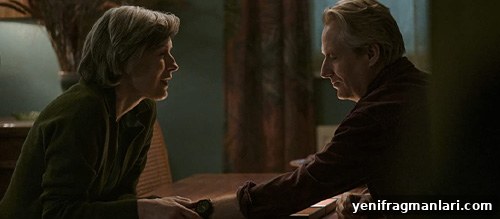
Structurally, the film alternates between the 1950s and a subdued 1990s timeline. In the later era, we see older versions of the characters—Tom, Patrick, and Marion—portrayed by Linus Roache, Rupert Everett, and Gina McKee. The later scenes show the characters living with the long-term consequences of their choices: Patrick recovering from a stroke and Marion caring for him with a mix of devotion and resignation. While the older actors deliver thoughtful performances, this timeline often feels underdeveloped. Marion, who occupies a central role in the later storyline, is written with limited interiority; her motivations and personal growth are too dependent on her relationships with the men, which leaves her character less compelling as a standalone protagonist.
Among the film’s stronger dimensions is the depiction of Tom and Marion’s marriage in the earlier timeline. Their relationship is complex and sincere, defined by affection and confusion in equal measure. Watching the couple attempt to be loving and honest within a constrained social framework is one of the film’s more affecting strands. Harry Styles brings a boyish vulnerability to Tom, and Emma Corrin portrays Marion with a steady earnestness. Still, key emotional moments are occasionally dulled by uneven line readings and a screenplay that favors restraint over fully realized confrontation.
Ultimately, My Policeman aims to be a quiet, reflective meditation on repression, identity, and the ways people compensate for forbidden love. It is at times touching and thoughtfully acted, and it benefits from a committed cast working within a beautifully realized period setting. Yet the movie’s ambition outpaces its narrative clarity: it gestures toward political critique and deep emotional inquiry without fully committing to either. For viewers seeking a rich, intimate portrait of queer love, the film may feel incomplete; for others, it offers a mellow, melancholic story about regret and the long shadows of passion.
Score: 12/24
Written by Emi Grant
You can support Emi Grant in the following places:
Instagram – @emi.grant
Portfolio – grantemi.portfolio.com
Twitter – @emii_grant