
Longlegs (2024)
Director: Osgood Perkins
Screenwriter: Osgood Perkins
Starring: Maika Monroe, Nicolas Cage, Blair Underwood, Alicia Witt, Michelle Choi-Lee, Dakota Daulby
Evil is an inescapable subject in both contemporary life and the stories we tell about ourselves. The digital era constantly exposes us to news and social media images of cruelty and violence, while many people also face personal forms of suffering. Within this landscape, serial killer films occupy a complicated place: they fictionalize very real horrors in an effort to understand or confront the darkest parts of human nature. Some entries in the genre deliver meaningful psychological insight or lasting unease; others risk descending into spectacle without deeper purpose.
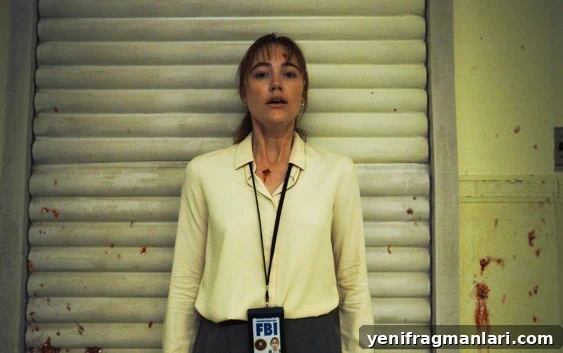
Osgood Perkins’s Longlegs sits squarely within that tension. The film centers on Lee Harker, an isolated and socially awkward FBI agent whose unusual intuitive gifts draw her into the investigation of a baffling serial killer known as Longlegs. The killer leaves cryptic letters at crime scenes—details that recall other true-crime and fictional cases—while orchestrating murders with a disturbing pattern: fathers are manipulated or compelled to turn violence inward against their families. As Harker probes the cases, she discovers a personal connection to the killer and must race to prevent further atrocities.
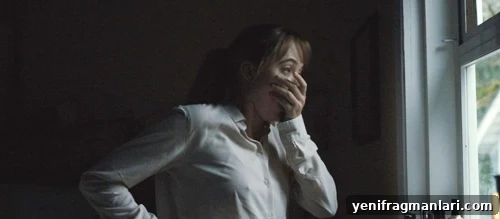
Perkins cultivates a pervasive atmosphere of dread throughout the film. The marketing campaign amplified that tension by teasing audiences with partial images of Nicolas Cage’s character and by emphasizing the shock of discovery rather than full exposure. On screen, Perkins delays a full reveal of Longlegs’s appearance long enough to let anticipation grow, using absence and suggestion to stoke fear. That technique—letting the viewer’s imagination populate the unknown—proves effective: much of the film’s power comes from the slow build of suspense rather than immediate shock.
Both Maika Monroe and Nicolas Cage deliver performances that stay with you. Monroe’s Lee is a layered, uneasy presence: awkward and intensely focused, she anchors the story with a performance that merges vulnerability and steely determination. In a different awards climate, such a role might attract more mainstream recognition. Cage, as Longlegs, commits to a transformation that is both grotesque and oddly magnetic. His portrayal mixes menace with moments that verge on the absurd, an approach that sometimes undercuts pure terror but also lends the character a memorable unpredictability. The result is not a conventional villain but a figure whose extremes feel unmoored from ordinary humanity.
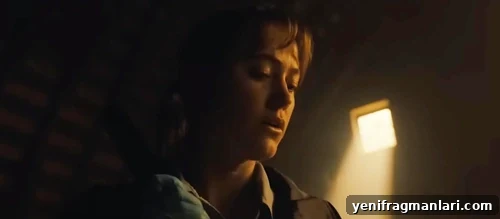
Visually, the film establishes a cold, empty look that echoes Perkins’s earlier work. Wide, wintry compositions and sparse rural settings become unnerving through careful framing: silhouettes and shadowed figures lurk at the margins of shots, quietly amping the sense of menace. Cinematographer Andrés Arochi uses shifts in aspect ratio—such as a 4:3 framing for certain flashbacks—to distinguish memory from the present and to deepen the viewer’s immersion in the characters’ psychological landscapes. These visual choices consistently support the film’s intent to unsettle.
Comparisons to canonical serial killer films like The Silence of the Lambs and Se7en are understandable: the procedural elements, the emphasis on investigator and killer psychology, and the film’s somber tone naturally invite them. Yet while Longlegs evokes those influences in its best moments, it falters near the end. The final act aims for thematic revelation but leaves several narrative threads unresolved, which can diminish the overall impact. The unresolved aspects generate ambiguity, but for some viewers they create frustration rather than profundity.
Even with its flaws, Longlegs represents an audacious piece of filmmaking from Osgood Perkins. It’s a film that seeks to interrogate fear—both the explicit horrors we see and the subtler, internal anxieties that follow us home. At its strongest, the movie lingers after the credits, inviting reflection on why we watch and what we find terrifying. Its evocative visual style, committed performances, and persistent atmosphere of dread make it a notable addition to contemporary horror and psychological thriller cinema.
Score: 19/24
Rating: 3 out of 5.
Recommended reading: 10 Times Nicolas Cage Went “Full Cage” (listicle reference)
Written by Jake Fittipaldi
Support Jake Fittipaldi
Instagram: @jakefittipaldi
Letterboxd: /jakefittipaldi