Plan 75 (2022)
Director: Chie Hayakawa
Screenwriters: Jason Gray, Chie Hayakawa
Starring: Chieko Baisho, Hayato Isomura, Stefanie Arianne, Yumi Kawai, Taka Takao, Hisako Okata, Kazuyoshi Kashida
What happens when a society grows so old that it struggles to sustain itself?
Some insist the answer is to care for everyone, regardless of cost. But intentions alone do not resolve practical and structural barriers. In Plan 75, a fictional Japanese government introduces a voluntary program that allows elderly citizens to end their lives to relieve the perceived burden on society. The eponymous PLAN 75 offers participants only a small payout intended to cover funeral expenses if they choose. The scheme’s humane language masks an unsettling reality: it converts a public policy problem into an individual moral decision.
The film opens with a radio news segment that frames the debate and establishes the cultural context. That expository beginning may feel heightened, yet it resonates with current political tensions worldwide—where difference becomes a liability and economic logic can eclipse human dignity. PLAN 75 is premised on the chilling idea that someone who reaches 75 has exhausted their usefulness and should therefore be encouraged to die for the “common good.”
What feels most corrosive in Plan 75 is the unequal power relationship the program creates. It relies on the elderly’s sense of duty and gratitude toward society—people who have often sacrificed much—and asks them to return that allegiance by dying. The program’s modest financial offer suggests participants will likely come from economically vulnerable backgrounds; those with greater resources would be less compelled to accept such a bargain. Yet the state offers no genuine respect in return. The token payout, framed as a courtesy to help cover funeral costs, effectively pressures people into accepting a bleak farewell so the state can avoid caring for them.
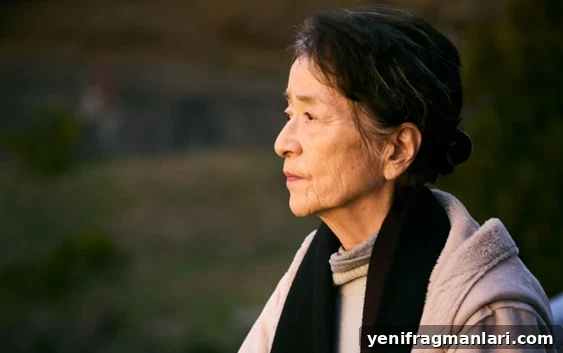
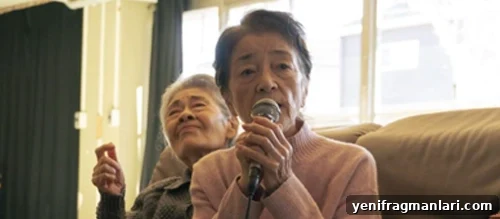
The film resists turning its premise into a grand political thriller. Instead, it narrows its focus to three central characters, and through them it examines the human consequences of institutional indifference. Michi (Chieko Baisho) is an older woman who finds herself marginalized as she ages: her husband is gone, retirement looms, and landlords refuse to rent to someone perceived as having little time left. Himoru (Hayato Isomura) is a young government employee tasked with promoting PLAN 75. He starts out earnest and trusting in the system until a personal connection forces him to confront the program’s moral cost. Maria (Stefanie Arianne) is an immigrant care worker who accepts a role with the PLAN 75 administration out of financial necessity.
At its heart, Plan 75 asks us to practice empathy without prescribing easy answers. None of the protagonists are painted as purely virtuous or villainous; they are people shaped by circumstances and constrained choices. The film’s tone is quietly devastating, often taking on a documentary-like realism that stems from measured performances and careful production design. Cinematography reinforces intimacy: compositions linger on faces and domestic spaces, while the clinical blue-and-orange branding of PLAN 75 intrudes like a visual shock—bureaucracy rendered in antiseptic color.

Michi’s story is the film’s most heartrending. Her arc follows the slow erosion of dignity and connection as she prepares to opt into PLAN 75. The loneliness she endures—denied housing, stripped of companionship, clinging to small acts of kindness—makes her choice heartbreakingly comprehensible. The movie lingers on the banalities of her life: a single takeaway delivery driver who bends the rules to bring her a meal, a telephone call with a government official who helps her schedule her final day. Those quiet details accumulate into an acute portrait of social abandonment.
Across their narratives, the three leads force viewers to confront complex ethical questions: Is mere biological survival enough to justify staying alive? How much responsibility does a community owe its elders? And how would ordinary people respond if faced with a state-sponsored program like PLAN 75? The film deliberately limits scenes showing the broader political apparatus or the public that supports the program; this narrower focus keeps the story intimate but occasionally leaves a desire for more context about how such an idea took root.
Stylistically and thematically, Plan 75 echoes other near-future works that explore despair born from societal stagnation. Like Alfonso Cuarón’s Children of Men, it presents a plausible, near-term scenario in which social and demographic pressures breed an existential malaise. The result is a film that is bleak but compelling—one that invites reflection rather than easy condemnation. Its strength lies in its restraint: a careful, humane study of people coping with an institutionalized loss of value.
Score: 17/24
Written by Rob Jones