
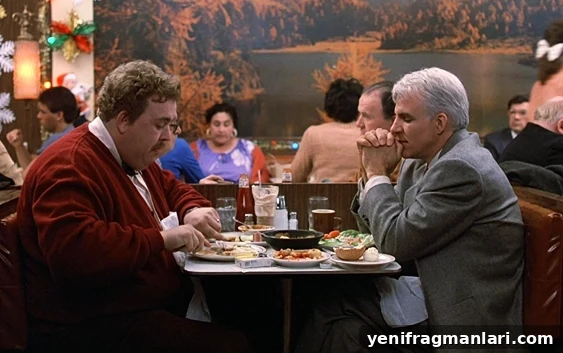

Planes, Trains and Automobiles (1987)
Director: John Hughes
Screenwriter: John Hughes
Starring: Steve Martin, John Candy
Few films capture the spirit and frustrations of holiday travel as memorably as John Hughes’ 1987 classic, Planes, Trains and Automobiles. Over the years it has become synonymous with Thanksgiving viewing for many families, a comic and heartfelt antidote to the bustle of the season. While Hughes wrote other enduring holiday comedies—such as National Lampoon’s Christmas Vacation and Home Alone—this film, which he both wrote and directed, feels especially personal and enduring.
The story pairs Steve Martin and the late John Candy as two mismatched travelers bent on reaching home for Thanksgiving despite a succession of disasters that derail their plans. Martin plays Neal Page, a tightly wound advertising executive who just wants a quiet trip home. Candy is Del Griffith, an effusive, endlessly loquacious shower-ring salesman who trails Neal like an accidental companion. That gulf between Neal’s reserve and Del’s buoyant openness drives the film’s comic engine while also creating a surprisingly moving emotional core.
Casting could not have been more inspired. Both actors bring their unmistakable comic rhythms to the roles, making Neal and Del feel like fully realized people rather than mere caricatures. Their chemistry is immediate: Neal’s impatience continually collides with Del’s inability to read social cues, and through that friction the movie delivers a steady stream of laugh-out-loud moments and quotable lines. Many of those lines—some scripted, some born of improvisation—have entered the wider cultural lexicon and are still recited decades later.
Yet the film’s success rests not only on its performers but on Hughes’ thoughtful script and directorial choices. Hughes wrote dialogue that leans natural and authentic, then let his actors inhabit it freely. Brief cameos—such as Kevin Bacon’s small role early in the story—add texture without distracting from the central relationship. Hughes famously favored character and truth over preciousness in dialogue, allowing scenes to breathe until they feel both funny and true.
One of the movie’s pivotal moments takes place in a motel room, where Neal finally unleashes a torrent of frustration at Del. Instead of escalating into cruelty, the scene reveals Del’s quiet dignity and vulnerability, and it reframes the two men’s dynamic. That balance—between broad farce and plainspoken tenderness—is the film’s greatest strength. Hughes mines comedy from everyday inconvenience but never lets it undercut the humanity of his characters. Martin and Candy elevate the material, turning sentimental beats into something sincere rather than cloying.

At its heart, Planes, Trains and Automobiles is a story about connection. Neal and Del, two lonely men with very different social masks, gradually discover common ground. That discovery resonates because it feels true: people who would never otherwise speak can, under shared stress and time, reveal their better selves. In today’s world—where anonymous rides, screens, and busy schedules often insulate us from strangers—the film’s plea for human decency and small acts of empathy remains timely. One can easily imagine a modern adaptation poking fun at rideshare culture and gig-work inconveniences, yet the underlying lesson would endure.
Hughes’ approach—pairing mismatched characters and allowing their unexpected similarities to appear—creates a universal theme: we are more alike than we think. Delivered with humor and compassion, that insight makes the film memorable. It’s a model of crowd-pleasing studio comedy that nevertheless trusts its audience’s emotions; the laughs and the tenderness feel earned. For many viewers, the film has become a seasonal ritual because it blends sharp comedy with genuine heart.
Score: 19/24
⭐⭐⭐⭐
Rating: 4 out of 5.
Written by Connell Oberman
Support Connell Oberman on social media:
Twitter: @ObermanConnell
Instagram: @connello_22
Substack: ConnellOberman