
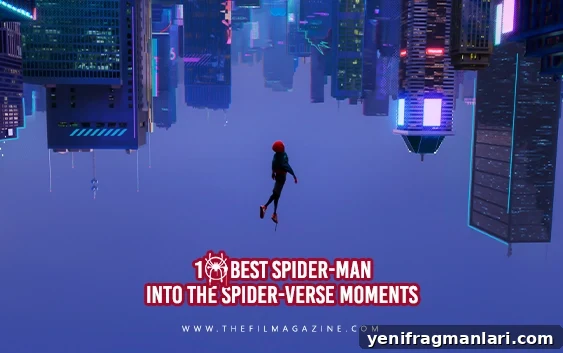
2018 was a landmark year for comic-book movies. Black Panther advanced representation in blockbuster cinema, Avengers: Infinity War felt like a culmination of the Marvel Cinematic Universe, and Aquaman became the first DC Extended Universe film to surpass $1 billion at the box office. Yet many fans and critics point to a different highlight from that year: the debut of Spider-Man: Into the Spider-Verse.
Released in December 2018, Spider-Man: Into the Spider-Verse immediately captivated audiences with its bold storytelling and striking, fresh animation style. Directed by Peter Ramsey, Rodney Rothman and Bob Persichetti, the film reinvented what an animated superhero story could look and feel like.
The film introduces the multiverse concept with clarity and heart, bringing together several Spider-people from different dimensions. At its center is Miles Morales (voiced by Shameik Moore), a Brooklyn teenager who struggles to accept his new abilities after the death of his universe’s Spider-Man. Miles is forced to grow quickly when alternative-universe heroes enter his life and challenge his idea of who he is and what responsibility means.
Critical acclaim followed, including the Academy Award for Best Animated Feature, recognition that honored both the film’s technical innovation and its emotional depth. Into the Spider-Verse transcended the label of “superhero movie” and became a milestone in Western animation, influencing filmmakers and audiences alike.
Below, we highlight ten standout moments from the film that explain why Into the Spider-Verse endures: visually daring, emotionally resonant, and wildly entertaining.
Follow @thefilmagazine on X (Twitter).
10. Welcome to the Spider-Verse
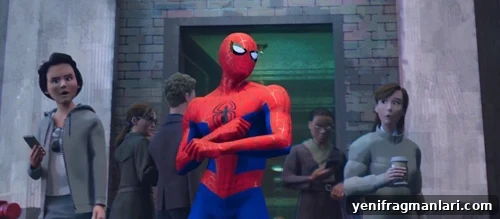
The film opens with dazzling confidence. The escalating opening music, glitching studio logos and flashes of graffiti immediately announce that this is not a conventional comic-book film. The sequence rapidly becomes a visual feast—an explosion of color, texture and graphic design that sets the tone: playful, clever and self-aware.
Peter Parker’s opening monologue wryly frames the story as a familiar origin tale told with fresh economy. Instead of bloated exposition, the film delivers concise, humorous beats—small, human details that keep the sequence grounded even as it revels in comic-book iconography. The opening two minutes act as a thesis statement: Into the Spider-Verse is funny, fast-paced and visually spectacular, and it celebrates why Spider-Man has remained beloved across generations.
9. Meet Miles
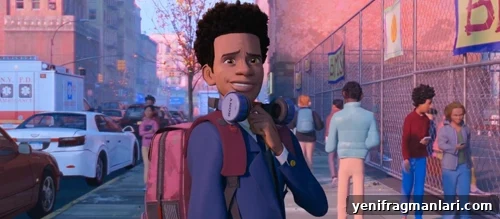
A film’s success often depends on its lead, and Miles Morales arrives as an instantly sympathetic, fully formed character. Early scenes show him immersed in art and music, daydreaming his way into everyday teenage trouble—late for school, dodging parental scolding—yet always retaining an authentic, relatable warmth.
A kinetic montage introduces Miles’ Brooklyn: stickers of his artwork, a hip-hop-infused soundtrack and visual flourishes that mirror his creative energy. His awkward charm—balanced by wit and vulnerability—makes him someone audiences can root for from the start. These opening moments accomplish in minutes what many blockbusters struggle to do in their entire runtime: they create a hero who feels real and alive.
8. It Can Get Weirder
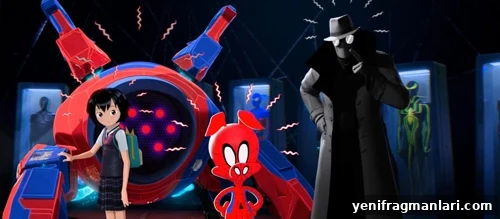
When Miles and Peter B. Parker meet Aunt May, the story expands to reveal three more Spider-people. Spider-Man Noir, rendered in stark black and white, brings a pulpy, detective-style edge. Peni Parker pilots a mech with anime-inspired expressiveness, and Spider-Ham offers classic cartoon slapstick and irreverent humor. The variety is dizzying but intentional: the film embraces genre extremes while grounding each new arrival with personality and purpose.
This moment demonstrates the filmmakers’ willingness to get wildly imaginative, but it avoids chaos because the characters and their relationships are already well established. The result is a joyous, surprisingly coherent celebration of Spider-Man’s many incarnations.
7. Escape from Alchemax

Miles and Peter B. Parker’s infiltration of Alchemax introduces Olivia Octavius as this universe’s Doc Ock—an unexpected and effective twist. Her reveal and the ensuing action feel dangerous and inventive, especially as the heroes flee through the woods and Miles learns to swing under pressure.
The animators use different frame rates to visually distinguish experience levels—Peter’s smooth veteran movements versus Miles’ tentative motion—subtly reinforcing character through technique. The sequence also brings Gwen Stacy into the fold, whose design and guarded presence add emotional complexity. The Alchemax escape mixes spectacle with character growth, and it even plants small, memorable details that echo later in the story.
6. The Future Is Bright

After Kingpin is defeated, the film closes with an uplifting montage: Miles settling into his role as his universe’s Spider-Man, improving at school and enjoying normal teenage life. The quietly powerful emotional beat arrives when Miles, as Spider-Man, approaches his father and shares a simple, disguised moment of affection and openness. That small revelation—an “I love you” spoken in a playful tone—delivers the emotional closure the story has been building toward, blending humor and heart with beautiful restraint.
5. Uncle Aaron’s Death
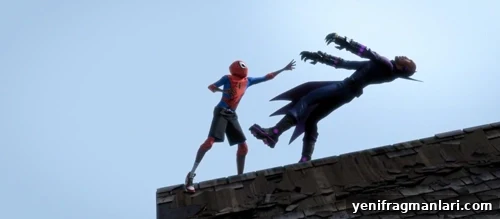
Into the Spider-Verse doesn’t shy away from tragedy. Miles’ uncle Aaron—the man who encouraged and protected him—dies in a moment that reshapes Miles’ motivations. The scene is heartbreaking: Aaron’s last words, delivered with poignancy, become a lasting moral compass for Miles.
“I wanted you to look up to me. I let you down man, I let you down. You’re the best of all us, Miles. You’re on your way. Just keep going… just… keep going.”
The arrival of Jefferson—Miles’ father—at the scene adds further emotional complexity. To Jefferson, the evidence suggests Spider-Man is responsible, setting up painful misunderstandings and high stakes for the film’s final act. The writing here is mature and resonant; it elevates the story from superhero fare to a moving family drama.
4. The Biggest Team-Up in the World(s)
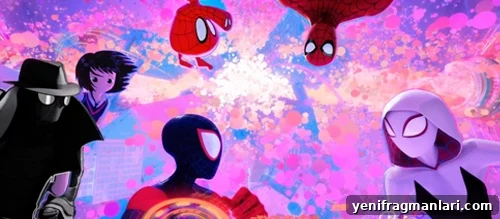
The climax brings every Spider-person together to shut down Kingpin’s collider. The sequence is a controlled chaos of surreal visuals—floating trains and skewed cityscapes—that emphasizes both spectacle and character. Each Spider-person’s unique style and humor shine: Spider-Ham’s cartoonish antics, Spider-Man Noir’s brooding intensity, Peni’s anime energy and Gwen’s precise grace.
Beyond the action, the emotional goodbyes are deeply affecting. The team’s parting underscores how much each member has grown through connection and sacrifice. The film proves a crossover can be both crowd-pleasing and meaningful without years of prior setup, as long as it centers on characters audiences care about.
3. The Prowler Reveal

One of the film’s sharpest twists is the discovery that the Prowler is Aaron—Miles’ uncle. What began as a threatening antagonist becomes a wrenching betrayal, forcing Miles to reconcile family loyalty with a moral duty. The reveal is expertly staged: shadowy atmosphere, rising paranoia and a score that heightens the dread. The emotional fallout turns a standard hero-versus-villain conflict into an intimate, painful family drama.
2. The Door Between Father and Son

At the heart of the film is Miles’ relationship with his father, Jefferson. After Aaron’s death, father and son finally find a moment of connection. Jefferson speaks to Miles through a door while Miles is unable to reply, and they share a silent, intimate exchange that conveys unconditional care. Jefferson’s line—“you don’t have to say it back though”—is a devastating callback to earlier emotional distance, and it becomes the catalyst for Miles’ courage. It’s a simple, human moment that many superhero films overlook, and it grounds the whole story in real feeling.
1. “That’s all it is Miles, a leap of faith.”

The film’s most iconic moment is Miles’ leap of faith, the culmination of his emotional and heroic transformation. In a beautifully staged sequence, the image of Miles falling is flipped so he appears to rise upward—an arresting visual metaphor for growth and empowerment. The scene’s music, particularly “What’s Up Danger” by Blackway & Black Caviar, syncs perfectly with the animation, amplifying the exhilaration as Miles finally trusts himself and connects a web to a skyscraper.
His custom red-and-black suit and graffiti-styled emblem emphasize that this is Miles’ Spider-Man: personal, improvised and wholly his own. The leap of faith encapsulates the film’s central message—courage, self-belief and the idea that heroism is often a single decisive moment.
With so many moments as powerful as these, it’s no surprise that Spider-Man: Into the Spider-Verse continues to inspire and captivate. Which sequences stand out to you? Share your thoughts in the comments and keep following The Film Magazine for more thoughtful movie lists.