
Pachyderme (2022)
Director: Stéphanie Clément
Screenwriter: Marc Rius
Starring: Christa Théret
Stéphanie Clément’s Pachyderme (2022) stands out as one of the most haunting animated short films of recent years. Nominated in the Animated Short category at the 96th Academy Awards, this film transforms a simple childhood memory into a richly layered and unsettling meditation on fear, memory, and trauma. Its sparse plot—focused on a young girl staying with her grandparents—belies the depth and complexity embedded in the visuals, sound design, and narration.
The film follows a woman recalling time spent at her grandparents’ home, speaking in the voice of the child she once was. The narration guides us through small domestic scenes—the creak of floorboards, the patterns on the ceiling, evenings at the dinner table, days at a river and in nearby woods. These ordinary settings become charged with a threatening atmosphere that feels at once intimate and ominous. While the film flirts with supernatural imagery, its real power is as a psychological portrait: a depiction of the anxieties, confusion, and vulnerability of childhood, and an oblique exploration of abuse.
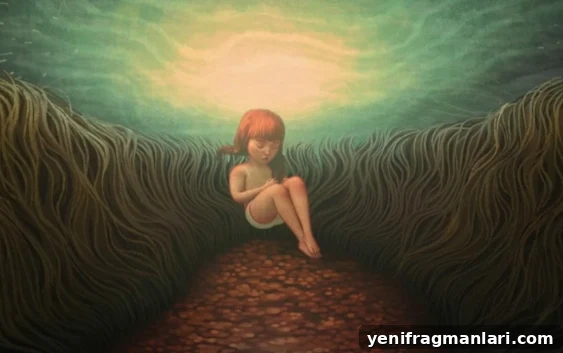
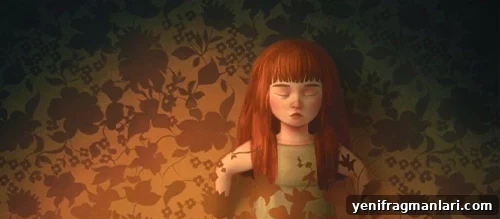
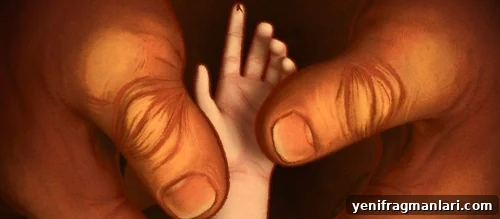
Visually, Pachyderme is striking. The film uses hand-drawn 2D animation enriched with subtle three-dimensional elements that highlight particular props and spaces—beds, walls, river water—inviting the viewer to linger on details that carry emotional weight. The palette and character design evoke storybook warmth at first, then shift to a dreamlike, sometimes nightmarish mood. This merging of traditional techniques with layered visual textures creates an ethereal quality: the familiar becomes uncanny, and small household objects take on symbolic resonance.
Screenwriter Marc Rius and director Stéphanie Clément carefully avoid spelling everything out. Instead, the film relies on implication and atmosphere to communicate its darker themes. Scenes that might suggest abuse—the child bathing, the sense of being watched, the grandfather’s presence—are presented subtly rather than explicitly. The film uses allegory: a prowling grandfather becomes a hunter-like presence at the door; the wallpaper becomes a place of retreat. A final image—a broken elephant tusk near the girl’s room—hints at damage and a rupture in the household, but it does not offer tidy resolutions. Ghostly sequences of girls playing in the river and other otherworldly motifs suggest lingering trauma rather than a neat closure.
Because the film leaves interpretation open, audiences can approach it on multiple levels. Some viewers will see it as an exploration of childhood anxieties—how small sounds and shadows can become threats in a child’s imagination. Others will read it as a careful allegory for abuse and its long-term effects. Whichever reading you favor, the sorrow that permeates the film is unmistakable. There is a sense of perceptible damage running beneath the surface of every scene, a feeling that the past continues to reverberate.
Christa Théret’s narration is a major asset. Her deep, measured voice lends the film a poetic cadence that enhances its haunting quality. The narration balances restraint and emotion, guiding the viewer without dictating a single meaning. The tone echoes the best traditions of French voice performance: moody, economical, and deeply expressive.
As an Oscar-nominated short, Pachyderme is not a conventional narrative-driven piece but rather a mood-driven cinematic experience. Its brevity and episodic structure mimic the way memory works—fragmented, associative, and sometimes unreliable. The film invites viewers to reflect on their own pasts, to recognize small moments of fear and curiosity, and to consider how those moments shape identity. In the right setting, with attention and openness, it has the power to provoke introspection and emotional response.
Technically and artistically, Pachyderme is meticulously crafted. From its animation techniques to sound design and voice work, every element contributes to a cohesive atmosphere. While other animated shorts in its awards year may rely on star power or straightforward storytelling, this film’s strength lies in its ability to linger—quietly disquieting and formally sophisticated. For viewers interested in animated films that blend visual innovation with psychological depth, Pachyderme is essential viewing.
Score: 20/24
Rating: 4 out of 5.