
Hillbilly Elegy (2020)
Director: Ron Howard
Screenwriter: Vanessa Taylor
Starring: Gabriel Basso, Amy Adams, Glenn Close, Haley Bennett
Ron Howard’s 2020 Netflix drama Hillbilly Elegy arrived on a wave of controversy and expectation. From its first trailers the film was labeled by many as “Oscar bait,” a tag that framed much of the early conversation. Built from J.D. Vance’s memoir, the film follows a young Yale law student confronting his mother’s addiction and the legacy of a troubled family past while trying to build a career after graduation. That premise alone suggested a film destined for awards consideration: intimate personal trauma, social commentary and roles that invite transformative performances. Yet the finished film struggles to cohere those elements into something consistently honest or compelling.
The memoir itself divided critics and readers, praised in some circles and critiqued in others for broad generalizations about white working-class America. Those tensions carry into the movie. Rather than clarifying or deepening the source material’s contested observations, the adaptation chooses a cautious middle path: it strips much of the book’s sharper political perspective while retaining its more familiar, and often stereotypical, depictions of poverty and addiction. The result is a film that often feels hollow—aware of the issues it could probe but unwilling to commit to a clear stance.
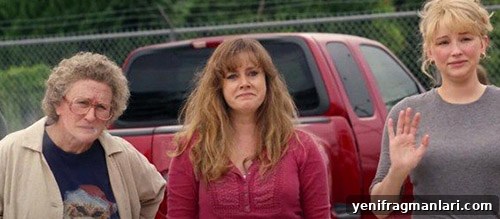
Structurally, the screenplay jumps between two periods in J.D. Vance’s life—his teenage years in 1997 and his adult years around 2011. This cross-cutting could have provided a layered, generational portrait, but the film rarely builds meaningful connections between past and present. Instead, scenes snapshot moments in time without developing them further. Key figures in J.D.’s life are reduced to single-note archetypes: the mother who struggles with substance abuse, the tough-love grandmother, the supportive yet sidelined sister. When characters remain confined to these roles, the narrative loses momentum and emotional depth, because it never allows them to evolve beyond the tropes they first introduce.
Direction and tone are persistent problems. Howard, a filmmaker with a long and varied career, leans toward the obvious here—gestures and beats are often exaggerated, with scenes that aim for pathos sliding into melodrama. Moments intended to convey J.D.’s disorientation among privileged peers instead land as unintentionally comic, undermining the film’s dramatic aspirations. This overemphasis is frustrating because there are elements that work: the makeup and costume departments help Amy Adams and Glenn Close achieve convincing physical transformations, and Gabriel Basso conveys a believable uncertainty as the young man caught between worlds.
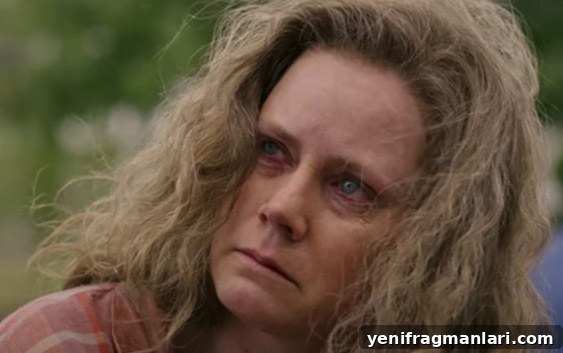
Performances are one of the film’s more complicated facets. Adams and Close bring professionalism and range, but they are constrained by a script that rarely gives their characters clear arcs. Close’s portrayal of the grandmother has force and grit, and Adams brings sincerity to the role of a mother mired in addiction, yet both performances are frequently undercut by scenes that demand overt emotional displays rather than subtle, earned moments. Supporting players, including Haley Bennett, provide texture but are not given enough space to develop fully.
Where the film falters most is in its reluctance to engage the thornier questions posed by the source material. By neutralizing the memoir’s more provocative claims, the adaptation turns toward a safer human-interest story without the thematic teeth that might have elevated it. The screenplay removes much of the “meat” of the original narrative—the social critique and the harder truths—leaving a story that feels equal parts personal memoir and awards-season calculation.
That said, Hillbilly Elegy is not inert. It moves briskly, and despite its shortcomings the film rarely becomes dull. The editing keeps the pace lively, and some individual scenes carry real emotional weight. The production design, hair and makeup, and period details ground the film in a tangible world. But these technical strengths cannot fully compensate for a lack of tonal consistency and missed opportunities for deeper insight.
In the end, Ron Howard’s adaptation is an uneven piece: technically competent, occasionally affecting, but ultimately uncommitted. It offers strong surface elements—costume, makeup, committed lead actors—but it softens the book’s sharper edges and never quite finds the dramatic center it needs. For viewers curious about the memoir, the film may provide an accessible entry point; for those hoping for a nuanced exploration of class, identity and responsibility, it will likely feel dissatisfying.
6/24
Recommended for you: Top 10 Ron Howard Movies