
The Matrix (1999)
Director: Lana Wachowski, Lilly Wachowski
Screenwriters: Lana Wachowski, Lilly Wachowski
Starring: Keanu Reeves, Laurence Fishburne, Carrie-Anne Moss, Hugo Weaving, Gloria Foster, Joe Pantoliano, Marcus Chong, Matt Doran, Julian Arahanga, Anthony Ray Parker, Belinda McClory
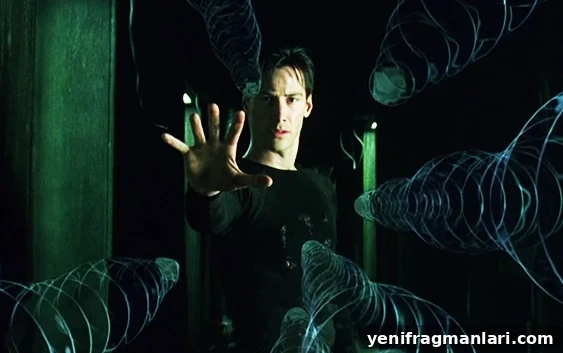
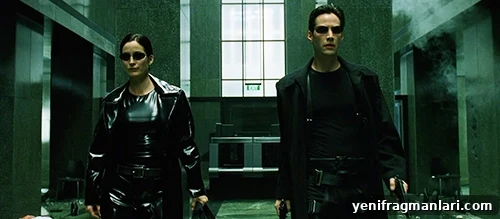
There’s little left to say about The Matrix that hasn’t been observed, dissected, or celebrated, yet the film still rewards revisiting. Rarely does a motion picture achieve the status of cultural myth the way this one did: it exists as an idea as much as a film, a concept that transcends its genre influences. The Wachowskis stitched together anime-inspired cyberpunk aesthetics, motifs drawn from Buddhist philosophy and postmodern theory, and Hong Kong action choreography, producing something that resonates as deeply as a modern myth. The Matrix introduced a visual vocabulary—slick black coats, mirrored shades, and groundbreaking camera work—that has been emulated endlessly, while also shaping conversations about reality, identity, and simulation.
For anyone unfamiliar with the basic premise, a brief recap: Thomas Anderson, known online as Neo, works a mundane day job at a software company while he moonlights as a talented hacker. Pursued by relentless, suit-clad agents led by the menacing Agent Smith, Neo is contacted by Trinity and Morpheus, who reveal a startling truth: the world he knows is a simulated reality called the Matrix. Morpheus offers a choice and a purpose—Neo must decide whether to accept that the apparent reality is an elaborate deception. What follows is a battle for human freedom, visceral action sequences, philosophical questioning, and some of the most iconic visual set pieces in modern cinema.
The film was not created in a vacuum. Other works explored virtual worlds and simulated realities around the same time, and the Wachowskis acknowledged inspirations from influential anime and cyberpunk literature. Ideas from groundbreaking animated films and novels informed the film’s visual and conceptual palette, and Jean Baudrillard’s Simulacra and Simulation is explicitly referenced within the movie, underscoring the filmmakers’ engagement with postmodern theory. What the Wachowskis accomplished was not simply originality of ideas, but the synthesis of those ideas into a mainstream, high-budget Hollywood film that retained artistic ambition while appealing to broad audiences.
What made The Matrix revolutionary for general viewers was how expertly it blended disparate elements into a single, coherent experience. It married Hollywood spectacle to Hong Kong martial-arts choreography, infused the story with dense philosophical subtext, and used a substantial production budget to realize truly inventive visuals. For most moviegoers at the time, the combination felt radical even when its ingredients were recognizable. The film’s structure, pacing, and visual choices presented complex themes in an accessible way, allowing audiences to engage with big ideas without sacrificing excitement.
Every frame in The Matrix was crafted with meticulous attention. The screenplay underwent extensive development before filming, resulting in tight, economical writing with memorable lines that entered popular culture. Visually, the movie is a showcase: Bill Pope’s cinematography and innovative photographic techniques created unforgettable imagery, while Don Davis’s score supported both the intellectual and emotional beats. The film’s use of color—particularly the greenish tint within the Matrix contrasted with the cooler blue of the Nebuchadnezzar’s reality—serves as a clear visual shorthand, helping viewers navigate the film’s dual worlds.
The performances are a major part of the film’s enduring power. Keanu Reeves’s portrayal of Neo charts a convincing transformation from confused outsider to confident, decisive hero; the role suited Reeves’s understated, introspective presence and helped cement his association with the film. Laurence Fishburne as Morpheus lends the story much of its philosophical gravitas, while Hugo Weaving’s Agent Smith is chillingly authoritarian and memorable. Carrie-Anne Moss brings strength and precision to Trinity, and the supporting ensemble contributes a consistent level of intensity and commitment that makes the stakes feel real.
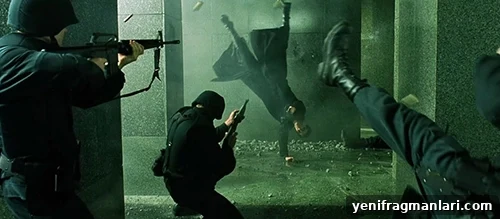
No single aspect of the film stands alone: production design, special effects, choreography, sound, and performances work together in service of a unified vision. The slow-motion “bullet time” sequences, since parodied and referenced countless times, were not merely gimmicks but integral storytelling devices that made action feel both kinetic and contemplative. The film’s technical achievements enhanced its themes, turning abstract questions about perception and freedom into scenes that audiences could both feel and analyze.
The Matrix is not without flaws. The romantic subplot between Neo and Trinity feels underdeveloped at times, occasionally winking toward a conventional Hollywood ending that sits uneasily with the film’s otherwise rigorous tone. Small narrative choices and conveniences appear contrived in service of a dramatic resolution. Yet these weaknesses are minor compared to the film’s many strengths. Its ambition, craft, and cultural impact far outweigh any occasional storytelling shortcuts.
More than two decades after its release, The Matrix remains a landmark work—one that changed filmmaking techniques, popular aesthetics, and the way mainstream audiences engage with philosophical science fiction. It is a rare film that stimulates both the heart and the mind: thrilling, stylish, and thought-provoking. In short: The Matrix is a cultural milestone whose resonance continues to be felt across film, fashion, and ideas.
Score: 23/24
Rating: 5 out of 5.