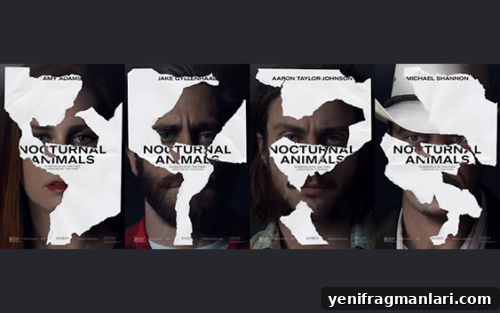
Nocturnal Animals (2016)
Director: Tom Ford
Screenwriter: Tom Ford
Starring: Amy Adams, Jake Gyllenhaal, Michael Shannon, Aaron Taylor-Johnson, Isla Fisher, Armie Hammer, Michael Sheen.
Tom Ford, the renowned fashion designer turned filmmaker, returns with his second feature, Nocturnal Animals, a visually immaculate drama-thriller that dissects the destruction of love, regret, and the consequences of past choices. Anchored by strong performances from Amy Adams and Jake Gyllenhaal, the film balances psychological intensity with a precise aesthetic sensibility, delivering a memorable and unsettling cinematic experience.
Nocturnal Animals functions as a layered cautionary tale and an exploration of emotional retribution. The narrative alternates between the present-day life of Susan (Amy Adams) and the violent, suspenseful world of a novel written by her ex-husband Edward (Jake Gyllenhaal). As Susan reads the manuscript, the book’s grim tale—centered on murder and betrayal—folds into her memories and current reality, forcing a confrontation with past decisions. Tom Ford and editor Joan Sobel interweave these timelines and tonal registers with clarity and control, allowing transitions to serve as meaningful emotional pivots rather than confusing interruptions.
One of the film’s most striking qualities is its visual rigor. Every composition, lighting choice, and set decoration reads like the product of a meticulous photo shoot. This polished look is not mere vanity; it is a deliberate storytelling strategy. By maintaining a pristine, controlled visual language across both the present-day sequences and the novel’s darker world, Ford guides the audience’s attention toward Susan’s interior life and the consequences of her actions. The cinematography and production design function as psychological architecture, framing Susan’s experiences in a modern Los Angeles whose sleek surfaces conceal deep unease and isolation.
Ford’s visual approach intentionally borrows from classic cinematic traditions. At times the film evokes Hitchcockian paranoia, using modern urban spaces—art galleries, minimalist apartments, and glass-fronted buildings—as cages that reflect the characters’ fears and regrets. Elements of melodrama and heightened emotion recall the work of Douglas Sirk, while the film’s disciplined compositions occasionally reference the formal strength of classic American directors. These influences are integrated into a distinct directorial voice that uses metaphor and spatial design to deepen the story’s emotional stakes.
The ensemble cast delivers performances that complement Ford’s exacting style. Amy Adams portrays Susan with a controlled reserve: her expressions and quiet delivery communicate a woman who has cultivated a protective composure while bearing private wounds. Adams leads the film with understated intelligence, allowing the audience to sense the erosion beneath her character’s polished exterior. Jake Gyllenhaal plays Edward and his fictional counterpart Tony, providing a layered turn that shifts between tenderness, anger, and the rawness required by the novel’s darker chapters.
Michael Shannon supplies a compact but potent supporting performance as a character whose intensity and moral ambiguity enrich the film’s emotional texture. Shannon’s signature intensity is paired with surprising vulnerability as his character’s backstory emerges, creating a rounded portrayal that resonates despite limited screen time. Aaron Taylor-Johnson delivers one of the film’s most magnetic performances as the primary antagonist within the novel’s storyline. His portrayal mixes cruelty with immaturity, producing a chilling and unforgettable villain whose presence elevates the stakes of the fictional narrative and impacts Susan’s response to the manuscript.
Nocturnal Animals is very much an authorial film: a director’s vision realized with meticulous craft. Its immaculate visuals and deliberate pacing may distance some viewers who expect a more conventional thriller, but that distance is part of the film’s power. The movie’s restraint and formal precision insist that viewers engage with its psychological and moral concerns rather than rely on surface-level shocks. For viewers willing to enter Ford’s controlled world, the film offers sustained tension, emotional complexity, and a strong sense of purpose.
Ultimately, Nocturnal Animals is more than a showcase of aesthetic achievement; it is a compelling meditation on remorse, accountability, and the ways stories can wound or heal. Tom Ford demonstrates that his first film was not an anomaly: his command of image, atmosphere, and actorly nuance has matured into a distinctive cinematic voice. While the movie’s elegance may occasionally prioritize style over raw immersion, its polished craft, thoughtful structure, and powerful performances make it a standout example of contemporary American cinema and a notable contender for year-end recognition.
Score: 22/24