
A Quiet Place Part II (2020)
Director: John Krasinski
Screenwriter: John Krasinski
Starring: Emily Blunt, Cillian Murphy, Millicent Simmonds, Noah Jupe, Djimon Hounsou
A Quiet Place Part II arrives in a cultural moment saturated with sequels, remakes, and reboots, where returning franchises face the twin challenges of honoring what worked in the original while offering something new. John Krasinski, who directed and wrote the first film and returned to direct this installment, waited before committing to the sequel—an understandable caution given how difficult sequels can be to get right. The result is a film that expands the original’s world and delivers moments of genuine tension, but also struggles with structure and recycled character beats.
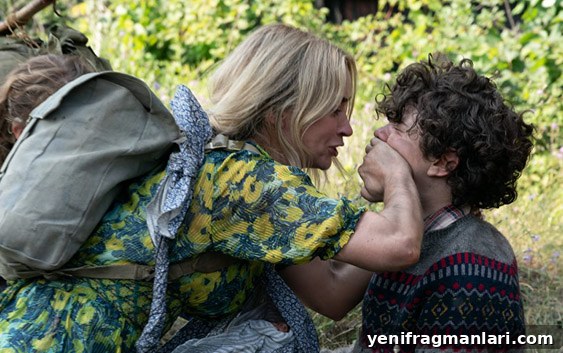
The film opens powerfully on “Day 1,” showing the moment the creatures first overwhelm the world. This sequence is electric: it not only increases the stakes by allowing viewers to witness life before the invasion, it also makes clear what the Abbott family—and humanity—has lost. That opening is one of the film’s strengths, using a careful, deliberate build to generate dread while setting up relationships and emotional stakes that pay off later.
From that promising start, Krasinski maintains a strong command of atmosphere. The sound design remains exceptional and continues to be a primary storytelling device; silence and noise are used as narrative tools to build suspense and emphasize every creak or distant sound. Visual staging and production design also effectively convey a fragile, post-apocalyptic world where small choices can mean survival or death. These elements recreate the nervous energy that made the original so effective.
However, once the story moves forward and the Abbott family searches for a new place to settle, the film’s limitations become more apparent. Structurally, A Quiet Place Part II often feels divided into two distinct halves that don’t always flow together smoothly. That split creates a noticeable shift in tone and pacing that can be jarring; instead of a cohesive three-act progression, the movie reads like two connected but uneven segments. In the hands of a different filmmaker this could be a bold choice, but here it undercuts narrative momentum at times.
Character work is another area where the sequel is uneven. Cillian Murphy joins the cast as Emmett, a character who shelters the Abbotts. Murphy gives a committed performance, but Emmett’s arc echoes too closely the role that John Krasinski played in the original: skeptical at first, then convinced of Regan’s special abilities. That familiarity reduces the emotional impact of his conversion. Noah Jupe’s Marcus undergoes a similar progression to his previous portrayal—shy, scared, forced to grow—while Millicent Simmonds’s Regan continues to be the emotional and thematic center. These repeated trajectories make the film feel safe rather than surprising.
Some of the choices made by characters, particularly Marcus, come across as questionable, and at times the script puts them in situations that undercut tension rather than heightening it. When characters act in ways that feel implausible, it becomes harder to stay invested in their peril. Still, the performances remain among the film’s most reliable assets: Emily Blunt anchors the family with quiet determination, Murphy brings grounded intensity, and Simmonds continues to provide a powerful, understated presence.
It’s also worth acknowledging the contributions of the original screenwriters, Bryan Woods and Scott Beck. Their work on the first movie helped define its spare, intimate approach to horror, and the sequel’s muddled attempts to replicate that formula show how important their voice was to the original. Krasinski’s direction nonetheless keeps many of the original’s virtues intact—tension, restraint, and a strong visual sense—but the screenplay’s tendency to retread familiar ground prevents the sequel from fully standing on its own.
In short, A Quiet Place Part II has memorable moments and enough craft to make it an enjoyable watch. It extends the world cleverly in places, and the technical elements—sound, cinematography, and acting—remain top-tier. Yet structural issues and recycling of character arcs hold the film back from achieving the same freshness and nerve as its predecessor. Fans of the original will find much to admire, but those hoping for a bold reinvention or a standout horror sequel may leave wanting more.
11/24