
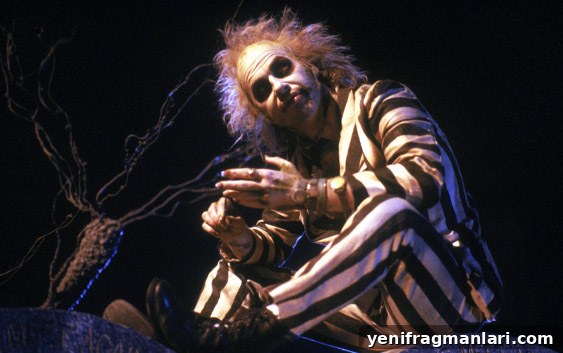
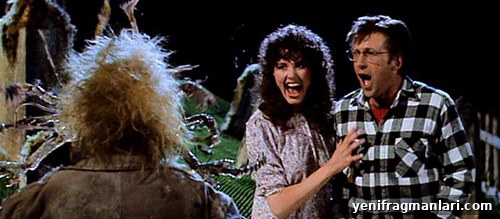
Beetlejuice (1988)
Director: Tim Burton
Screenwriters: Michael McDowell, Larry Wilson, Warren Skaaren
Starring: Michael Keaton, Alec Baldwin, Geena Davis, Jeffrey Jones, Catherine O’Hara, Winona Ryder
Beetlejuice is a singular film that blends horror, comedy and sharp social observation into a wildly imaginative cinematic experience. Released in 1988 and directed by Tim Burton, the movie remains a standout not only for its offbeat humor and memorable performances but also for its layered themes: gentrification, possession, and the bureaucracy of the afterlife. These elements combine to create a film that is both a witty supernatural comedy and a distinct critique of 1980s social values.
The story follows Adam (Alec Baldwin) and Barbara (Geena Davis), a married couple who die unexpectedly and find themselves trapped as ghosts in their own home. When a materialistic, status-driven family moves in, the couple desperately tries to scare them away. After multiple failed attempts, they seek help from Betelgeuse (Michael Keaton), a rambunctious and unpredictable bio-exorcist from the Netherworld who promises to remove the new residents—at a price.
At its core, Beetlejuice skewers the era’s obsession with status and outward success. The intrusive new family—embodying a quintessentially 1980s yuppie culture—threatens to absorb the town into its bland, pretentious lifestyle. Tim Burton resists reducing these characters to one-dimensional villains; instead the film portrays their behavior as a conditioned compulsion, an almost pathological drive toward consumption and social ascent. That satirical eye on the decade’s values gives the film a sharper edge than a straightforward comedy-horror.
Burton’s depiction of the afterlife is a particular strength. The Netherworld is presented with bureaucratic absurdity: the spiritual is treated like a tedious administrative process. This “procedural supernatural” approach turns existential dread into comedic frustration, transforming death from an unknowable horror into a mundane, often laughable experience. The film’s afterlife scenes—complete with waiting-room absurdities and officious attendants—demystify death while keeping a playful sense of the macabre.
Despite its dark material, Beetlejuice often feels optimistic. Where some of Burton’s films lean toward melancholy, this one ends on a note of strange harmony: the old house, the living family, and the Netherworld find a way to coexist. That reconciliation between worlds suggests a belief in adaptability and creative resilience rather than despair.
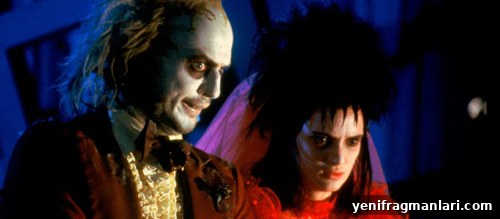
Michael Keaton’s Beetlejuice is magnetic, anarchic and unforgettable. Remarkably, his screen time is limited—around fourteen and a half minutes—but the character’s outsized presence dominates the film. This economical use of a powerful performance mirrors other films where a charismatic antagonist looms large despite minimal minutes on screen. Keaton’s Beetlejuice functions as a disruptive force whose absence and brief appearances amplify his menace and unpredictability.
The supporting cast elevates the material further. Catherine O’Hara, as the flamboyant and insecure Delia, delivers a standout performance, particularly in the film’s unforgettable dinner-party possession sequence. That sequence perfectly blends horror, comedy and musical spectacle: it’s a showcase of physical comedy, gothic absurdity, and genuine eeriness. The film’s willingness to merge genres—comedy, horror and musical—creates moments that are both entertaining and unsettling.
Visually, Beetlejuice is unmistakably Tim Burton. The production design, practical effects and Academy Award-winning makeup and hairstyling create a cohesive, otherworldly aesthetic. The film’s intentionally cheap, B-movie touches—stop-motion inserts, exaggerated prosthetics, and inventive set dressing—are not weaknesses but defining strengths. They support the film’s world-building and complement its surreal performances, offering viewers an immersive escape into Burton’s distinctive imagination.
More than a decade after its release, Beetlejuice endures because it balances sharp social satire with personal, almost childlike fears and fantasies. The screenplay smartly navigates tonal shifts, the cast consistently delivers, and the production design remains inventive and memorable. The result is a film that entertains while offering a critique of consumptive culture, an examination of mortality reframed through humor, and a celebration of eccentric creativity.
For viewers seeking a movie that is both macabre and merry, clever and spooky, Beetlejuice remains an essential Tim Burton film. It’s a rare instance of a mainstream Hollywood picture that merges visual daring with a pointed cultural critique, all while remaining wildly entertaining.
Score: 24/24
Written by Elisabetta Pulcini
You can support the author of this article, Elisabetta Pulcini, by following her on social platforms and visiting her portfolio.