
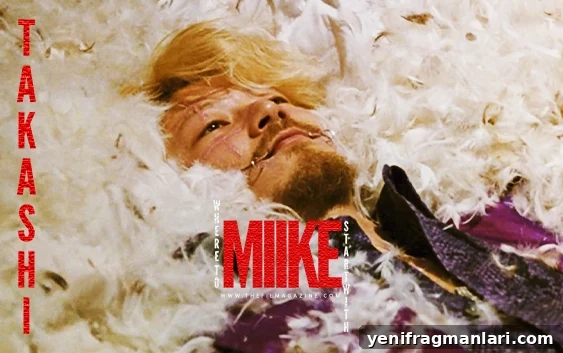
In contemporary Japanese cinema, Takashi Miike stands out as one of the most prolific and controversial filmmakers. Known for a wide-ranging output that moves between horror, extreme action, yakuza crime stories and samurai epics, Miike has built a reputation for audacity, dark humor and scenes that frequently provoke debate.
Born in 1960 in Osaka Prefecture, Miike grew up in a working-class household. His mother worked as a seamstress and his father as a welder; his father’s habits—gambling, drinking and the occasional trip to the cinema—left an impression on Miike and can be seen reflected in the masculine archetypes and conflicted male figures that populate his films.
After a youth that included bicycle racing and some brushes with gang culture, Miike studied at the Yokohama Vocational School of Broadcast and Film under the influential director Shōhei Imamura of the Japanese New Wave. Miike has credited Imamura with teaching him the importance of a personal connection between a director and a film, stressing that filmmakers must not simply imitate others but find their own voice. Miike often reflects on this lesson, noting that despite the mentorship he could not and would not make Imamura’s films because their sensibilities differ.
Miike began his directing career in the late 1980s working in television and low-budget straight-to-video productions. Japan’s economic growth in the early 1990s opened new funding opportunities for straight-to-video releases, a period Miike has praised for the creative freedom it afforded him. That independence became crucial as his films later drew international scrutiny and censorship for their graphic content.
His earliest credited feature is Lady Hunter: Prelude to Murder (1991), though the action comedy Eyecatch Junction, also from 1991, reached audiences first. These straight-to-video titles established recurring themes—violence, moral ambiguity and dark humor—along with frequent adaptations of manga. Miike’s third film, A Human Murder Weapon, was among his first direct engagements with manga source material, a pattern he would return to many times.
For newcomers, Miike’s filmography can feel overwhelming. The following guide highlights three accessible entry points that showcase his range: Audition (1999), Ichi the Killer (2001) and Blade of the Immortal (2017). Each film reveals different facets of his style, recurring themes and the moral complexity that makes his work both challenging and rewarding.
1. Audition (1999)
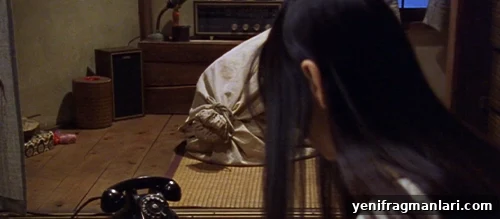
Audition marked Miike’s first major international breakthrough. Adapted from Ryu Murakami’s 1997 novel, the film is a masterclass in tonal deception: it begins as a measured, melancholic romance and slowly but inexorably turns into something far darker and more disturbing. Its ability to misdirect the audience, gradually revealing hidden depths of character and menace, is central to its power.
The plot follows Shigeharu Aoyama (Ryo Ishibashi), a widower encouraged by his son and friends to date again. A mock audition is organized as a pretext for meeting potential partners—only the producer and a close circle know the true purpose. When Asami (Eihi Shiina), a beautiful and enigmatic young woman, appears, Aoyama becomes infatuated despite obvious gaps in her background. As their relationship deepens, the film slowly exposes a darker undercurrent that culminates in a harrowing final act.
Audition’s third act is infamous for its unflinching depiction of torture and psychological collapse. Miike stages violent moments with a patient, unyielding gaze, prolonging the physicality of each action to amplify discomfort. Eihi Shiina’s layered portrayal of Asami—equal parts fragile, damaged and terrifying—adds emotional complexity: her rambling explanations about love, pain and isolation hint at real trauma beneath the shock value.
The film has sparked debate about misogyny and the objectification of women. Critics point to the manipulative way men in the film treat female characters, arguing that the narrative reinforces harmful views. Other commentators caution against simplistic readings, suggesting Audition interrogates male anxieties about female sexuality rather than endorsing them. Whatever the interpretation, the film’s influence on international horror and exploitation directors is clear: Audition remains widely cited and ranked among modern horror classics.
2. Ichi the Killer (2001)

After Audition, Miike deepened his exploration of extreme content with a string of yakuza films. Ichi the Killer, adapted from Hideo Yamamoto’s manga, blends gangster storytelling with grotesque, often cartoonish violence. The film centers on two damaged men: Ichi, a sexually repressed loner whose violent impulses are harnessed by others, and Kakihara, an unhinged enforcer who revels in sadism.
The film opens with an unflinching sexual assault and then slides into a prolonged series of brutal confrontations and acts of torture. Like Audition, it examines the relationship between violence and sexuality, presenting both as intertwined and destabilizing forces. Rather than moralizing, Miike presents the gore and depravity with a detached, sometimes absurdist tone that forces viewers to confront their own reactions to on-screen brutality.
Ichi the Killer provoked strong reactions at festivals and in distribution: its premiere at a late-night festival screening included gag bags and reports of fainting audiences. The film faced censorship and bans in multiple countries, with cuts required for releases in several territories. Despite—or because of—these controversies, Ichi the Killer secured a cult following and cemented Miike’s reputation as a provoker who continually tests the limits of cinematic taste.
3. Blade of the Immortal (2017)
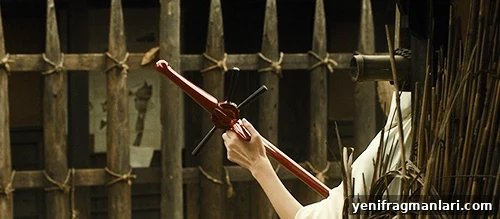
Blade of the Immortal is Miike’s one-hundredth film and demonstrates his comfort working within genre conventions beyond horror. Adapted from Hiroaki Samura’s acclaimed manga, this samurai epic focuses on Manji (Takuya Kimura), an immortal swordsman haunted by his past crimes, and Rin, a young woman who hires him to avenge her father’s death.
While violent, Blade of the Immortal balances its gore with an emotional core. The evolving bond between Manji and Rin provides a moral center and human warmth that offsets the film’s brutality. Themes of revenge, redemption and the cost of immortality unfold through stylized fight choreography and Miike’s characteristic mix of dark humor and visual excess. The film’s violence retains a level of absurdism that often makes it more palatable than his most extreme work.
Released theatrically in 2017, Blade of the Immortal received a modest international response but found a stronger audience in Japan. Samura, the original manga author, expressed satisfaction with Miike’s adaptation, praising its faithfulness to the characters and tone.
Taken together, these three films illustrate the range of Takashi Miike’s vision: Audition shows his mastery of slow-burn dread and psychological horror; Ichi the Killer exemplifies his willingness to shock and confound; and Blade of the Immortal reveals his capacity for genre storytelling that still foregrounds human relationships and moral dilemmas. Across a career spanning decades, Miike has produced a body of work that resists easy categorization. He remains a director who challenges viewers, asks uncomfortable questions about violence and desire, and continues to push boundaries—often in ways that are as divisive as they are influential.
Written by Lauren Frison
You can support Lauren Frison in the following places:
X (Twitter): @paranoidzpark
Letterboxd: /suspiriaz