
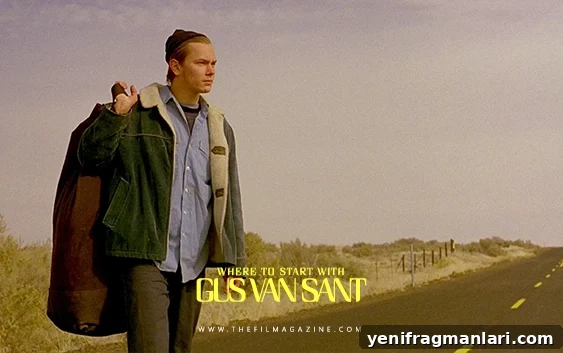
Regarded as one of the most influential figures of the New Queer Cinema movement, Gus Van Sant is a filmmaker who persistently explores the fragility and beauty of human life. His films examine outsiders, intimate relationships, and social margins with empathy and unflinching honesty.
Van Sant began his film career working behind the scenes, serving as a production assistant to producer Ken Shapiro before making his first feature, Alice in Hollywood, a project that was never released. Early on he honed his observational eye, frequently people-watching in downtown Hollywood—an environment that stood in stark contrast to nearby Beverly Hills. Drawn to the lives of those on the margins, Van Sant returned to directing with Mala Noche (1986), a love story that interweaves issues of immigration, desire, and urban poverty. While Mala Noche is less celebrated than his later work, it marks the emergence of the distinct aesthetic and thematic concerns that would define his career.
After gaining attention on the festival circuit, Van Sant attracted interest from major studios. Although early pitches to studios were not always accepted, the rejected ideas later evolved into landmark films such as Drugstore Cowboy (1989) and My Own Private Idaho (1991). With the success of these and other projects, Van Sant moved into the mainstream while preserving his singular voice. He has directed critically acclaimed films including Good Will Hunting (1997), Elephant (2003), Milk (2008), and Don’t Worry, He Won’t Get Far on Foot (2018).
Throughout his career Van Sant has remained consistent in his approach: his films confront difficult subjects—drug addiction, mental illness, gun violence, hate crimes, and suicide—with restraint and emotional rigor. For readers who want an accessible entry point to his work, this guide highlights essential films that showcase the director’s range and recurring concerns.
1. My Own Private Idaho (1991)
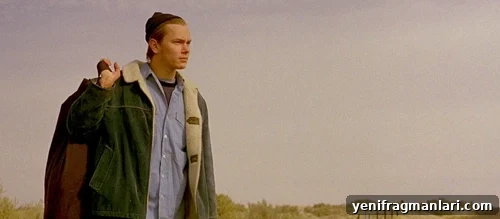
My Own Private Idaho is an early Van Sant film that uses allegory and intimate portraiture to examine social division, queer identity, and the experience of outsiders. The film centers on two young men—Mike (River Phoenix) and Scott (Keanu Reeves)—on a road trip to find Mike’s estranged mother. Van Sant balances wide, often cinematic landscapes with carefully measured, emotionally intimate scenes that keep the characters’ relationship at the film’s heart.
Loosely inspired by Shakespeare’s Henry IV plays and transposed into a contemporary, dreamlike context, the film wrestles with themes of duty, freedom, longing, and self-discovery. Van Sant’s blend of realism and lyricism produces a haunting, modern fable about belonging and the search for identity.
2. Good Will Hunting (1997)
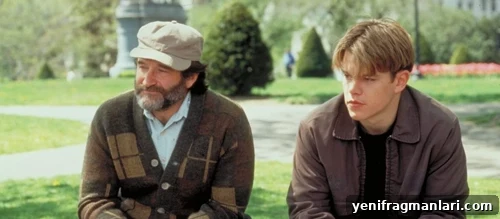
Good Will Hunting is widely regarded as a contemporary classic and represents Van Sant’s deft hand at guiding actors and shaping an emotionally resonant narrative. The film follows Will Hunting (Matt Damon), a gifted but troubled young janitor at MIT, and his transformative relationship with therapist Sean Maguire (Robin Williams).
Van Sant’s direction emphasizes naturalism and emotional truth: he limits stylistic flourish in favor of letting the script and performances carry the story. The film’s memorable scenes—ranging from tender breakthroughs to explosive confrontations—are grounded by restraint in camera work and an insistence on authentic human connection. Good Will Hunting showcases Van Sant’s ability to deliver deeply affecting mainstream drama without sacrificing nuance.
3. Elephant (2003)

Elephant confronts a subject that remains painfully relevant: a school shooting. Inspired in part by the Columbine tragedy, Van Sant approaches the material with a strict, observational style that refuses sensationalism. The film follows several students in the days leading up to the violence, presenting ordinary moments that accumulate into a chilling portrait of normalcy interrupted.
To preserve authenticity, Van Sant encouraged improvisation and developed scenes alongside the filmmaking process rather than relying on rigid, clichéd adolescent dialogue. The resulting work feels immediate and unsettling, a deliberate study of routine and how violence can intrude on everyday life. Critics and audiences praised Elephant for its formal precision and emotional restraint, a response that culminated in the film winning the Palme d’Or at the 2003 Cannes Film Festival.
Across his career, Gus Van Sant wields the camera with a distinctive economy: he often favors quiet observation over overt dramatization, creating films that probe the margins of society and the interior lives of characters. Whether exploring sweeping human dramas or stark contemporary crises, Van Sant’s filmography offers a compelling blend of compassion and formal daring. For viewers seeking cinematic experiences that are both challenging and deeply humane, his work remains essential.