It Ends with Us (2024)
Director: Justin Baldoni
Screenwriter: Christy Hall
Starring: Blake Lively, Justin Baldoni, Jenny Slate, Hasan Minhaj, Brandon Sklenar
BookTok—the reading-focused community that flourished on TikTok during the early months of the COVID-19 pandemic—has reshaped both reader habits and the publishing industry. What began as a way for people to connect over books during lockdowns turned into a powerful cultural force that can transform midlist titles into bestsellers and push publishers to prioritize stories that perform well online. While critics argue BookTok sometimes favors marketability over literary nuance, its influence on which novels receive adaptations and widespread attention is undeniable.
Hollywood has responded to BookTok’s commercial sway. Recent screen adaptations inspired by viral novels include bestselling romances and literary phenomena now moving to film and streaming. Among these, the big-screen adaptation of Colleen Hoover’s 2016 novel It Ends with Us is one of the most anticipated and controversial. The novel, which tackles generational trauma and domestic abuse, experienced renewed popularity on social media in 2021. Hoover’s prominence in that online space has made her a touchstone for debates about the relationship between popularity and quality.
Directed by Justin Baldoni, with a script by Christy Hall, It Ends with Us improves on several aspects of its source material. The film presents a polished melodrama anchored by committed, vulnerable performances from its cast. Although it has imperfections, the movie treats its difficult subjects—abuse, the complexities of intimate relationships, and the long shadow of family trauma—with sensitivity and restraint. It offers a moving portrayal of how hard it can be to break cycles of violence and why the choices victims make are rarely simple.
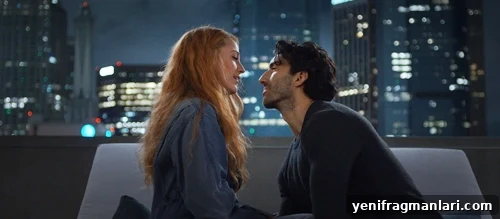
It Ends with Us opens with Blake Lively’s Lily Bloom returning to Boston for her father’s funeral. Lily, whose full name is Lily Blossom Bloom, struggles to confront grief and instead seeks solitude on a rooftop overlooking the city where she has recently opened a flower shop. There she meets Ryle Kincaid (Justin Baldoni), an intense and charismatic neurosurgeon who confesses he has just lost a patient. Their chemistry is immediate, but their differing relationship rules—Ryle avoids commitment, while Lily seeks it—initially keep them apart. The pair reconnect after Ryle turns out to be the brother of Lily’s new employee, Allysa (Jenny Slate). As their romance deepens, Lily also revisits her history with Atlas Corrigan (Brandon Sklenar), her first love, complicating her decisions and emotions.
Unlike some viral-origin adaptations that feel exploitative or shallow, this film consciously strips away some of the novel’s more awkward or dated elements. The movie avoids the original book’s more cringeworthy narrative devices—such as teenage Lily’s epistolary flashbacks written to a celebrity—and instead integrates backstory in ways that support character development. Those flashback scenes are still uneven in pacing, but they provide necessary context for Lily’s relationship with Atlas and are performed convincingly.
One of the film’s challenges is its failure to draw a sufficiently explicit parallel between the abuse Lily experienced in childhood and the abuse she later endures in a romantic relationship. The idea of generational trauma is present, but the movie often sidesteps a full exploration of Lily’s mother’s history, leaving Amy Morton’s character underused. That omission weakens the film’s argument about patterns of violence and the complexities of familial influence.
The film’s visual language does important work in repositioning Lily as an unreliable narrator in subtle ways. Early sequences use warm autumnal tones that evoke a cozy romantic comedy, lulling the viewer before the story reveals its darker undercurrents. Baldoni and Hall lean into the contrast between a conventionally attractive, charming abuser and the small, unsettling moments that disclose his instability. Casting Baldoni as Ryle enhances this effect: his charisma and physical presence mask the harm of his actions, illustrating how easily red flags can be minimized or rationalized.
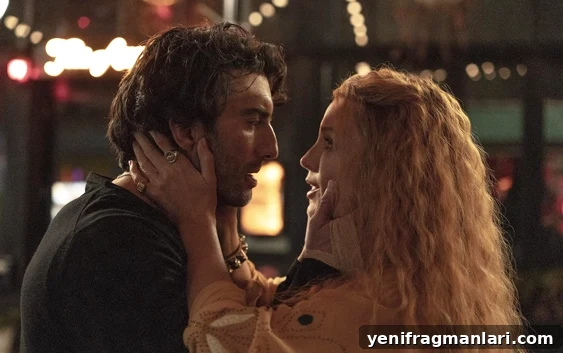
Baldoni’s direction is intimate, relying heavily on close-ups that track the actors’ expressions and the uneasy rhythms of their interactions. Lively brings a quiet strength to Lily, particularly in the film’s final act, though the character could benefit from additional depth and nuance. By adhering closely to the novel in certain respects, the screenplay occasionally misses opportunities to expand Lily’s interior life, especially around issues such as reproductive autonomy and the social pressures women face.
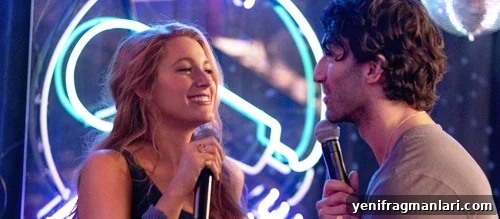
The supporting cast provides important tonal balance. Jenny Slate and Hasan Minhaj offer moments of humor and warmth that offset the story’s darker elements without undermining them. Brandon Sklenar, as the adult Atlas, delivers a grounded, steady presence that contrasts effectively with Ryle’s volatility. The chemistry between Lively and Sklenar feels distinct from the chemistry she shares with Baldoni, which helps the emotional stakes of the film’s central love triangle even when Atlas receives relatively limited screen time.
It Ends with Us is a glossy, emotionally driven melodrama that occasionally struggles with the limitations of its source material. While it does not fully solve the novel’s more contentious thematic questions about abusers and survivors, the film succeeds at eliciting genuine feeling and empathy. It finds a small but important measure of truth about love, damage, and the strength required to choose a different path—and in a landscape crowded with avatar-driven adaptations and nostalgia, earning that emotional engagement is notable.
Score: 14/24