
This article was originally published on SSP Thinks Film by Sam Sewell-Peterson.
Minority Report (2002)
Director: Steven Spielberg
Screenwriters: Scott Frank, Jon Cohen
Starring: Tom Cruise, Colin Farrell, Samantha Morton, Max von Sydow, Steve Harris, Neal McDonough, Kathryn Morris, Lois Smith, Peter Stormare, Tim Blake Nelson
Far more than just another Tom Cruise action vehicle—though he certainly runs, jumps and fights—Minority Report is a deceptively complex blockbuster. Now marking its twentieth anniversary, this underappreciated Steven Spielberg film adapts Philip K. Dick’s short story into a sophisticated, stylish meditation on fate, surveillance and the justice system. Even as it delivers thrilling set pieces, the movie stays grounded in character and in an intricate, twist-driven plot.
Set in Washington, D.C. in 2054, the film centers on the PreCrime Initiative, a policing system that prevents violent crimes by arresting would-be perpetrators before they act. The program relies on three psychic “Precogs” whose visions allow authorities to intervene. Violent crime has been virtually eliminated, and officials are preparing a national rollout. The system seems infallible—until Chief John Anderton (Tom Cruise) is flagged as the future killer of a man he does not know.
Minority Report underwent a long development process, passing through multiple hands and delays. Spielberg was drawn to the project because it combined strong character work with a layered, complex mystery. Screenwriters Scott Frank and Jon Cohen crafted a lean script that establishes the rules of this near-future world without heavy-handed exposition, relying instead on visual storytelling and efficient character beats.
Spielberg and his collaborators quickly and elegantly demonstrate how this future operates. We follow Anderton through his daily routines and see how technology has reshaped ordinary life. Exposition is handled organically—for example, when Colin Farrell’s Danny Witwer arrives at PreCrime, his orientation provides the audience with essential information, but it also plants details that later become critical to solving the film’s central mystery. This careful seeding of clues enables the narrative to misdirect and surprise both protagonist and viewer.
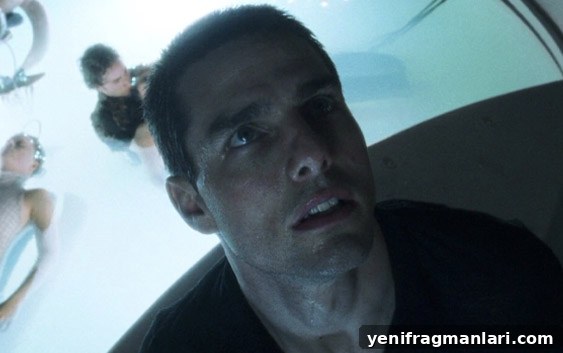
One of the film’s most striking achievements is the visualization of the Precogs’ visions. The sequences feel cold, distant and eerie, narrowed to specific details that guide perception. That constrained viewpoint allows the filmmakers to conceal key information and to reveal it at precise moments, making each twist land with greater impact. The result is a mystery that continuously shifts the audience’s understanding of who is manipulating whom.
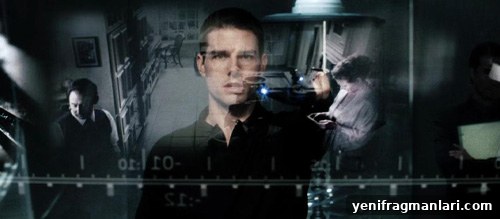
Minority Report also reads like a near-future forecast. Many of the film’s technologies—gesture-based controls, immersive displays, targeted advertising, retina and facial recognition—have become familiar in the years since its release. The film’s production design and user-interface concepts influenced the visual language of modern sci-fi and tech design, and many subsequent filmmakers and designers echoed its aesthetic.
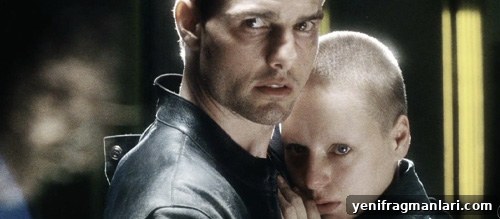
Like Blade Runner, Minority Report expands on Dick’s original premise to construct a satirical and sometimes grotesque mirror of the American justice system. The ethical questions it raises are unsettling: if society can prevent crimes before they occur, does that justify detaining people for acts they have not yet committed? The film forces the viewer to confront the tension between safety and liberty, and Spielberg pushes this debate into emotional terrain through Anderton’s personal loss—his missing son, Sean, which haunts his motives and choices throughout the story. The most human moments come from interactions with Precog Agatha (Samantha Morton), whose “what if?” revelation provides a rare emotional closure for Anderton.
The film also showcases Spielberg’s mastery of pacing and visual suspense. It contains memorable scare beats and inventive action sequences, and it helped define many modern sci-fi action tropes. Iconic elements—the sick-stick, the sonic gun, spider-like police drones—leave a lasting impression despite limited screen time. Small world-building touches, like the omnipresent health symptoms people display or the quirky domestic interruptions during a drone scan, enrich the setting without slowing the plot.
Some sequences lean toward the fantastical—such as a brief, surreal encounter with aggressive vines—but these moments are rare flourishes that do not undermine the film’s core logic. Occasionally the plot asks viewers to accept convenient details for the sake of momentum, but such concessions are minor compared to the film’s broader strengths: its moral complexity, visual inventiveness and tightly knit mystery.
Overall, Minority Report remains one of Spielberg’s most philosophically engaged genre films. It interrogates free will, responsibility and the price societies pay for security, balancing thoughtful questions with blockbuster spectacle. Watching it now, two decades on, highlights the film’s prescience and craftsmanship: it is at once a thrilling procedural mystery and a cautionary tale about surveillance and certainty.
Score: 22/24