
Tarzan (1999)
Directors: Kevin Lima, Chris Buck
Screenwriters: Tab Murphy, Bob Tzudiker, Noni White
Starring: Tony Goldwyn, Minnie Driver, Glenn Close, Rosie O’Donnell, Brian Blessed, Nigel Hawthorne, Lance Henrikson, Wayne Knight
Released at the end of the 1990s, Disney’s Tarzan arrived as the studio was shifting from the spellbinding musical fairy tales of the Disney Renaissance into broader, adventure-focused storytelling. This transition allowed animators and writers to experiment with tone and technique while building on the studio’s reputation for emotional depth and artistic ambition. Tarzan stands as an emblem of that transitional era: bold, visually impressive and emotionally resonant.
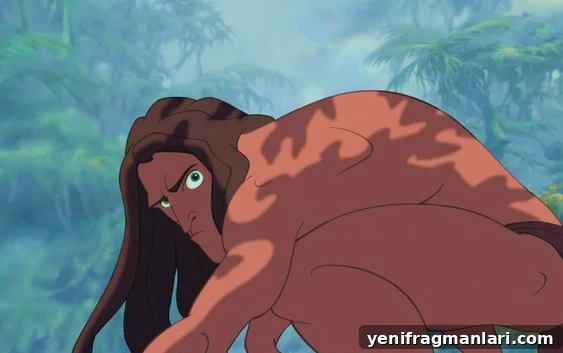
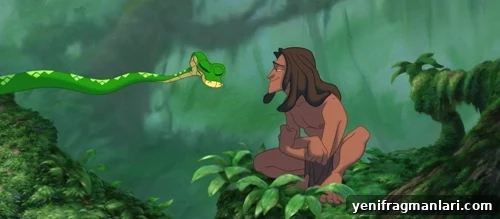
Loosely based on Edgar Rice Burroughs’ classic stories, Tarzan follows a human child raised by gorillas after a tragic shipwreck claims his parents. Kala, the gorilla who adopts him, provides warmth and protection, while Kerchak, leader of the gorilla troop, remains wary and distant. As Tarzan grows, he learns the rhythms and laws of the jungle, developing physical grace and a profound bond with the animals around him. When a group of English explorers arrives, including the curious Jane Porter and the scholarly Professor, Tarzan is confronted with a new world: humanity. This encounter forces him to negotiate identity, loyalty and love, and introduces the film’s original antagonist, Clayton, whose predatory motives bring violent conflict to Tarzan’s home.
From its opening ten minutes, Tarzan establishes a darker tone than many animated films of its time. The early sequence depicting the shipwreck and its aftermath, including the deaths of young gorillas and Tarzan’s parents, sets the stage for themes of loss, survival and adopted family. That darkness, however, is not gratuitous; it deepens the story and allows the film to ask meaningful questions about belonging and the bonds that define us.
Exploration is the film’s central motif. For Tarzan, exploration is inward and experiential—discovering language, culture and human emotion. For Jane, the Professor and Clayton, exploration is outward: a scientific and colonial gaze trained on the jungle. Tarzan’s story sits between those two points, acting as a bridge between species and worlds. The filmmakers reinforce this tension using sound and perspective: at times the film leaves certain characters silent to emphasize cultural distance, or places dialogue in languages that other characters do not understand. These choices subtly underline the divide between worlds while also reminding viewers that shared instincts—like a beating heart—connect all living beings.
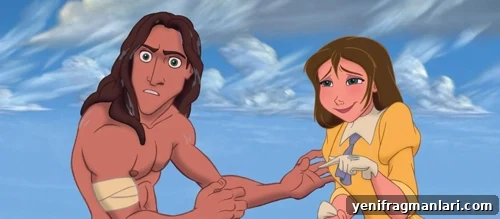
Family, especially nontraditional family structures, is another vital theme. Kala’s maternal devotion to Tarzan is tender and authentic, even when Kerchak warns that they cannot replace a lost child. That tension between grief and new love gives Kala’s choices emotional weight. Later, when the Porters accept Tarzan and attempt to teach him about the human world, the film presents adoption and chosen family as complementary forces: Kala’s jungle upbringing and the Porters’ mentorship both shape Tarzan’s sense of self rather than contradicting one another. The moment Kerchak finally recognizes Tarzan as his own represents one of the film’s most moving emotional payoffs.
Disney tradition is preserved through moments of comic relief, mainly provided by animal sidekicks. Tantor and Turk inject levity that counterbalances the film’s darker beats and highlight the warmth of friendship across differences. While some of these scenes can feel lighter in tone than the core drama, they reinforce the film’s humanistic heart and make the story accessible to a wide audience.
Musically, Tarzan is distinctive. Phil Collins supplies emotionally direct songs that act as a musical narrator, reflecting the action and interior states of characters rather than serving as Broadway-style character numbers. That approach could have felt simplistic, but Collins’ craft and Mark Mancina’s orchestral scoring elevate the songs, making them integral to the film’s emotional architecture. “You’ll Be in My Heart” won the Academy Award for Best Original Song in 2000, a recognition of how effectively the music supports the film’s themes of love and protection. The anthemic “Son of Man” remains a memorable sequence, aurally marking Tarzan’s passage from childhood to adulthood.
Visually, Tarzan blends traditional hand-drawn animation with the technological advances of its time. The film boasts sequences of remarkable fluidity and scale: Tarzan’s web-like movement through the canopy and a long, improvisational sequence where Jane recounts her encounter with Tarzan are both examples of the animators’ ambition. Glen Keane’s character work gives Tarzan expressive depth—his gestures, eyes and posture convey emotional nuance that makes him an empathetic protagonist, despite his straddling of two worlds.
Ultimately, Tarzan endures because of its heart. Its exploration of belonging, family and identity, combined with striking visuals and a memorable soundtrack, keeps the film relevant decades after its release. The care poured into voice performances, animation and music results in a film that still resonates emotionally and artistically, offering viewers both nostalgia for a distinctive era of animation and a rich, self-contained story.
Score: 19/24
Rating: 3 out of 5
Recommended reading: Disney Renaissance movies ranked
Written by Rehana Nurmahi
You can support Rehana Nurmahi at the following handles:
Twitter – @Han_notsolo
Letterboxd – hana_banana97
Portfolio – Authory