
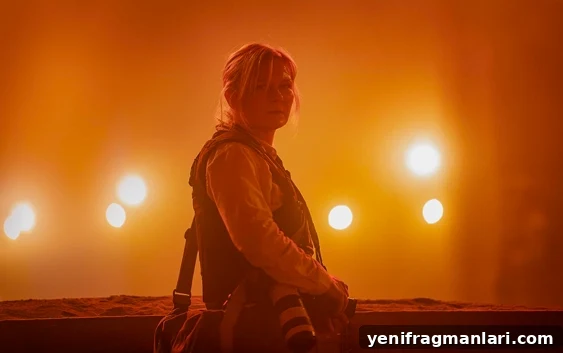
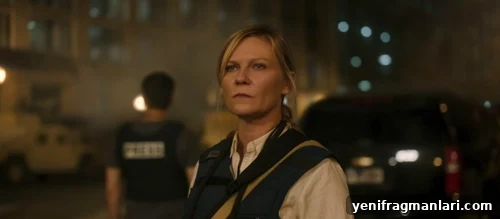
Civil War (2024)
Director: Alex Garland
Screenwriter: Alex Garland
Starring: Kirsten Dunst, Wagner Moura, Cailee Spaeny, Stephen McKinley Henderson, Sonoya Mizuno, Nick Offerman, Jesse Plemons, Nelson Lee, Evan Lai, Jefferson White
Alex Garland’s fourth film, Civil War, lands as a sharp, unnerving satire that feels increasingly relevant. Written several years before its release, the screenplay anticipated tensions that have only intensified, and Garland uses that foresight to craft a tense, intimate portrait of a nation in collapse. The film imagines a near future in which a third-term President consolidates power, prompting California and Texas to secede and plunging the country into a costly, chaotic second civil war. Against this backdrop, a small team of journalists sets out on a deadly journey from New York toward Washington, D.C., determined to document the truth as the conflict reaches a possible turning point.
Garland has explained that his central concerns were how reporting and extremism interact, and how facts become twisted by competing narratives before they reach the public. Rather than approach these ideas as a classroom debate, he stages them as a tense road movie—a format that allows character, danger and ethical ambiguity to unfold in real time. The director heightens contemporary American politics just enough to make the scenario convincing: familiar institutions erode, rumors and propaganda multiply, and ordinary life fractures. The film’s premise feels close to home; the memory of recent political violence and the fragility of democratic norms are implied throughout, giving the story an urgent, uncanny edge.
The film introduces Nick Offerman’s President early on in a chilling opening sequence where he rehearses a speech for a divided nation. That formal, televised presence remains a distant but constant force—most characters experience him through screens, secondhand accounts and the stories they carry. Garland intentionally avoids spelling out every detail of the uprising: references to events such as an “Antifa massacre” or the disbanding of federal agencies appear as fragments, leaving viewers to assemble the larger picture. This oblique approach is characteristic of Garland’s style; he trusts the audience to fill in gaps and respond to the film’s moral questions rather than handing down tidy explanations.
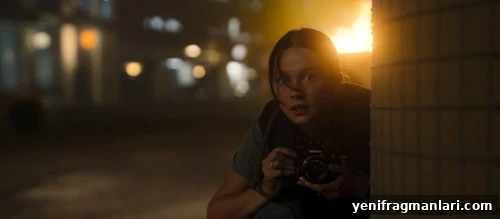
The film’s core ensemble represents varied philosophies about journalism. Kirsten Dunst leads as Lee Smith, a pragmatic, experienced reporter who prioritizes survival and responsibility. Her advice to rookie Jessie—played by Cailee Spaeny—captures the film’s ethical center: once you start asking hard questions you cannot simply stop; often journalists instead record so others can interrogate. Spaeny’s Jessie is driven by idealism and a hunger for truth, and Garland charts the toll that pursuit takes on her psyche. Wagner Moura contributes a charismatic, instinctive presence as Joel, while Stephen McKinley Henderson brings a weathered, mentor-like steadiness as Sammy. Jesse Plemons appears in a brief but unforgettable scene, using a deceptively simple question—“What kind of American are you?”—to create an almost unbearable moment of tension.
Garland keeps the film largely unglamorous. Action is used sparingly and deliberately; the combat sequences are often experienced through the journalists’ cameras, emphasizing how reporting filters violence into images and narratives. The movie uses sound and music in unsettling ways: tracks that sound upbeat at first reveal darker lyrical choices on closer listening, subverting the cathartic cues viewers usually expect from well-placed songs. That contrast reinforces the film’s critique of how media frames conflict.
A key strength of Civil War is how it transplants imagery familiar from other conflicts—the chaos of street fighting, hooded detainees, mass graves—into American settings. Seeing these scenes play out against recognizable landmarks and small-town façades jolts the viewer into recognizing that atrocities do not require foreign battlefields to occur; they can unfold within one’s own country when institutions fail and fear triumphs over reason. Garland also explores the social dynamics of denial and complacency: in one sequence a group of journalists stops in a preserved, picturesque town that seems frozen in the past, yet an armed presence nearby hints at the fragile peace under which that normalcy persists.
Not everything is flawless. The film’s sound mix occasionally buries quieter dialogue under explosions and gunfire, which can diminish the impact of key lines. After a prolonged build of tension, the ending may strike some viewers as abrupt or anticlimactic, but that choice can be read as deliberate: this story is a snapshot of a larger, unresolved crisis rather than a neatly resolved thriller.
The ethical questions at the heart of the film—Can you truly record the whole truth? What does it cost a person to preserve evidence of death and suffering?—linger long after the credits. Jessie’s arc, from eager observer to someone willing to take the photograph that matters regardless of personal cost, embodies the film’s exploration of sacrifice and the corrosive effects of witnessing atrocity. Garland refuses easy answers, preferring to leave viewers with uncomfortable images and moral puzzles.
Civil War is a taut, searing work that reads as more immediate than speculative. It will not satisfy audiences seeking nonstop action or clear-cut solutions, but it offers potent visuals, memorable performances and thoughtful provocation about misinformation, media responsibility and the fragility of democratic freedoms.
Score: 20/24
Rating: 4 out of 5.