
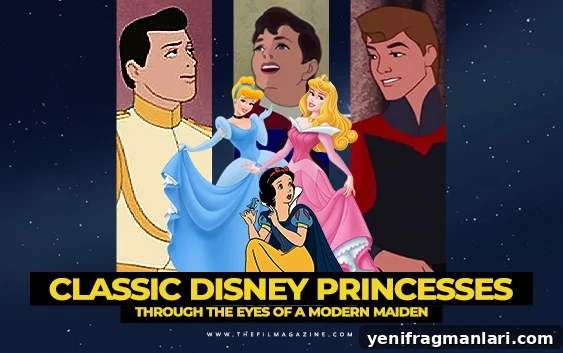
Classic Disney told a simple story: love conquers all. If you were a boy — whether a deer, an elephant, or a wooden puppet — love often came from a parent or a charming young doe with impossibly long lashes. If you were a girl, love arrived in one predictable form: a dashing, prince-shaped savior. After some trials, usually involving a cruel stepmother, the heroine would encounter him—perhaps through a window or because a pet owl had stolen his cap—and within a day or two she would be granted a happily ever after.
For a long time, that felt like the only story on offer.
Early Disney presented clear moral binaries: the good were unmistakably good and the bad unapologetically evil, with few shades of gray. Female jealousy often became full-blown witchcraft. Many of the studio’s vilest characters were women: powerful, rich, and self-assured in ways that carried problematic messages for young audiences of the 1940s and 1950s. Employment options for women were limited, but the films implied that power could come wrapped in a cape and horns—an odd aspiration for girls being raised in that era.
Today’s Disney is far more progressive and diverse in both tone and character. Recent titles have explored a variety of voices, cultures, and family structures, and modern heroines are just as likely to wield swords as they are to dance in ballgowns. That shift raises an interesting question: how does a child with contemporary sensibilities respond to the studio’s early classics — Snow White and the Seven Dwarfs (1937), Cinderella (1950), and Sleeping Beauty (1959)?
In this experiment, a nine-year-old named E, raised by a feminist mother, watches these three films for the first time. E had previously avoided them because their emphasis on domestic service, immediate romantic attachment, and kisses delivered without consent felt out of step with the values she’s been taught. Could these films change E’s mind, or would they simply confirm her mother’s concerns about outdated stereotypes and narrow gender roles?
Snow White and the Seven Dwarfs (1937)
When Snow White premiered in 1937, it was a landmark achievement: the first full-length animated feature from the studio and an immediate classic. Its influence shaped generations of animated storytelling. The craftsmanship is remarkable — animators created up to twenty-four drawings for every second of film, producing a lush, dreamlike quality that still impresses.
E’s first reaction was very literal: “You can tell that’s drawn.” For a child who grew up on modern CGI and films like Inside Out, the hand-drawn look seemed almost fossilized, but that handmade quality is part of the film’s enduring charm. The voice acting, however, puzzled her. Adriana Caselotti’s breathy, affected delivery sounded like a stereotype of a 1930s screen ingénue. Learning that the studio restricted her from other roles to preserve Snow White’s illusion felt unsettling to E: it reinforced the idea that women’s public personas were tightly controlled.
One line in particular jarred: “I’m so ashamed of the fuss I’ve made,” spoken right after an attempt on Snow White’s life. That kind of self-effacing response to trauma is difficult to reconcile with contemporary expectations for agency and self-protection. On the other hand, Snow White’s youth and relative naivety do feel authentic for a thirteen-year-old character in a pre-modern context, and her practical, observant eyes mark a clarity often missing in later princesses.
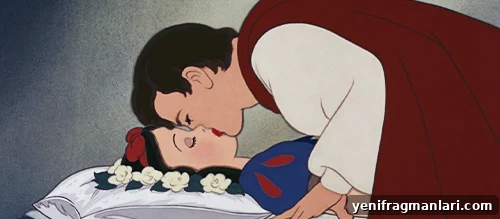
The film also established motifs that became Disney staples, including the “true love’s kiss” trope. From a modern perspective, the prince’s kiss — laid upon someone he believes dead — is problematic. E, familiar with later films that invoke the same idea, was less surprised than her mother, but the scene still sparked conversation about consent and romantic mythology.
Another observation from E was that there seemed to be a lot of boys in a movie marketed to girls. She noticed how gender targeting in merchandise doesn’t always reflect who might enjoy the story, highlighting how Disney’s cultural reach has long been shaped by marketing decisions.
Cinderella (1950)
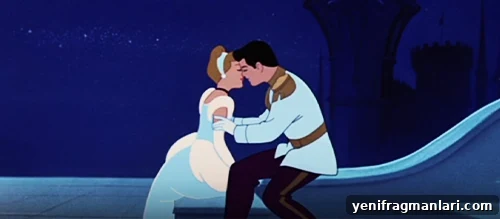
Cinderella refines many of the familiar elements: a kind heroine, a cruel stepfamily, a magical rescue, and the instant, overwhelming love that leads to a wedding by midnight. Unlike Snow White, Cinderella speaks to the man she falls in love with before the kiss, which at least offers a sliver more reciprocity. Still, her independence is limited. She voices dissatisfaction but relies on the men and even the household animals to change her fate. Autonomy is minimal — a choice about linens is framed as agency.
E didn’t immediately spot the subtler sexist tropes in Cinderella. That may be because she’s been raised with modern examples of strong female leads — warriors, explorers, and problem solvers — so a woman in a domestic role doesn’t necessarily read to her as a stereotype. A joking aside about mice and sewing felt more like benign silliness than an ideological statement, though E’s mother saw it differently and found the joke outdated.
Sleeping Beauty (1959)
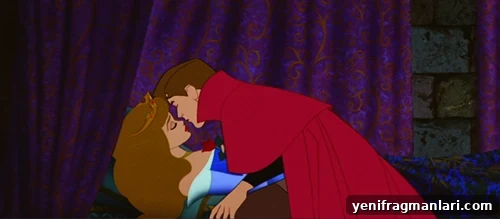
Sleeping Beauty carries traces of older versions of the tale where awakening came through maternal acts rather than romantic ones. Disney’s version opts for a princely kiss, which again raises questions about consent — even if betrothal is used as a narrative justification. Aurora at least speaks briefly with Prince Philip before the kiss, and Philip is aware that his action will restore the kingdom, adding a layer of responsibility absent in Snow White’s awakening.
E found Sleeping Beauty “too lovey” and slow. In an age of high-energy children’s media — with intense action and visual thrills — Maleficent’s raven and the fairies’ antics don’t generate the same suspense they might have in 1959. Of the three heroines, Aurora has the least control over her destiny: she’s acted upon by others at almost every turn. Her role reads as more decorative than decisive, and her wardrobe and posture reflect a shift toward more overtly stylized, unattainable beauty standards that later princesses would inherit.
Watching these three films alongside a modern child highlighted how far Disney storytelling has evolved. The studio’s earlier movies are rooted in fairy-tale simplicity and spectacle; their strengths lie in storycraft and visual ingenuity. But they also reveal dated gender norms and storytelling conventions that don’t always resonate with contemporary values.
E’s verdict was blunt: she has no desire to rewatch Snow White or Sleeping Beauty. That reaction suggests these films don’t supply the emotional or moral lessons a growing girl needs today. Her mother’s earlier reservations about their suitability seem, in this context, understandable.
Disney’s modern challenge is to create films that can compete with an unprecedented array of entertainment while reflecting current social attitudes. The company has responded by widening the scope of what a “princess” can be — from archers who reject marriage to young people confronting identity and family complexity. Acknowledging the past is important: Cinderella danced, and that legacy made room for characters like Merida to run. Nostalgia will keep the earliest films alive, but for many modern families they no longer hold the same place at the center of a child’s imaginative world.