
The Perfect Candidate (2019)
Director: Haifaa Al-Mansour
Screenwriter: Haifaa Al-Mansour, Brad Niemann
Starring: Mila Al Zahrani, Dae Al Hilali, Nora Al Awad, Khalid Abdulraheem
After branching into English-language cinema with Mary Shelley, pioneering Saudi filmmaker Haifaa Al-Mansour returns to her homeland with a quietly radical, thoughtful drama: The Perfect Candidate. The film continues Al-Mansour’s commitment to telling intimate stories that reflect broader social struggles, this time centering on a young female doctor who decides to run for local office to solve immediate problems in her community.
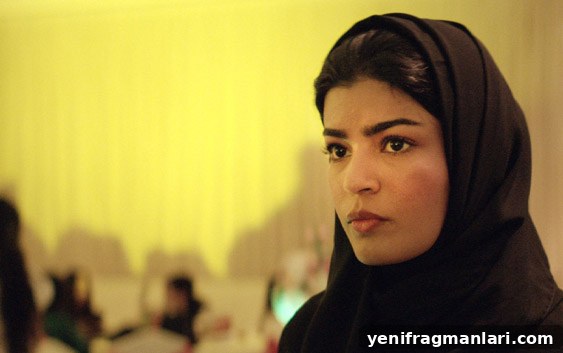
Doctor Maryam (Mila Al Zahrani) works in an under-resourced clinic that serves a small village. The clinic is isolated—reachable only through a muddy track—and the emergency room is chronically understaffed. Some patients refuse treatment from a woman on religious grounds, leaving Maryam to navigate both medical emergencies and social prejudice. When a travel document issue prevents her from attending a career-advancing conference in the city, and without a male guardian available to verify her papers, she realises that running for a seat on the Local Council may be the only viable route to secure funding and improvements for the clinic.
Maryam’s decision to run is practical rather than ideological at first: she wants better working conditions and the ability to provide higher-quality care. Yet once her campaign draws attention, the pressure mounts. The media, the local electorate and even members of her own family respond with a mix of curiosity, condescension and hostility. A television interviewer patronises her, assuming that a female candidate would focus on parks or playgrounds and that her candidacy will “matter mainly to women.” Tiny slights like this reveal the broader assumptions Maryam must overcome to be taken seriously as a professional and a public figure.
Al-Mansour draws an easy parallel between Maryam’s struggle and her own experience as a filmmaker working in a conservative environment. The director’s earlier film Wadjda told the story of a ten-year-old girl who dreams of owning a bicycle; The Perfect Candidate broadens the scope to examine systemic constraints on Saudi women’s roles in public life. Al-Mansour’s use of understated humour and restrained emotional beats gives the film a humane clarity: it resists melodrama while still making a clear moral argument for equality and respect.
Maryam’s relationship with her father (Khalid Abdulraheem) is one of the film’s most affecting threads. He presents himself as supportive—insisting he will not stop his daughters from pursuing their goals—but his affection is complexly bound to social reputation and traditional expectations. He is proud and progressive in many small ways, yet he still worries about appearances and the consequences of his daughter’s visibility. Al-Mansour handles this tension with nuance, showing how support can be sincere and limited at the same time.
A memorable scene finds Maryam addressing male voters by video link from a neighbouring tent; the men laugh and dismiss her words until she steps into the tent in person, forcing them to confront their discomfort. That moment, both comic and sharply political, crystallises the film’s central conflict: the disconnect between private competence and public recognition. Mila Al Zahrani’s performance anchors these scenes—she conveys resilience, weariness and quiet determination with minimal excess, making Maryam a fully believable and sympathetic protagonist.
The film is set against a specific social context. In recent years Saudi Arabia has seen important legal changes: women gained the right to vote and run for office in 2015, and later reforms expanded women’s ability to travel and obtain personal documents without a male guardian. The Perfect Candidate is situated just before some of those shifts, capturing what life felt like in the interim and the small acts that helped push society toward change.
Structurally, the story follows familiar beats of an underdog political drama, but Al-Mansour’s direction and the film’s observational tone keep it fresh. Rather than rely on grandstanding, the film accumulates small, specific moments—the irritation of bureaucratic hurdles, the awkwardness of public exposure, the tender domestic exchanges—that build a persuasive portrait of constrained agency and the work required to claim it.
For viewers interested in contemporary world cinema, gender politics or the evolving social landscape of Saudi Arabia, The Perfect Candidate offers both a human story and a timely social critique. Al-Mansour’s deft handling of character and context makes the film both an intimate character study and a convincing plea for dignity and practical reform.
21/24