
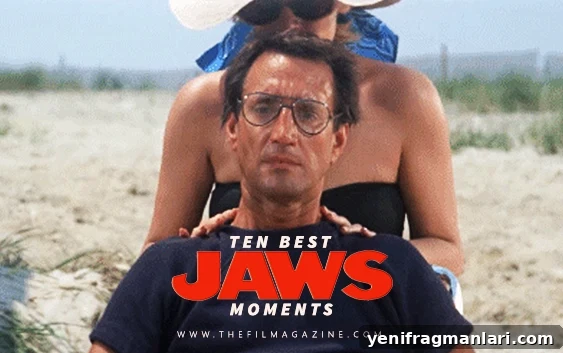
Jaws (1975) opens with a body: a clear, brutal sign that something in the water has attacked. The people of Amity Island, however, are slow to accept the implication. Chief Martin Brody (Roy Scheider) stands out as the lone reasonable public official, uneasy on the beach and increasingly alarmed. Into this tense, sun-soaked community arrive two very different men who will take opposing approaches to the danger — Matt Hooper (Richard Dreyfuss), a marine biologist, and Quint (Robert Shaw), a hardened shark hunter.
The predator at the centre of the story is no ordinary shark. Spielberg’s great white is presented less as an animal to be studied and more as a force: intelligent, relentless and terrifyingly single-minded. The film deliberately avoids exhaustive biological detail; instead it crafts the shark as a near-mythic antagonist, a cinematic boogeyman whose presence fuels suspense and dread.
Brody is one of cinema’s most reluctant heroes. His challenges are not limited to confronting a man-eating predator: he faces a mayor more concerned with tourism revenue than public safety, his own acute fear of water, a complacent populace, and the volatile pride of a vengeance-driven man. The film’s dramatic arc demands that Brody shoulder responsibilities far beyond what he expected — and his evolution into a capable, stubborn protector of his town is central to the story.
Jaws became an instant phenomenon and remains a defining classic nearly fifty years later. The film established Steven Spielberg’s reputation, set new standards for suspense and cinematic pacing, and influenced generations of filmmakers. Its combination of powerful performances, memorable score, inventive camera work and pure, sustained tension turned ordinary seaside fears into a cultural touchstone that still makes audiences wary of the water.
Below are ten standout moments from the film that capture its terror, drama and lasting appeal — the scenes that cemented Jaws as a modern classic.
10. Hooper’s Reappearance
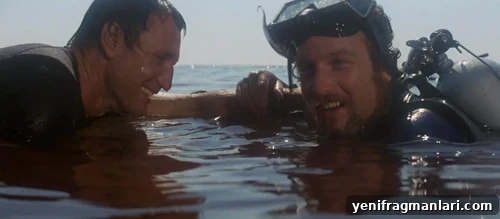
After the climactic explosion that finally appears to destroy the shark, Brody surfaces amid the wreckage with grief for lost friends still heavy in his chest. The moment that truly completes the emotional arc is when Matt Hooper, who had been presumed dead, emerges alive. Their reunion offers genuine relief: the human connection between Brody and Hooper ties up the movie thematically and emotionally, underscoring that the real victory is the survival of their fragile partnership.
Recommended for you: Where to Start with Steven Spielberg
9. The Prank
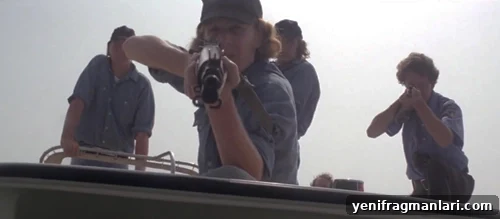
Two boys swim ashore wearing a fake fin, laughing at a prank that mimics a shark attack. Spielberg uses this brief, lighthearted moment to heighten the unease: the town’s complacency and casual attitude toward danger contrast sharply with the audience’s growing fear. The prank underscores a core theme of the film — human hubris and denial make the true threat even more insidious.
8. Ben Gardner’s Head
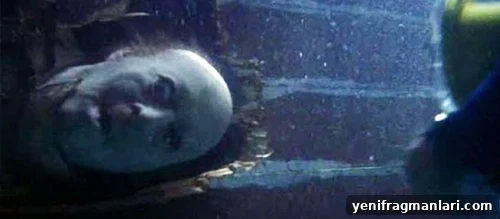
One of the film’s most effective jump scares occurs when Matt Hooper dives to inspect the abandoned boat of Ben Gardner. Engrossed in a massive tooth embedded in the hull, Hooper is suddenly confronted by a horrifying, disfigured head. The grotesque reveal shocks both character and audience, and its influence can be felt in many later films that use unexpected corpses to jolt viewers.
7. Alex Kintner’s Death
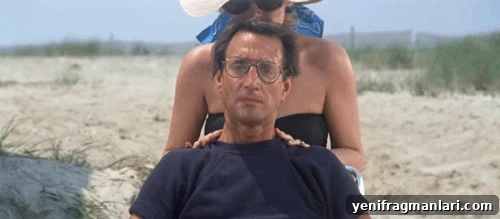
The death of young Alex Kintner is a pivotal moment that raises the stakes. Occurring early in the film, it’s a shocking reminder of the shark’s lethality and the real cost of inaction. The scene’s emotional weight is reinforced by its restraint — the horror arrives in a quiet, devastating instant of recognition rather than melodrama. It’s also the moment associated with the iconic dolly zoom on Brody, a visual that has become inseparable from the film.
6. Lining up to Be a Hot Lunch
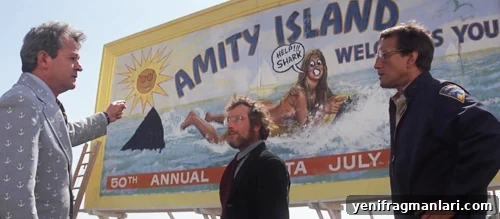
Mayor Vaughn’s reluctance to close the beaches is arguably as dangerous as the shark itself. In a scene where Hooper appeals to the mayor’s sense of urgency, a comedic sign behind them highlights local denial and misplaced priorities. The sequence also cements the alliance between Brody and Hooper, showing the practical, human effort to confront a growing catastrophe while the town debates livelihoods and cost.
5. Chumming
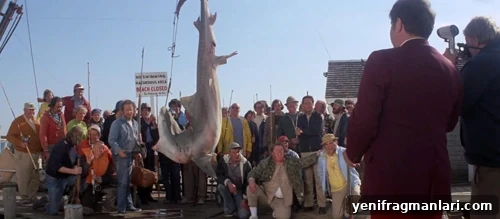
A scene of human arrogance, the chumming sequence shows fishermen celebrating a captured shark while Hooper reacts with disgust and professional alarm. That triumphal mood proves tragically premature. The false sense of safety among the crowd amplifies the shock of what follows and underlines one of the film’s central lessons: overconfidence in the face of nature’s power can be deadly.
4. Quint’s Death
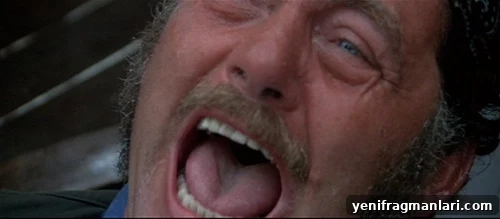
Quint’s violent end on the Orca is visceral and unforgettable. After the shark attacks the cage and Hooper’s fate hangs uncertain, Quint fights desperately and ultimately pays the highest price. His death closes the arc of a brash, proud character who lived by his own rules. It is brutal, fitting and deeply affecting — a final reminder that bravery and bravado cannot always tame a primordial force.
Recommended for you: Every Oscar Nominated Best Picture Horror Film Ranked
3. The Indianapolis
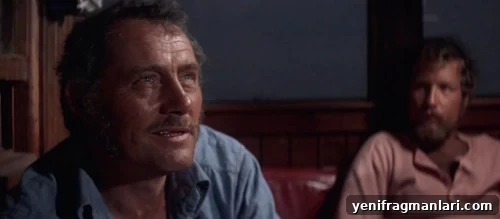
Quint’s chilling monologue about the USS Indianapolis provides deep context for his character and an atmosphere of historical dread. His recounting of that wartime trauma explains why he is simultaneously fearless and haunted. The speech is a masterclass in building character through storytelling, turning Quint from a simple caricature into a man forged by extreme experience.
2. “Too many captains on this island.”
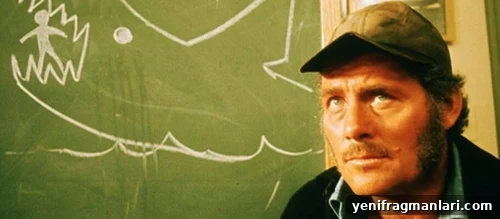
At a tense community meeting, Quint cuts through the town’s nervous chatter with a single line that exposes its political dysfunction. The sound of his long nails scraping and the steadiness of his voice create a menacing presence. His frank assessment of Amity’s leadership captures the film’s exploration of power, pride and the consequences of putting profit above people.
1. “You’re gonna need a bigger boat.”
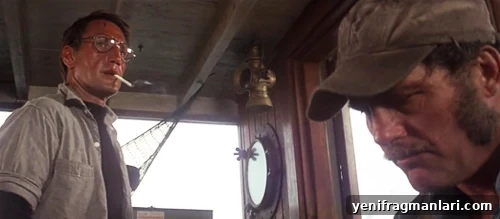
The moment Brody finally comes face-to-face with the shark is the film’s signature beat. The creature’s enormous size and lifeless, doll-like eyes dissolve any illusion that the men are in control. As the famous score swells, the camera briefly reveals the vulnerability of the crew — and Quint’s laconic line, delivered in understated disbelief, perfectly captures the mixture of awe and dread. It’s a concise, devastating reaction that has echoed through pop culture ever since.
Jaws is widely regarded as a landmark in modern filmmaking, the movie that defined the summer blockbuster and reshaped Hollywood storytelling. Its influence reaches across decades, inspiring films that balance spectacle with character-driven suspense. Techniques Spielberg honed here helped pave the way for later blockbusters while his approach to tension and atmosphere remains exemplary.
What are your favourite moments from Jaws? Which scenes still make you hold your breath? Share your thoughts — the film continues to spark conversation and fear, even after all these years.